

Remembering Jason Collins
USTA SOUTHERN CALIFORNIA
USTA SOUTHERN CALIFORNIA
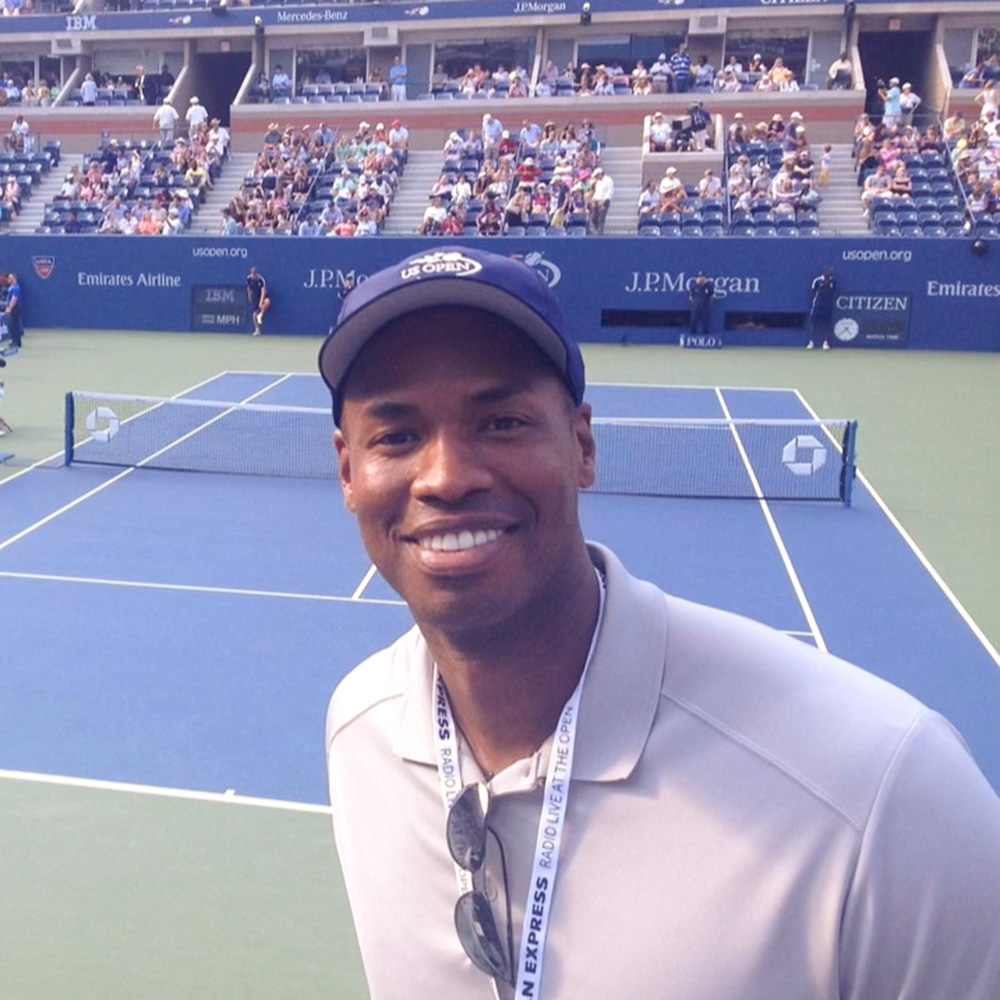
Top: Jason Collins on Arthur Ashe Stadium at the US Open.
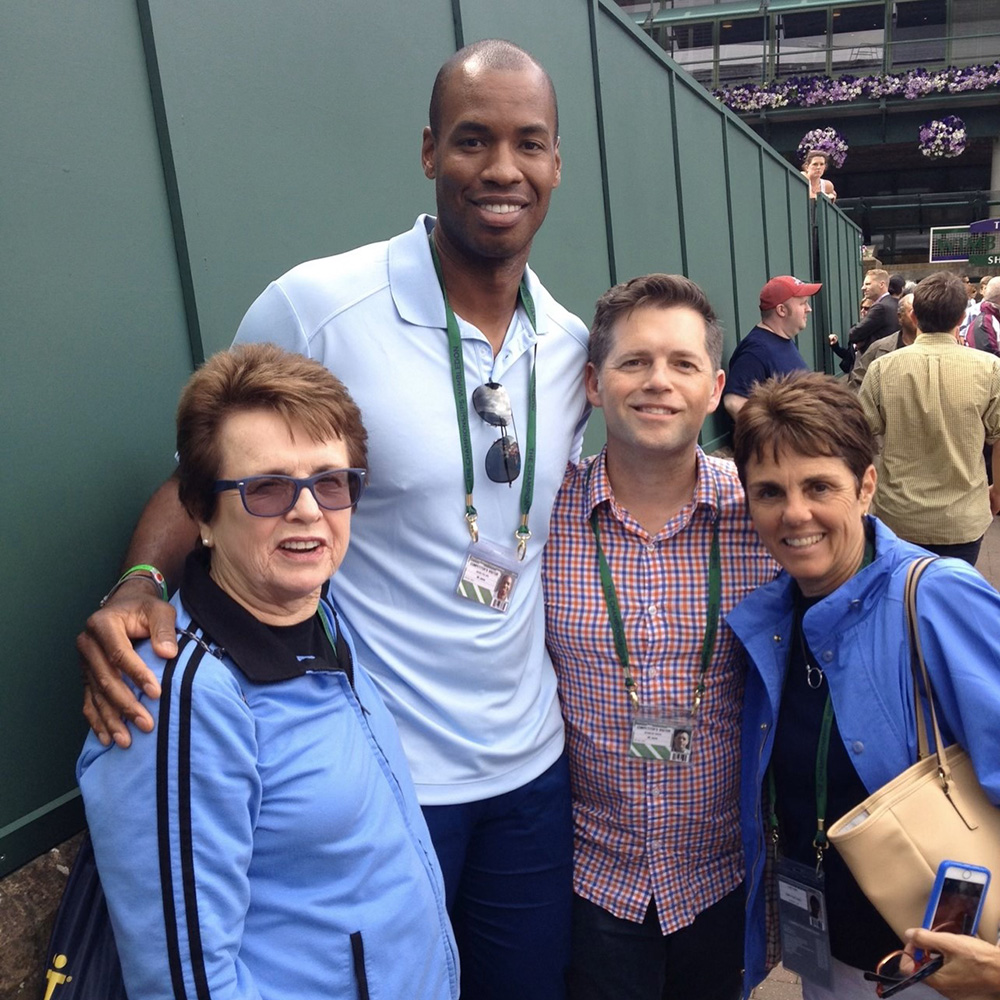
Middle #1: Billie Jean King, Jason Collins, Brunson Green, and Ilana Kloss.
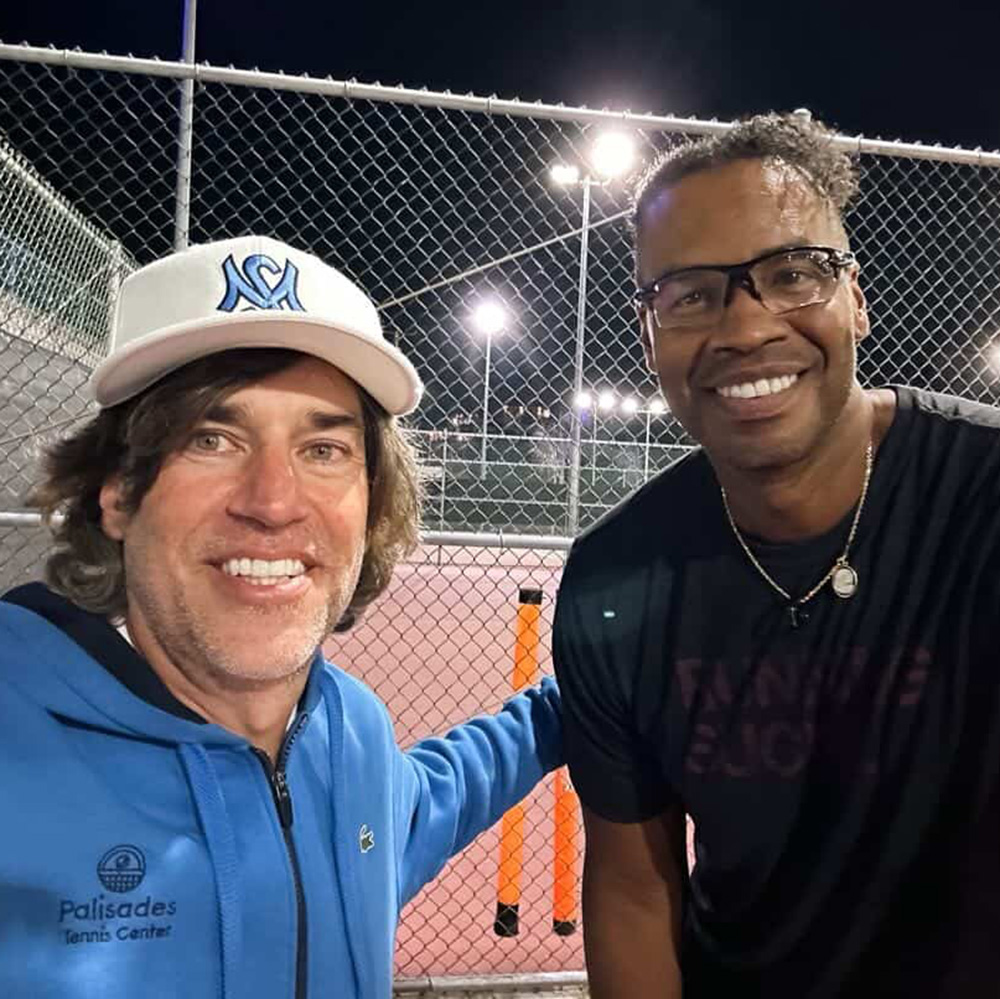
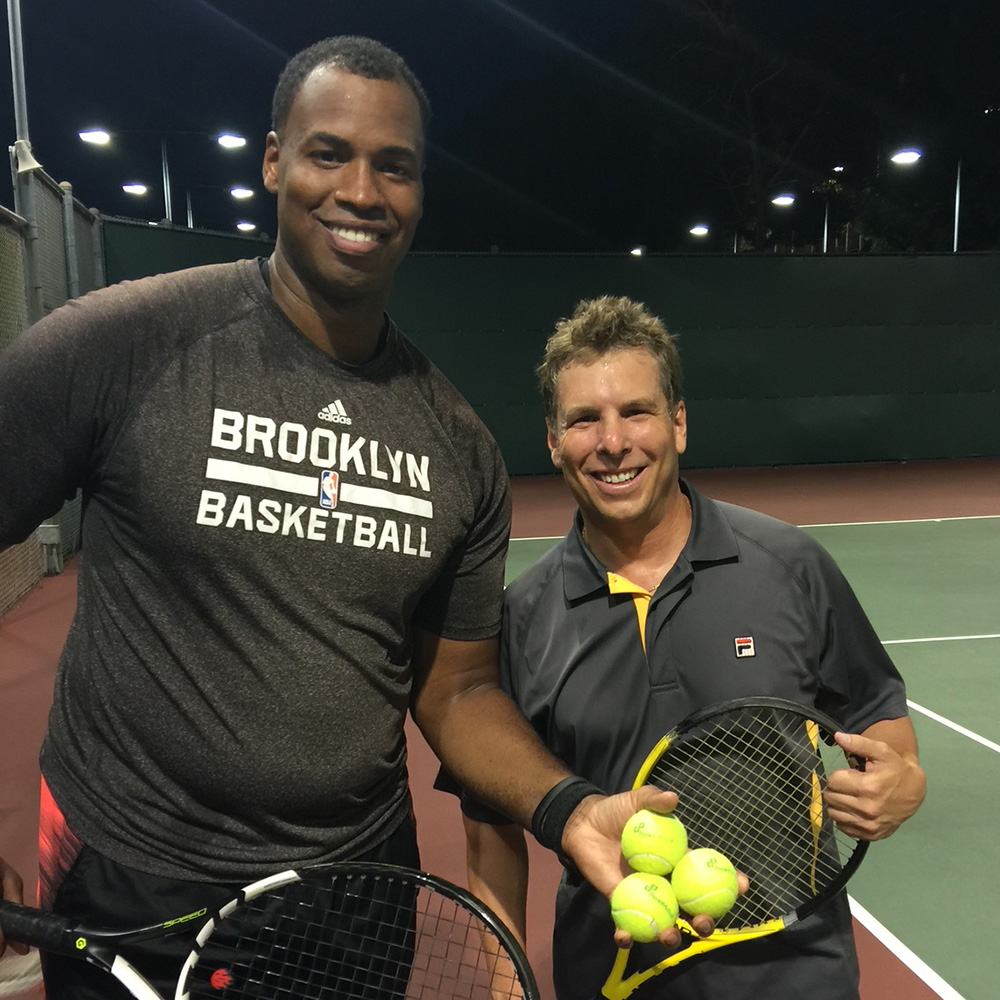
Middle #2: Mike Tomas and Jason Collins.
Bottom: Jason Collins and Ron Bertke.
The Southern California tennis community is mourning the loss of Jason Collins, a man whose courage changed the face of professional sports, but whose heart always seemed most at home on a neighborhood tennis court. At just 47 years old, Collins passed away on May 12, 2026, after a valiant battle with glioblastoma, a relentless and aggressive form of stage 4 brain cancer.
While the world knew him as the 13-year NBA veteran who shattered barriers in 2013 as the first openly gay active player in the four major North American sports, those of us in the USTA Southern California family knew him as something else: a fierce doubles competitor, and a true student of the game.
From Northridge to the NBA Finals
Jason’s journey began right here in Southern California. A standout at Harvard-Westlake in Los Angeles alongside his twin brother, Jarron Collins, Jason went on to become an All-American at Stanford before being selected in the first round of the 2001 NBA Draft. His legendary status at his alma mater was cemented in 2017 when he was inducted into the Stanford Athletics Hall of Fame.
In the NBA, Jason was the ultimate “player’s player.” He spent 13 years in the league, bringing his veteran leadership to six different franchises. He didn’t chase the limelight or the box score; instead, he made a career out of the gritty, unselfish work that wins games. He was a defensive specialist, a “big man” who could shut down the league’s most dominant scorers. During his tenure with the New Jersey Nets, he helped lead the team to back-to-back NBA Finals appearances in 2002 and 2003. His reputation as a premier locker-room leader followed him through seven franchises, with coaches often describing him as the consummate professional.
However, his most lasting contribution to sports came off the court. In April 2013, Jason penned a first-person essay for Sports Illustrated that began with the simple, historic words: “I’m a 34-year-old NBA center. I’m black. And I’m gay.” It was a watershed moment that earned him the support of everyone from teammates and superstars like Kobe Bryant to the White House and then-former President Bill Clinton—whose daughter, Chelsea, had been a classmate of Jason’s at Stanford.
Jason’s roots in leadership and advocacy were fostered during those Stanford years, where he was roommates with Joe Kennedy III, a member of another American political dynasty who would go on to represent Massachusetts in Congress for eight years. By choosing to speak his truth, Jason paved the way for future generations of athletes to live authentically, moving from a veteran player to a global symbol of courage.
A Tipping Point and the “Sweet Feeling of Freedom”
While Jason made his announcement in the context of basketball, the tennis world claimed him as one of their own. For Jason, the move was a step toward the “sweet feeling of freedom” championed by his idols. He had long looked up to Martina Navratilova, who had been outed decades earlier under much harsher circumstances. Upon his announcement, Navratilova noted that the “arc of history” was finally bending, telling Jason, “Trust me, you will sleep a lot better now.”
Tennis icons like Billie Jean King saw Jason’s courage as a “tipping point” for all sports. In an era where male athletes often feared ridicule, Jason’s thoughtful and reflective coming out became an emblem of change, clearing the air for the sport he would eventually come to call his own.
A Second Act on the Hardcourts
For Jason, tennis became the great “second act” of his life. While he grew up in Northridge, it was after his retirement from the NBA in 2014 that the sport became a central passion. Seeking a way to stay physically and mentally fit outside the grueling environment of professional basketball, Jason picked up a racquet and never looked back. It wasn’t just a workout; it was a way to find a new community.
“I’m trying to do anything I can besides riding a stationary bike or getting on a treadmill at the hotel gym,” Jason famously said. He found that in tennis, he could satisfy his athlete’s edge while enjoying a sense of camaraderie that was different from the high-stakes world of the NBA.
Since 2015, Jason was a mainstay in USTA Southern California Adult Leagues, most notably as a powerhouse on the Mountain Gate 8.0 doubles team. To his teammates, he wasn’t a celebrity; he was a dedicated partner who loved the strategy of the doubles court. He took the game seriously—he even traveled with his racquets tucked into his luggage—but he never took himself too seriously. He often joked about the “humbling” nature of the sport, laughing about the times he’d face a self-ranked player in their 20s and realize that his NBA credentials didn’t help him much against a well-placed cross-court lob.
“Jason brought joy, laughter, and authenticity everywhere he went,” said Mike Tomas, Owner & CEO of LA Tennis Centers. “While the world rightly celebrates him as a groundbreaking athlete and trailblazer, at LA Tennis Centers we were fortunate to know him simply as Jason. A truly beloved member of our tennis community who showed up with humility, competitiveness, kindness, and that unforgettable smile. He always brought fun to the courts, and at 7 feet tall he was basically impossible to lob in LiveBall—something everyone who played with him remembers well. Whether he was competing hard or joking around between points, he made people feel welcome and valued.”
A Legacy of Inclusion and Love
Beyond the physical benefits, tennis became a platform for Jason’s advocacy. Inspired by icons like King and Navratilova, he used his presence in the tennis world to champion equality. He was a frequent face at US Open Pride Days, where he often spoke on panel discussions at the annual events to share his story and encourage the next generation of athletes. He remained a vocal supporter of making the sport inclusive for all, urging the tennis community to lead with visibility and courage.
“I try to give back to the community any way that I can,” Jason once said, reflecting on his work with local youth clinics. “I fell in love with the sport when I was a kid, and it was something everyone in my family could play together. I want others to experience that same kind of joy that I have from playing tennis.”
That commitment to the next generation was perhaps most evident in his work with the First Break Academy in Carson. Current USC women’s associate head coach Marc Lucero first met Jason at a WTA event in Hong Kong in 2016 and soon began inviting him to First Break events.
“He made a career out of playing physical beneath the basket on the hardwood; nobody took the ball to the basket and got an easy layup if he was in the lane,” Lucero recalled. “But if you thought that was intimidating, try seeing him standing all of 7 feet on a tiny 36-foot red ball mini tennis court! Seeing our kids play with him, each of them giving the other all they can handle, and seeing him put them at ease immediately with that magnetic smile and the deep belly laugh—I can still hear it.”
Rick Buchta of First Break Academy echoed that sentiment: “Jason Collins brought strength, grace, and authenticity everywhere he went. More than anything, he was incredibly generous with his time, always encouraging and supporting the next generation with kindness and enthusiasm. He will be missed.”
Jason also found deep personal happiness in his later years. In May 2025, he married his longtime partner, film producer Brunson Green, in a joyful ceremony in Austin, Texas. Even as he was diagnosed late last year, he continued to show up as his true self. In a poignant essay for ESPN in December, he reflected on the decade since coming out, saying, “Your life is so much better when you just show up as your true self, unafraid… This is me. This is what I’m dealing with.”
Last week, though he was too ill to attend, Jason was honored with the inaugural Bill Walton Global Champion Award. His brother Jarron accepted it on his behalf, calling Jason “the bravest, strongest man I’ve ever known.”
Following his passing, his family released a statement through the NBA that echoed the sentiments of so many in our local tennis community: “Jason changed lives in unexpected ways and was an inspiration to all who knew him and to those who admired him from afar. We are grateful for the outpouring of love and prayers over the past eight months and for the exceptional medical care Jason received from his doctors and nurses. Our family will miss him dearly.”
Keeping the Racquet Up
Even in his final months, Jason’s spirit remained tied to the court. He often recounted the advice he received from coach Brad Gilbert during a pro-am: “Keep that racquet up!” It was a mantra he carried into his battle with cancer—staying alert, staying positive, and never giving up on the point.
Jason Collins leaves behind a legacy that transcends sports. He showed us that there is always room for a new passion, that retirement is a beginning rather than an end, and that a true athlete never stops learning. He is survived by his husband, Brunson, his parents, his brother Jarron, and a community of players who will miss his “loud American” cheers and his unwavering kindness.
The next time we step onto the court at Mountain Gate or across Southern California, we will remember Jason—the man who came for the workout but stayed for the people.