

Competitor to Transformational Coach
USTA SOUTHERN CALIFORNIA
USTA SOUTHERN CALIFORNIA
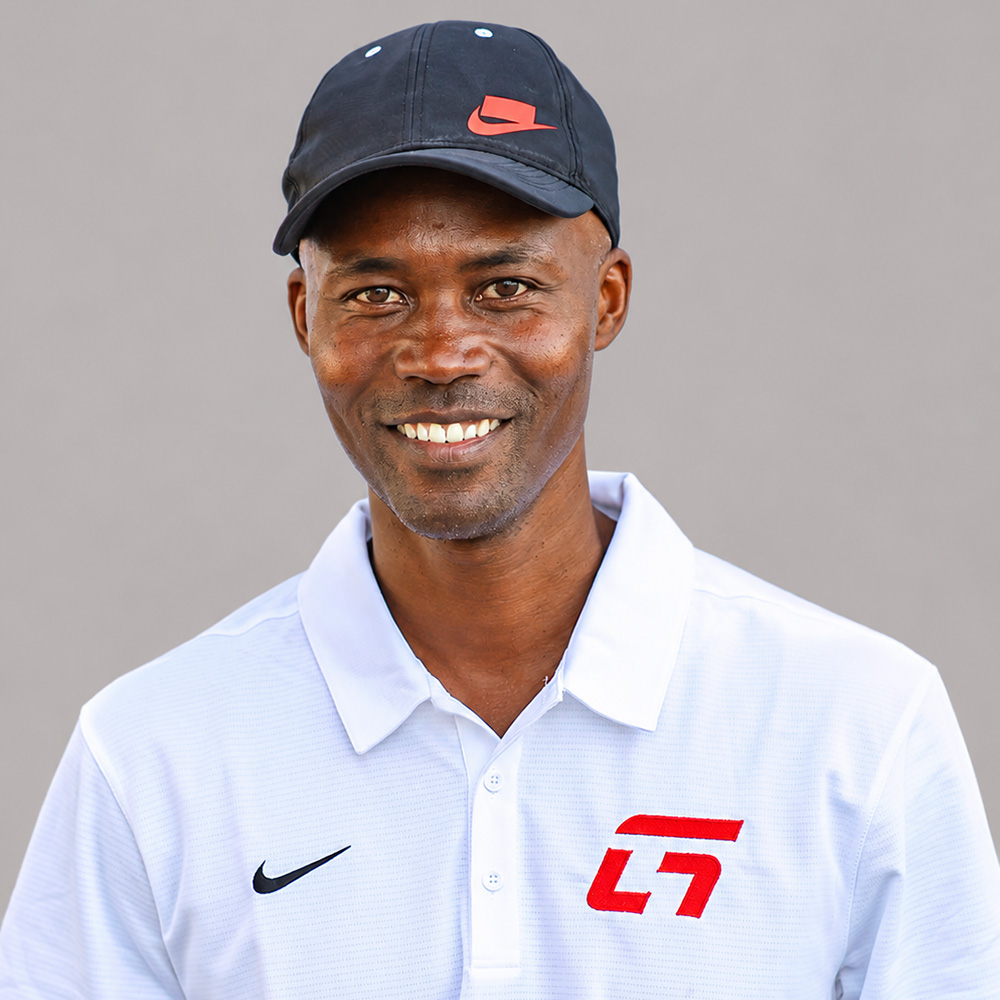
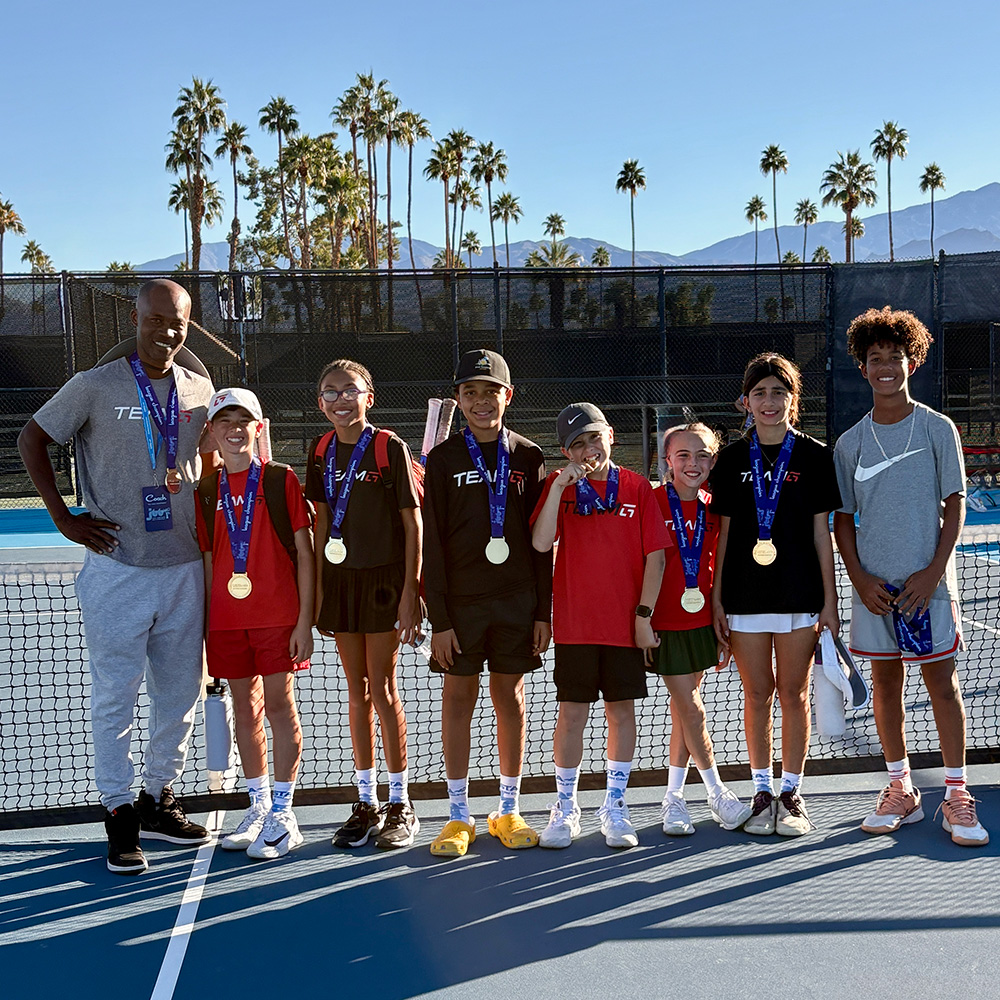
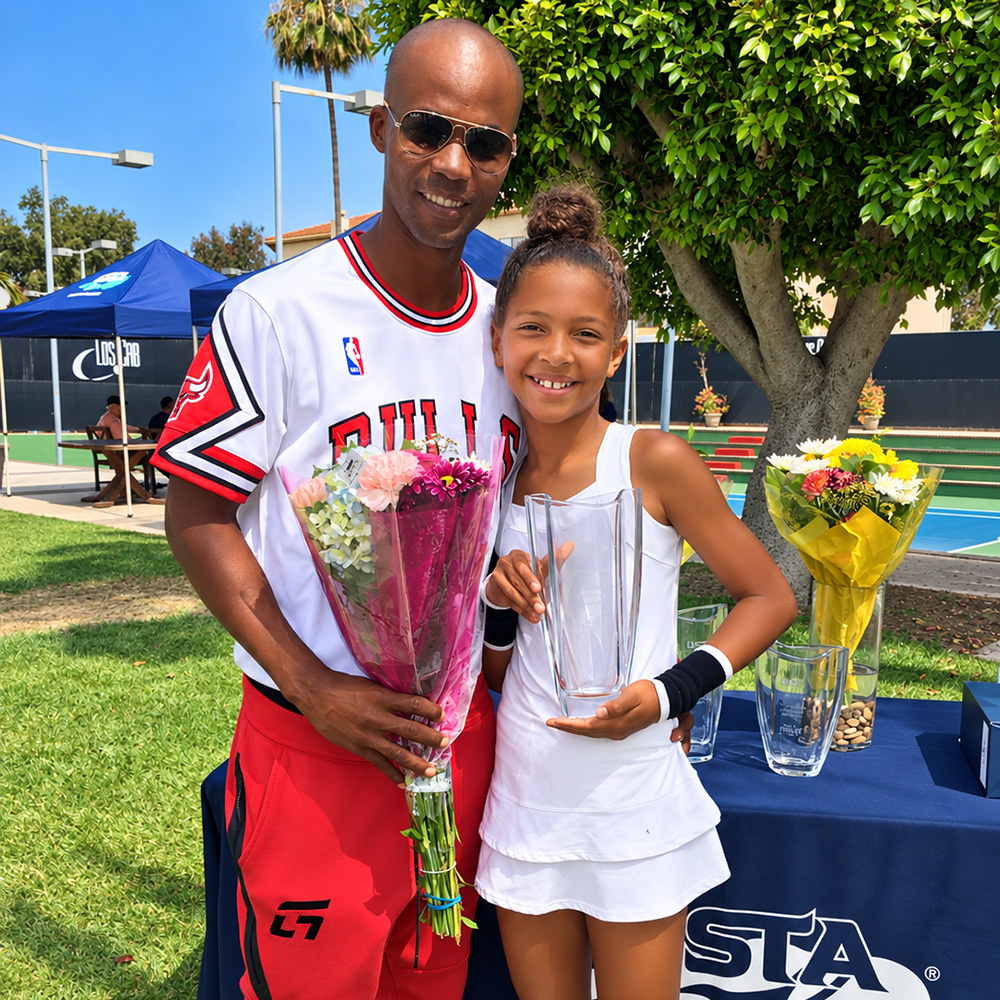
Top: Gerald Mathews; Middle: Gerald coaching Team G Tennis at Junior Team Tennis Sectionals in Palm Desert; Bottom: Gerald and Thea Frodin at USTA Southern California Junior Sectionals.
Above: Gerald Mathews, founder of Team G Tennis.
The importance of a great coach can never be overstated. Exceptional coaches do far more than just teach. As role models, they build confidence, foster meaningful relationships with the players and families, and help young athletes develop skills that serve them long after their final lesson.
For more than 25 years, Gerald Mathews has brought that philosophy to life, combining his own unconventional path to competitive tennis with a coaching approach rooted in connection, encouragement, and a lifelong love of the game. A natural-born leader, Gerald embodies the qualities parents look for in a coach and young players gravitate toward on the court. His outgoing charm and extensive playing and coaching experience make him a trusted, approachable mentor who makes learning fun. That combination is especially valuable at the grassroots level, where junior players are naturally curious, eager to connect, and often thrive in an encouraging, non-traditional learning environment.
Through private lessons, development camps, and Junior Team Tennis (JTT) programs, Gerald has helped players pursue competitive success while making tennis a welcoming, rewarding experience for athletes of all backgrounds. This Coach Appreciation Month, USTA SoCal celebrates a coach whose impact extends beyond the players he develops to the families and communities he brings together.
An Athletic Pedigree
Growing up in Texas as the son of a Yale men’s basketball player, athletic excellence was instilled in Gerald’s DNA. He competed in soccer, basketball, football, and baseball throughout his youth, but picking up tennis as a high school sophomore introduced an entirely new challenge. Without a family background in the sport or the financial means for private instruction, he had to navigate the developmental pathway on his own.
Gerald became an exceptional visual learner, studying elite players and absorbing technical nuances simply by watching others play matches. That approach, combined with training at the John Newcombe Tennis Academy the summer of his senior year, secured him a spot on the men’s varsity tennis team at Lamar University in Beaumont, Texas, where he went on to study civil engineering and business.
After graduating and working in industrial coatings, Gerald stepped away in 2000 to commit to competitive tennis fully. Mentored by former Top 100 ATP pro Grant Doyle, he pursued the professional tour, competing across the United States and spending a year training in the Czech Republic. Following his days as a player, he relocated to Los Angeles to coach alongside Doyle, bringing those international training methods directly back to Southern California junior tennis.
In those early years, Gerald focused heavily on local high school and junior competition, serving as the head coach for the boys’ and girls’ tennis teams at Calabasas High School. Under his leadership, he guided student-athletes through league play and CIF competition. In 2015, he founded Team G Tennis, a competitive athletic program and junior tennis academy based in Woodland Hills.
The Shift to a Family Mission
For its first five years, Team G operated strictly as a high-performance training hub. The COVID-19 pandemic, however, became a catalyst for the academy’s broader evolution.
As Gerald navigated the changing sports landscape, his wife, Casandra, brought her background in public relations, marketing, and operations to the business, helping expand the academy’s vision beyond elite training into a more comprehensive family-oriented program.
Meanwhile, the couple’s three sons, Grae, now in tenth grade, Gavin, in seventh grade, and Garrison, in third grade, were competing in USTA SoCal events while balancing other youth sports. Navigating the tournament scene as a parent gave Casandra a firsthand view of the emotional strain, logistical demands, and social pressures families face on the junior circuit. She also noticed a critical gap in early development: while elite training existed for older juniors, there were few engaging, team-oriented entry points for younger kids just starting out.
With Casandra’s encouragement, Gerald began re-evaluating his developmental framework, adapting his technical instruction to make early-stage tennis experiences more social and enjoyable.
“Her perspective gave me an entirely different understanding of what parents experience, including the expectations, anxiety, excitement, investment, and tremendous joy that comes with watching your child compete,” Gerald explained. “It also made us realize there was an opportunity to create something I had previously overlooked: an exceptional introduction to tennis for younger children. We could take the fundamentals that eventually create high-level players and package them within a team environment that was fun, social, and exciting. Instead of presenting tennis as an individual sport that children had to navigate alone, we could give kids a community where tennis felt cool, welcoming, and worthwhile.”
Experiencing the highs and lows of competition through his own sons further influenced Gerald’s coaching philosophy, reinforcing the importance of long-term athlete development and helping families appreciate progress beyond rankings and results.
“My sons don’t receive a free pass to becoming successful tennis players simply because their father has spent his career developing nationally ranked athletes,” Gerald noted. “Living through that journey as a father has made me a better coach. I try to help families take a longer view, to understand the process, appreciate the child they have in front of them, and enjoy watching that player develop rather than constantly worrying about where they ‘should’ be.”
Early Fundamentals to the US Open Stage
Even as Team G expanded its entry-level programming, Gerald’s foundational technical instruction continued to serve as a launchpad for top-tier talent. His long-standing work with one of SoCal’s brightest young stars, Thea Frodin, illustrates how strong fundamentals can translate into success at the highest levels of junior tennis.
Gerald first noticed Thea practicing with her father, Mathias, on the public courts. He occasionally offered small technical adjustments to help her improve, gradually building a relationship with the young player. That early rapport built a foundation of trust, and when Thea turned eight, her family chose Gerald to lead her technical development.
Over the next five years, Gerald helped Thea reach the No. 1 ranking in Southern California in the 10 and under division. She also captured the Junior Sectionals titles in singles, doubles, and mixed doubles. By age 12, Thea climbed to the No. 1 national ranking in the United States.
Her advanced skill set also led to a unique opportunity outside of traditional competition. When casting teams sought local tennis players for the film King Richard, starring Will Smith as Richard Williams, Gerald submitted photos of Thea. She ultimately portrayed a young Serena Williams on screen.
Their formal coaching relationship eventually concluded, but Gerald has continued to follow her rapid ascent. Thea went on to reach the semifinals of the Junior Australian Open, win the USTA Billie Jean King Girls’ 18s National Championship, and make her Grand Slam main draw debut at the US Open against then World No. 2 Elena Rybakina.
“Watching Thea go from those early days at the courts to competing at the US Open has been extraordinary,” Gerald reflected. “Creating a love and passion for the sport and instilling fundamentals that hold up under the highest levels of pressure, that is my passion. We hope she inspires the young kids coming behind her at Team G to see where these fundamentals can take you.”
Belonging Through Junior Team Tennis and Community
Junior Team Tennis is central to Team G’s expanded approach. Understanding that tennis can feel isolating for young competitors, Gerald and Casandra have used JTT to create a supportive team structure where wins and losses are shared collectively.
“If a child loses a match, the day isn’t necessarily over,” Gerald stated. “Their teammates are still there. Their coaches are still there. The team can still succeed. We can address what happened, encourage that player in real time, and send them back onto the court feeling supported rather than defeated. That environment builds confidence, creates friendships, and, most importantly, keeps kids in the sport.”
Alex Menichini, who joined USTA SoCal in July as the new Junior Competition & Tournaments Manager, saw that approach firsthand. Before joining the organization, Menichini spent more than three years developing top Southern California juniors alongside Gerald as Head Coach at Team G. A former DI standout at Fresno State and TCU, Menichini witnessed firsthand how Gerald’s leadership elevates everyone around him.
“I can honestly say I’ve never met a coach with as much energy and enthusiasm as Gerald,” Menichini shared. “His passion on the court is contagious, and it sets the tone for everything we do. What sets Gerald apart is his ability to connect with every single player. Whether it’s a beginner picking up a racquet for the very first time or a seasoned junior competitor preparing for a tournament, he creates an environment that is equally fun, inclusive, and challenging. He meets players where they are and genuinely gets them to fall in love with the game. Gerald doesn’t just build better tennis players; he builds confident kids who can’t wait to get back out on the court. That lasting love for the sport is the greatest gift a coach can give.”
Former students also credit Gerald with shaping their relationship with tennis. Rachel Scalera, a Marketing Coordinator at USTA SoCal who went on to play tennis at Emerson College, trained under Gerald throughout her youth in Los Angeles.
“Gerald changed my mindset about tennis, taking it from something I dreaded to something I actually wanted to be a part of,” Scalera shared. “He made an effort to connect with me as a person, and when I wasn’t excited about tennis, I still looked forward to my lessons so I could show him a new artist I was listening to and compare playlists. He made tennis cool for a lot of kids with a vision for his program that combined style, athleticism, and attitude. He’s a great person to learn from because he’s charismatic and knows how to uplift his students, but he also knows when to push you. He gave me a new level of respect for the game.”
That vision has allowed Team G to evolve into a full-scale community athletic destination in Woodland Hills. Beyond its signature junior competition and college recruitment pathways, Team G now offers youth clinics, private coaching, and adult programs designed to build physical fitness, athletic skill, and a lifelong connection to racquet sports. Today, Team G fields JTT squads across multiple divisions, welcoming young athletes from all sports backgrounds into a structured, encouraging space.
Gerald’s impact also extends section-wide. This year, he was chosen as one of four highly regarded coaches to lead players at the Kats Cup, USTA SoCal’s marquee intersectional team event bringing together top 12-and-under players from across western sections.
Off the court, Gerald’s outgoing personality and encouraging demeanor carry over to Team G’s social media platforms, where he shares instructional drills, highlights of player milestones, and positive life advice. Together with Casandra, he also ensures the program remains flexible for families seeking high-quality training without cost barriers.
For Gerald, the ultimate measure of success extends far beyond tournament trophies or national rankings.
“We don’t sell families a dream that their child has to become a professional tennis player for this journey to be worthwhile,” Gerald emphasized. “We strive toward college tennis for players who want to pursue that path, while standing firmly on something even bigger: the lifelong health, discipline, confidence, friendships, and opportunities this sport can provide.”