

& Journey of Paul Annacone
USTA SOUTHERN CALIFORNIA
USTA SOUTHERN CALIFORNIA
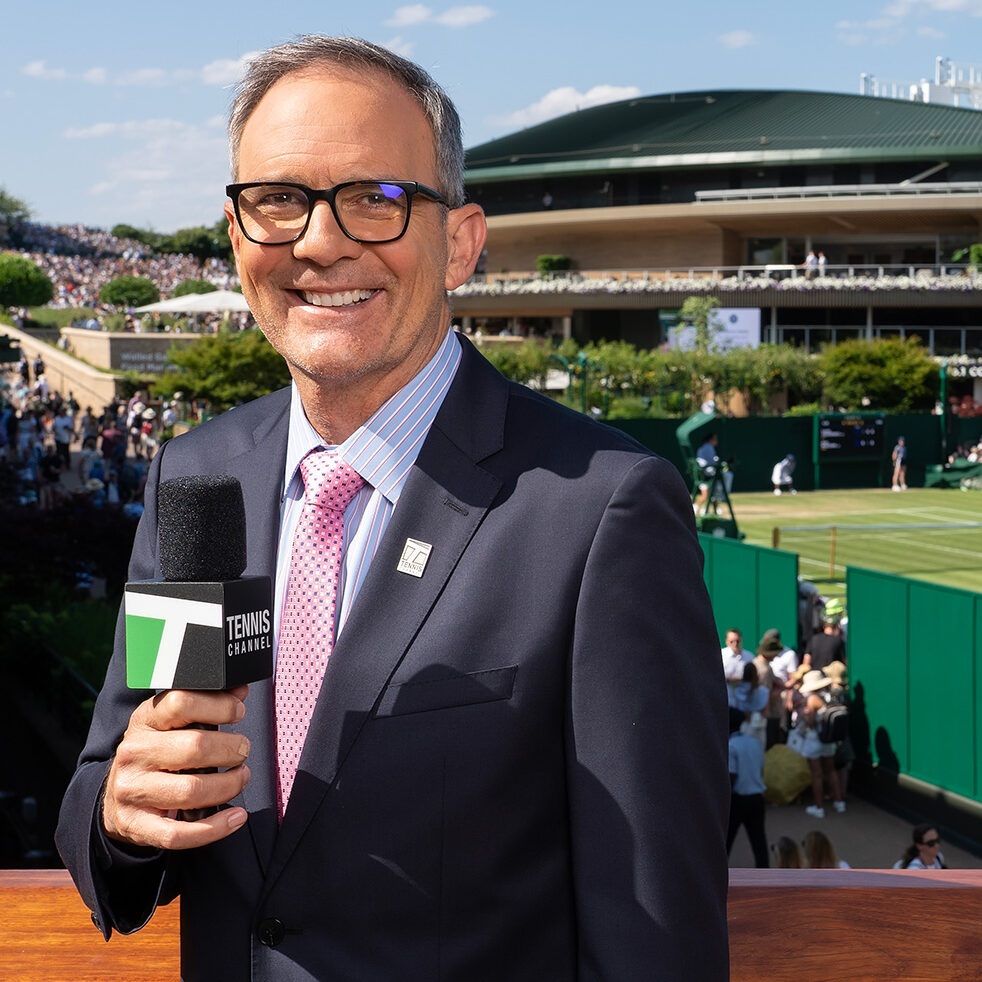
Top: Tennis Channel’s Paul Annacone poses at the2023 Wimbledon Championships. (Photo – Fred Mullane)
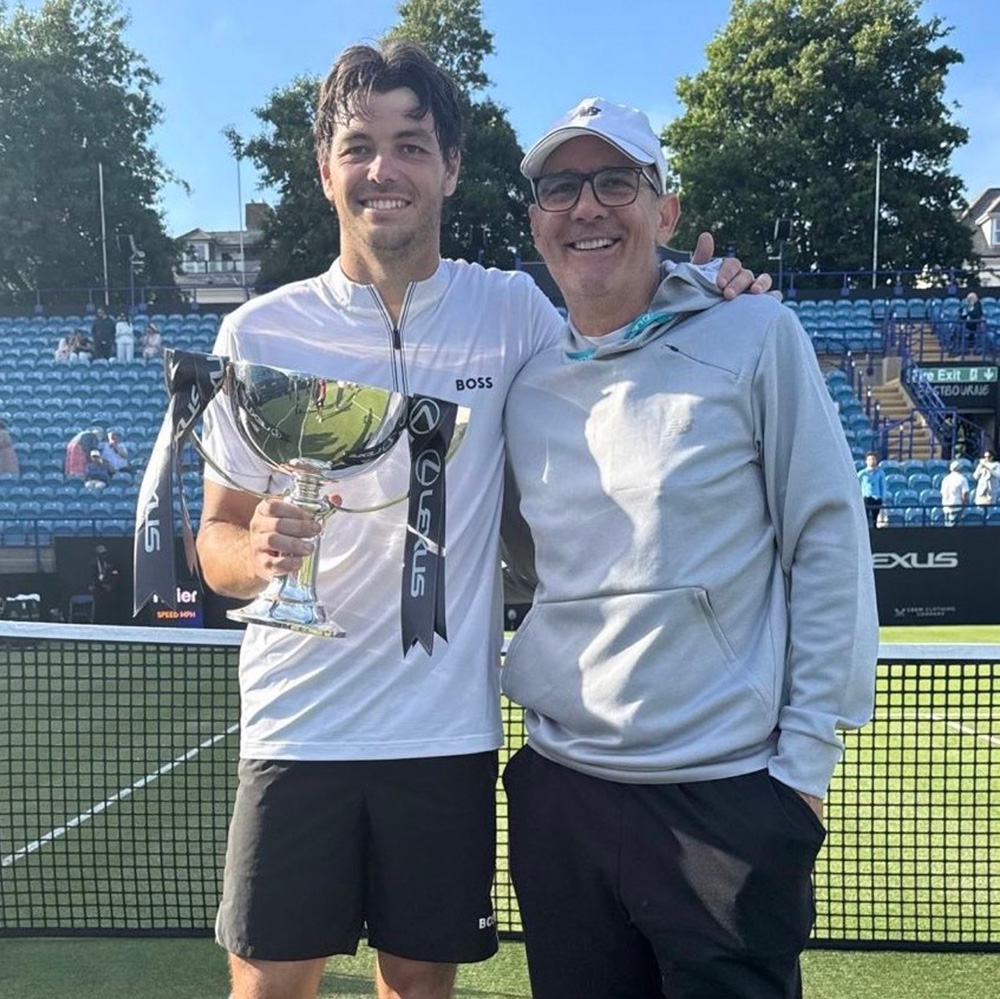
Middle: Taylor Fritz and Paul Annacone celebrate after Fritz captured his third Eastbourne title. (Photo – Paul Annacone via Instagram.)
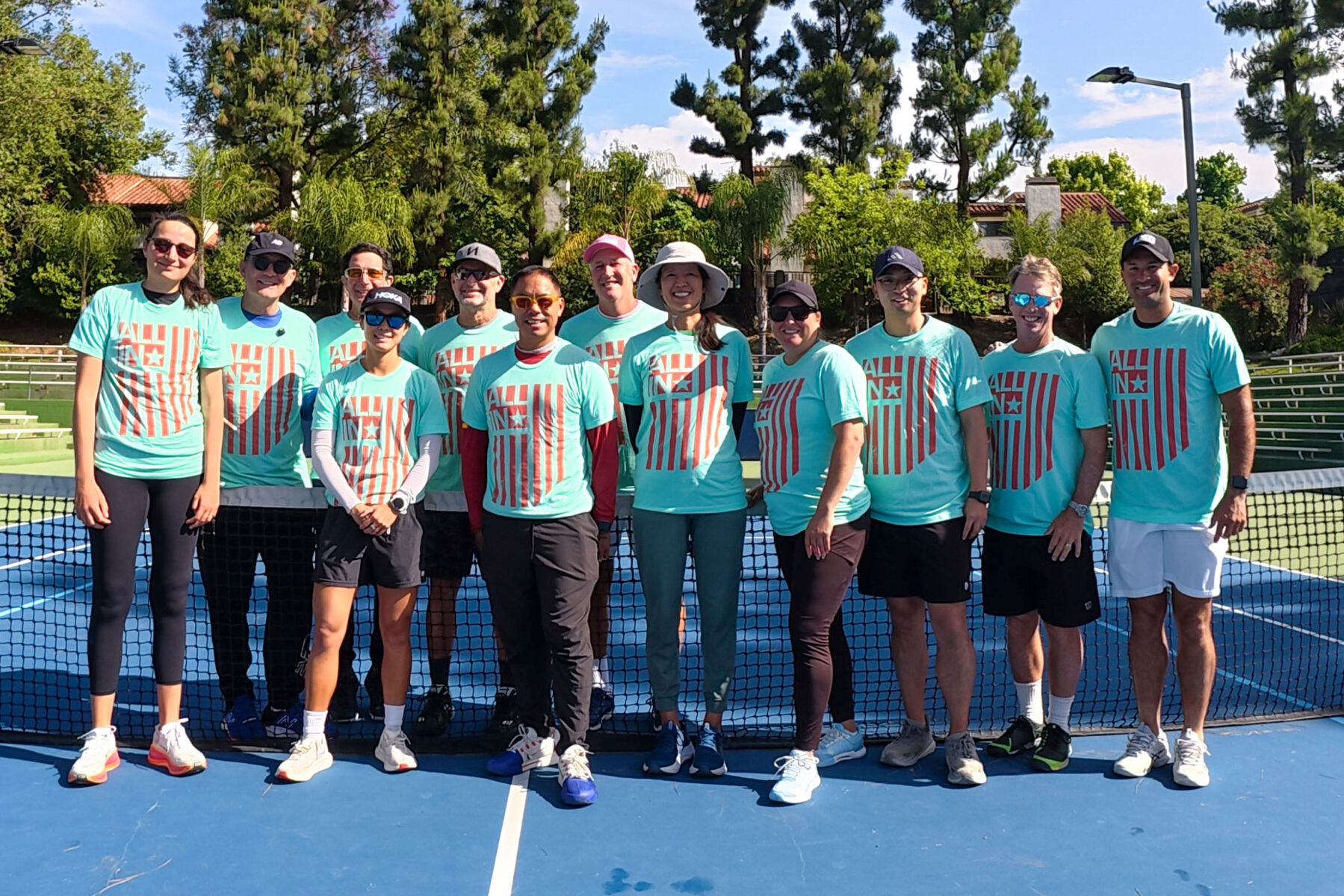
Bottom: Paul Annacone at the 2026 National Player Development Section Camp.
Tennis Channel’s Paul Annacone poses at the 2023 Wimbledon Championships. (Photo – Fred Mullane)
A lazy way to define coaching is to see it as autobiography: play like me. This is light years away from Paul Annacone’s approach. Over the course of a pro career that took him as high as No. 12 in the world in singles and No. 3 in doubles, the cornerstone of Annacone’s game was a relentless emphasis on net-rushing. Besides serving and volleying, Annacone consistently came forward on his returns, the classic chip-and-charge maneuver that remains useful but is scarcely seen in contemporary tennis. To the great annoyance of his opponents, Annacone deployed that tactic much more often than his fellow net-rushing peers.
Rather than impose his personal array of tactics, Annacone seeks to grasp a player’s identity. As an example, consider two players Annacone has worked with, Pete Sampras and Taylor Fritz. Both are tall, Southern California-raised big servers, each keen to crack the ball powerfully. But while Sampras built a playing style based heavily on charging forward to volley, Fritz generally prefers commanding rallies from the baseline. Aware of this, Annacone adapts accordingly, while still aware of what it takes to succeed at the very highest levels of the game.
Following a day of work commentating for Tennis Channel, Annacone shared his views about coaching. “The biggest thing about being a successful coach,” he said, “is the ability to understand the person you’re coaching … and have an antenna up so that you can read the room and understand when it’s time to listen and fully grasp what the player’s feeling, because it’s not a two plus two dictatorial situation. It’s a malleable conversation.”
“Paul is very calm, very positive, pretty analytical,” said former top pro and former Davis Cup captain Tom Gullikson. The kinship between the Gullikson family and Annacone was shaped by unusual circumstances. Gullikson’s twin brother, Tim, had started coaching Sampras in 1992, greatly helping him reach the number one ranking the next year. But in January 1995, during the Australian Open, Tim was suddenly taken ill and needed to leave Melbourne immediately for medical tests — tests that revealed he had brain cancer. Amid Tim’s jarring exit, Annacone began to help Sampras, initially as the on-site extension of Gullikson. Over time, as Gullikson’s health declined, Annacone’s role grew. “Timmy helped Paul learn a lot about coaching,” said Gullikson.
From 1995 to 2002, save for a short period in early ‘02, Annacone was the man in Sampras’ corner. During that time, Sampras won nine Grand Slam singles titles. So close were the two that when Sampras was inducted into the International Tennis Hall of Fame in 2007, he chose Annacone to introduce him.
“Paul would get to know me better than anyone else as a tennis player,” said Sampras during his induction speech. “We had a very unique relationship — one that I think is very rare to find. Paul knew how to really keep things simple and how to — how to downplay things rather than ramp up an occasion. We really clicked that way.”
Several years later, from 2010 until 2013, Annacone aided Roger Federer, including being front and center when Federer regained the world No. 1 ranking in 2012 after a two-year absence from the pinnacle.
In addition to Fritz and those two all-time greats, Annacone has coached former British No. 1 Tim Henman and another Southern California-based pro, 2017 US Open champion Sloane Stephens.
One major reason why Annacone appears so natural and fluid as a coach is that his parents, Dominic and Cathy, were both educators. Talk with Annacone for five minutes and you’ll instantly encounter a persona that’s cordial, curious, and quite generous when it comes to giving credit to those who’ve aided his growth. Significant tennis-life mentors for Annacone in his early years growing up on Long Island include Whitey Josyln, Andre Dupre, Paul Masters, and Don Brosseau.
Added to the educational mix: Annacone’s older brother, Steve, a fine player who began coaching at the super-early age of 14 and went on to coach Paul for seven years. “Paul and I were doing a lot of things by trial and error,” said Steve. “He’s continually learning from all the things he’s gone through … He’s really adapted well to each player that he’s worked with. So I think his adaptability and ability to continue to learn over a period of time is really what’s made him successful.”
A major moment also came in the late ‘70s, when the teenaged Annacone was among the first students to train at the startup tennis academy created by the distinctly passionate and motivational coach, future Hall of Famer Nick Bollettieri. “Whenever the kids saw Nick barrel through the doorway and the courts, the whole place changed,” said Annacone. “Nick was a master at imposing discipline, albeit through fear, but anyway, it always worked. Suddenly there were no sloppy shots, no more fooling around — it was all work, no play, but it was also incredible to see so many kids snap to attention and play their best.”
Following his formative years in Long Island and with Bollettieri, Annacone — by then one of the top 20 juniors in the U.S. — went off to the University of Tennessee, where he played for a Bollettieri close friend and business partner, Mike DePalmer, Sr. According to Annacone, DePalmer “was kind of a father figure, coach, mentor, friend, and sports psychologist all in one.” As one example, in the spring of 1984, at the end of Annacone’s junior year, he was one of the favorites to win the NCAA singles title. But he was upset in the quarterfinals. Despondent over this result, Annacone turned to DePalmer. “He basically said to me, ‘you’ve done all this work, an unbelievable amount of work … it’s going to jump out before you know it.”
Annacone also learned much during that time from Noel Blundel, a sports psychologist. “I didn’t understand back then how the mind drove the body and how that can help you deal with pressure,” said Annacone.
A few weeks following the ’84 NCAAs, ranked 243 in the world, Annacone caught fire at his Wimbledon debut, winning three matches to qualify and another four in the main draw before losing to Jimmy Connors in the quarterfinals. Just over a year later came more great results. In September ’85, at the tour stop played on the UCLA campus, Annacone won his first ATP singles title, in the final beating top tenner Stefan Edberg in a third-set tiebreaker. The next month came another singles victory, this time in Brisbane. And in December, Annacone and Christo van Rensburg won the Australian Open men’s doubles championship. By the time Annacone retired from the ATP Tour in 1993, he’d won three singles and 14 doubles titles.
For the last five years, Annacone has worked as a consultant for the USTA Southern California section, helping Dianne Matias, USTA Southern California Director of Junior Tennis, and Jason Cook, USTA Southern California Manager of Junior Team Tennis. “I like to be a sponge and listen and learn,” said Annacone. “When I go to the [Early Development] camps with Dianne and Jason, all the great coaches in Southern California, I listen and try to learn what some of the common issues are for juniors.”
“For me it’s all about storytelling and studying what the great players of today are doing to succeed,” said USTA Southern California Executive Director Trevor Kronemann. “When it comes to all of that, Paul brings so much that helps our juniors improve.”
“It’s very different being a coach than a player,” said Annacone. “As a player, you’re in control. As a coach, you’re trying to get messaging across right, and that is a very different dynamic.” Difficult as that might be, the evidence shows that, like the volley-based points Annacone played again and again and again, his messages are often brief — but like a good volley, consistently sharp and effective.