

The Great Neutralizer: Ralph Nunley
USTA SOUTHERN CALIFORNIA
USTA SOUTHERN CALIFORNIA
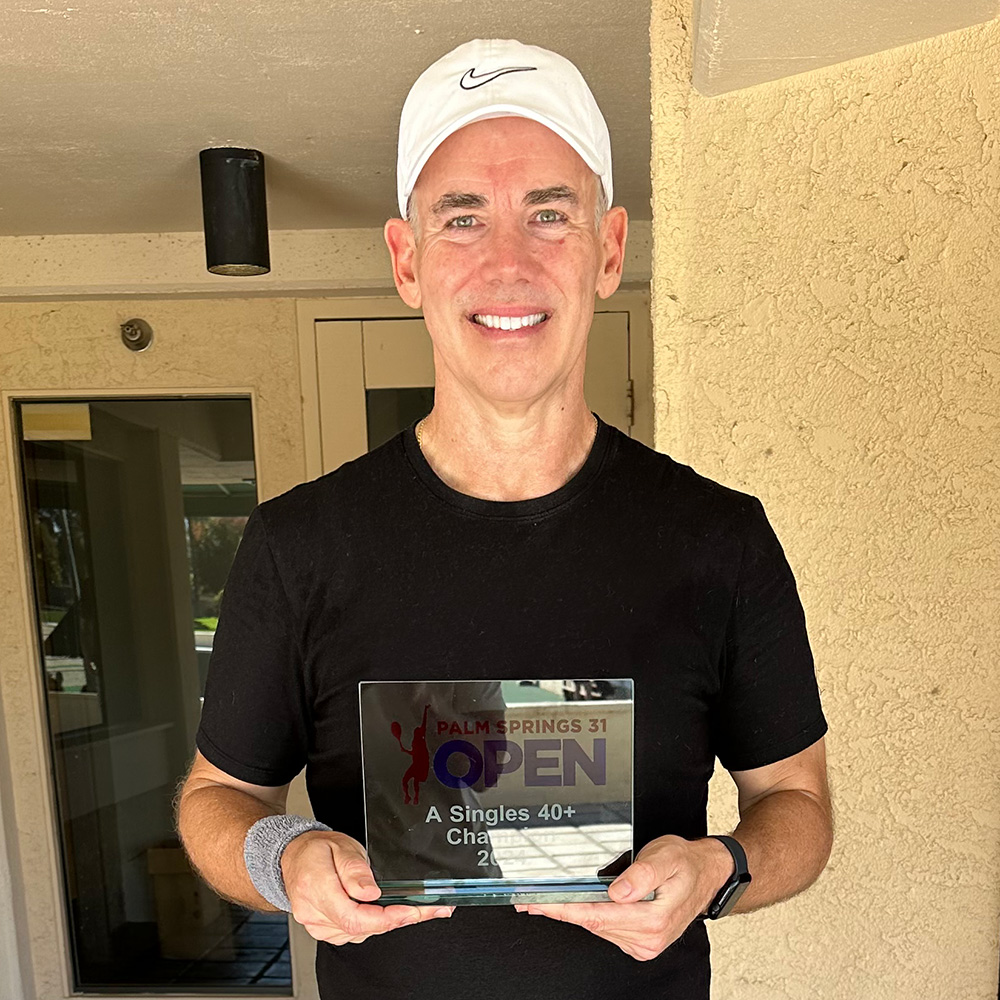
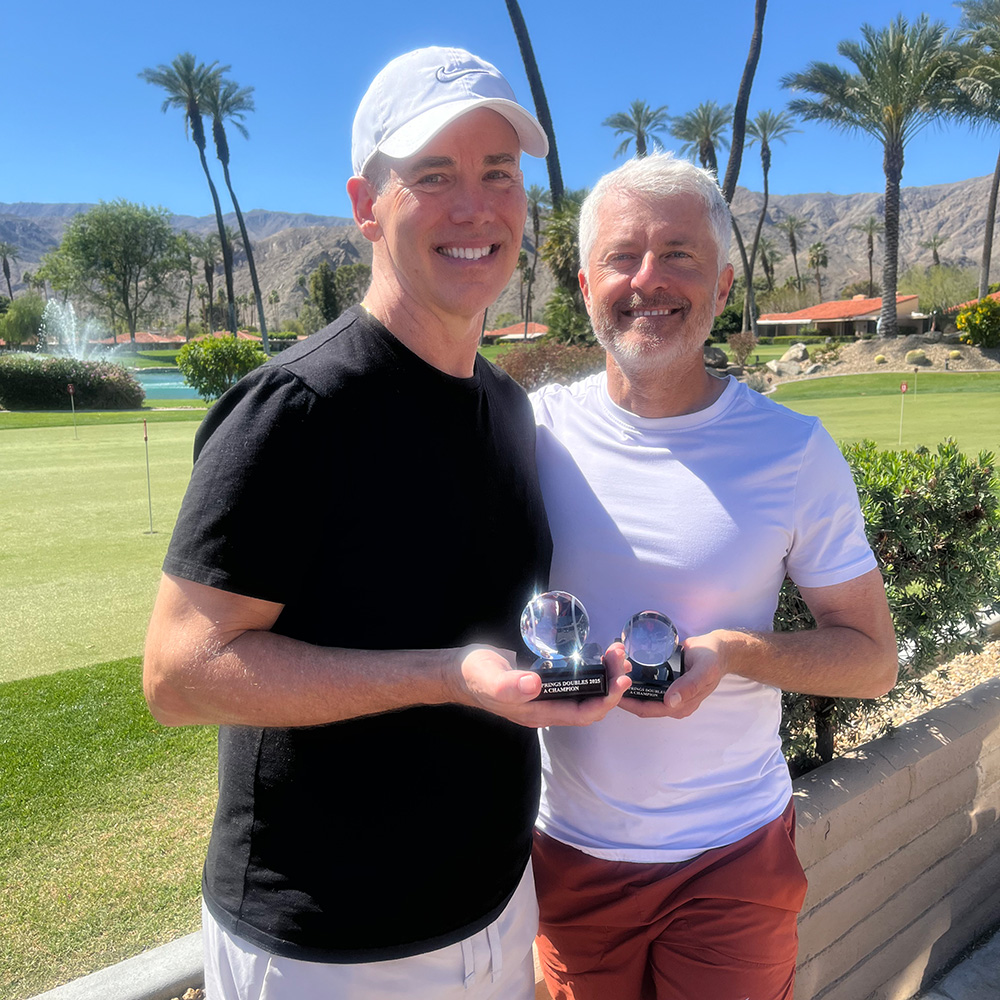
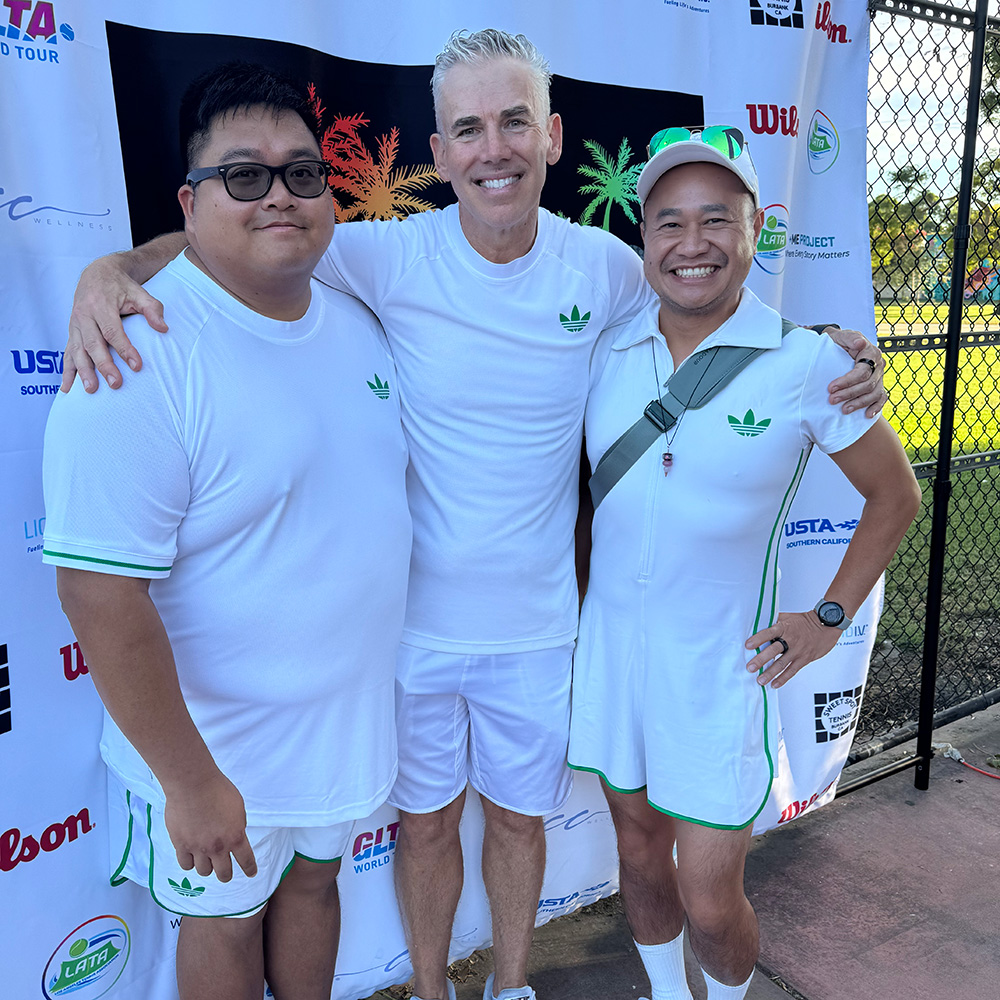
Ralph Nunley competing in USTA Adult League and LATA events.
Ralph Nunley competing in USTA Adult League and LATA events.
For most of the world, 2:55 PM is the mid-afternoon slump. For Ralph Nunley, it’s breakfast time.
Ralph lives a life of sharp contrasts. By night, he navigates the high energy world of the graveyard shift at Commerce Casino, located just minutes from Downtown Los Angeles. It is an environment of controlled intensity, hushed concentration, and the rhythmic sound of cards hitting felt. By day, he is one of the most vibrant and tactically sharp fixtures of the Southern California tennis scene. The transition from the casino floor to the sun drenched courts of Bellflower is more than a change of scenery. It’s a homecoming.
When Ralph steps onto the tennis court, he isn’t just playing a match. He enters what he calls a “neutralizer.”
“Tennis has always been a safe space, a distraction, and a relief,” Ralph says. “You can go pick up a ball and spend two hours just not thinking about whatever it is you are bothered with. It is like a cleansing sort of thing.”
For more than three decades, Ralph has balanced his love of tennis with a schedule that runs opposite of most of the world. Working overnight hours often means eating breakfast when others are preparing dinner and constantly adjusting sleep, recovery, and training around an unconventional routine.
Ralph jokes that he is still trying to figure out how to live like a vampire. In recent years, he has doubled down on his health, adding regular gym workouts several days a week to complement his tennis schedule and maintain the fitness necessary to compete at a high level.
Whether he is coming off a long shift, navigating life’s challenges, or preparing for a pressure-filled league match, tennis remains the place where everything else can temporarily fade into the background.
The Shadow Captain
Ralph’s tennis journey didn’t start at a prestigious academy or private club. Growing up in a working class household in Los Angeles, access to tennis wasn’t always easy. Instead, it started against a building wall on his street, where he spent countless hours hitting balls by himself because the nearest public courts were too far away.
Without private lessons, elite training programs, or many of the resources available to young players today, Ralph learned through repetition and persistence. The hours spent alone with a racquet taught him self-reliance and patience, qualities that would later become defining traits both on and off the court.
That solitary kid grew into a man who eventually found his tribe through the Los Angeles Tennis Association (LATA) after seeing an ad in the Frontiers magazine, a longtime publication that served the LGBTQ+ community in Los Angeles during a time when safe and welcoming spaces were often difficult to find outside the city’s nightlife scene.
Back then, the traditional social scene for a gay man in Southern California was heavily centered around the club scene and nightlife. While Ralph was doing his share of partying like any normal 20-year-old, he found that the environment could easily skew toward the unhealthy side. Discovering LATA completely changed his trajectory because it introduced him to a healthier, more grounded side of the LGBTQ+ community. Tennis provided a common bond and a productive outlet that clubs simply couldn’t match, allowing him to surround himself with athletic, like-minded people who quickly became his closest lifelong friends.
Once he found the social tennis community, Ralph immersed himself completely. He became what he calls a “monster,” playing six days a week.
While Ralph briefly explored the world of USTA officiating, he realized his true calling wasn’t behind a stoic chair, but in between the court lines with his teammates. His “transparent and outspoken” nature, the very thing that made him a challenging fit for the quiet neutrality of officiating, became his greatest asset as a “Shadow Captain.”
On his birthday, Ralph was paired with fellow USTA Community Tennis Coordinator, Bryan Hudson when their opponent called a ball out that was obviously in on set point. While Bryan calmly called for a line judge, Ralph spoke his truth directly, refusing to let his team get quietly cheated.
“I kind of lost my mind a little bit,” Ralph laughs. “I don’t deal with that well. But Bryan and I completely bonded from that moment. We won the ten-point tiebreaker, and I ended up winning on my birthday.”
Ralph is often the strategist for the team behind the scenes, helping captains think through lineups, matchups, and which players are mentally prepared to handle the pressure of Line 1. For him, leadership is less about authority and more about creating an environment where teammates feel supported and valued.
A Second Birth at 4.0
After a six year hiatus from USTA Adult League play, Ralph found himself wondering the same thing many longtime athletes eventually face: could he still compete the way he once had?
He continued hitting recreationally during the break for fun, but the pull of true competition never fully disappeared. When he stepped away from a previous management position a few years ago, the added time allowed him to rediscover his “obsession” with the sport.
Still, returning to league tennis in his 50s came with uncertainty. Would his body cooperate? Could he still handle singles against younger opponents?
The answer came during a stacked USTA league season where Ralph did more than hold his own; he went undefeated in singles and finished with a staggering 86% game-winning percentage. It was defining validation that confirmed his strategic depth and physical grit hadn’t gone anywhere.
“It was a second birth of competitive tennis,” Ralph reflects. “It was really nice to know that maybe my game is not exactly like it was in my 20s, but I can still play.”
Ralph describes his game as a “retriever” style inspired by pros like Agnieszka Radwanska and Monica Niculescu. He plays with a level of unpredictability that can feel like “absolute torture” for opponents who aren’t used to his variety. He relies on a heavy mix of slices and drops, keeping the ball in play until the other side of the net eventually cracks under pressure.
For Ralph, aging in tennis has not meant slowing down. It has meant learning how experience, strategy, and discipline can sharpen the game in different ways.
Tennis and Mental Health
Beyond the competition, tennis plays a large role in his mental health, becoming one of his most important outlets for managing stress and staying grounded. He describes the court as a “distraction” and a “relief” from life’s stressful moments.
“Hitting a ball for two hours and spending that time not thinking about whatever is bothering you… it gets your endorphins up,” Ralph explains. “Sometimes even after tennis, you’re like, ‘Well, that wasn’t really that big of a deal.’ It’s a cleansing sort of thing.”
For Ralph, league tennis is not defined by trophies or medals as much as the emotional reset that comes with stepping on court. The combination of movement, competition, camaraderie, and focus creates a rare environment where daily pressures temporarily fade into the background.
That feeling is part of what made tennis so meaningful when he first came out.
Pride and Perspective
For Ralph, tennis offered something different from the social environments that often defined LGBTQ+ life when he was younger. The court became a place where identity existed alongside competition instead of overshadowing it.
While Ralph believes tennis has made tremendous strides in creating welcoming spaces, he also recognizes there is still work to be done. He notes that transgender inclusion remains a complicated topic throughout the sport and that many transgender players often feel more comfortable competing within LGBTQ+ focused organizations than in traditional league environments.
For Ralph, the solution begins with creating spaces where every player feels respected, supported, and confident enough to participate. It is an extension of the same community minded philosophy that first drew him to tennis decades ago.
Although Ralph says he has only encountered a handful of derogatory remarks throughout his life, none of which occurred on a tennis court, he remains a fiercely vocal advocate for his community. He describes himself as a “people person,” but one who is not afraid to speak up when he sees something wrong. That experience helped shape his belief that the sport has a unique ability to bring people together across backgrounds and identities.
Living in Southern California, which Ralph refers to as a “gay paradise,” has also influenced his perspective on Pride Month and representation within tennis communities.
“I’ve been on teams where the captain is gay and picks most of the roster from LATA, so we essentially become ‘the gay team’ in adult leagues,” Ralph explains. “But I’ve also been on teams that aren’t like that at all. In the end, it feels the same. Whether you’re from a specific community or a specific city, it’s just a personality thing. We’re all on the same team, and tennis has a way of neutralizing those differences.”
He recognizes that while visibility remains a vital lifeline for those living in less diverse regions of the country, the diverse fabric of Southern California often makes the court feel like a true neutralizer where identity takes a backseat to team dynamics.
Community, Mentorship, and the Road to Valencia
Much of Ralph’s sense of pride is rooted in a deep loyalty to the organizations that shaped his tennis life, particularly the LATA and the Gay and Lesbian Tennis Alliance (GLTA). He views these spaces as essential “breaking in points” for LGBTQ+ tennis players who might feel hesitant or intimidated to join a traditional league environment for the first time.
His commitment to this community is best seen in his relationship with his longtime friend and “tennis idol,” Norm Tucker.
Thirty years ago, Norm was Ralph’s first tournament opponent. Ralph still remembers how welcoming Norm was throughout the match, even while Ralph was winning. Decades later, the journey came full circle when Ralph nominated the now 80 year old Norm for the LATA Sportsperson of the Year award, an honor he ultimately received.
While Ralph has already achieved a great deal, including a trip to USTA Nationals in Tucson, Arizona, his eyes are now set on a global milestone: competing at the 2028 Gay Games in Valencia, Spain.
He previously had to cancel a planned trip to the Gay Games in Guadalajara while caring for a sick pet, making Valencia feel even more meaningful.
Whether he is helping a nervous newcomer warm up before a match, diagramming doubles strategy late into the evening, or squeezing in court time between overnight shifts, Ralph Nunley continues to show up for the communities that shaped him.
Decades after first hitting tennis balls against a neighborhood wall, he still returns to the same feeling that drew him to the sport in the first place. Tennis remains his great neutralizer, a place where work schedules, personal stress, age, and identity briefly fade into the background. For a few hours, the noise quiets down, the outside world slows, and everyone on court is simply trying to win the next point.