

Where Passion Meets Profession: Trey Mihal’s
Advocacy Through Tennis
USTA SOUTHERN CALIFORNIA
USTA SOUTHERN CALIFORNIA
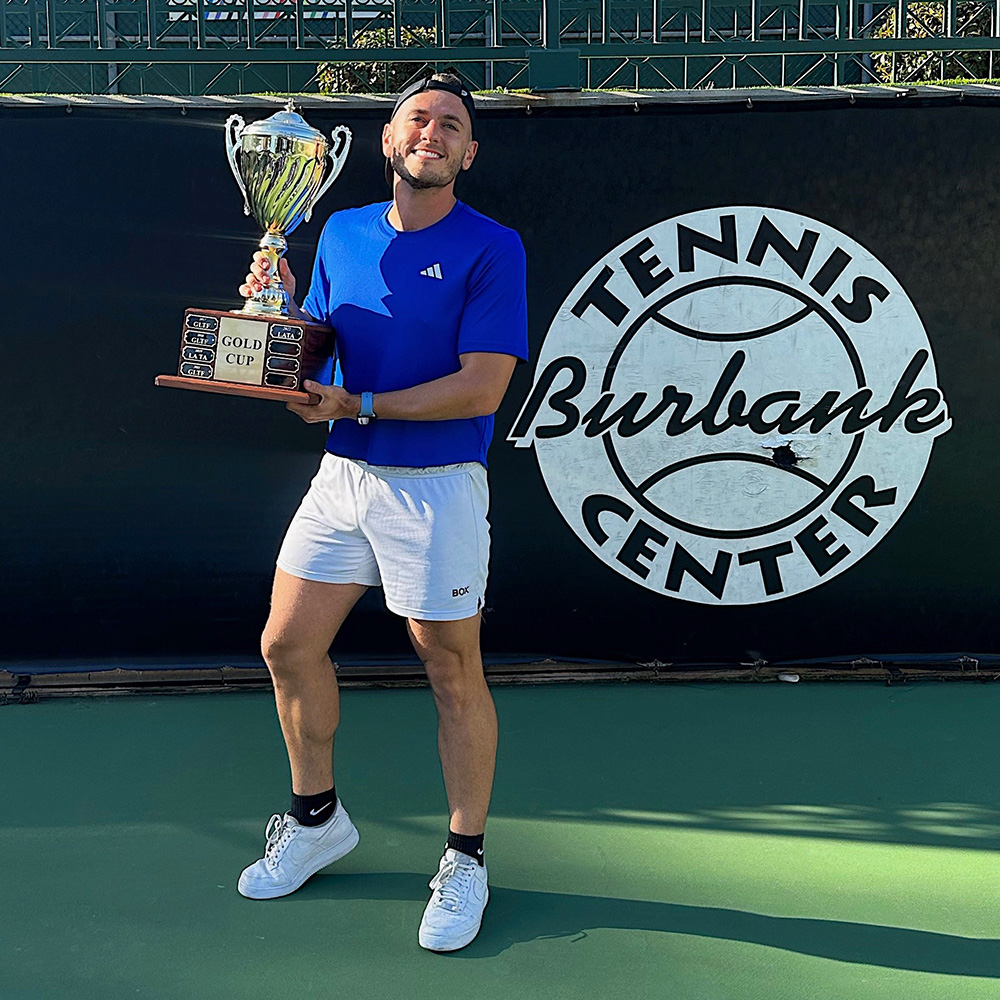
Top: Trey Mihal at Burbank Tennis Center.
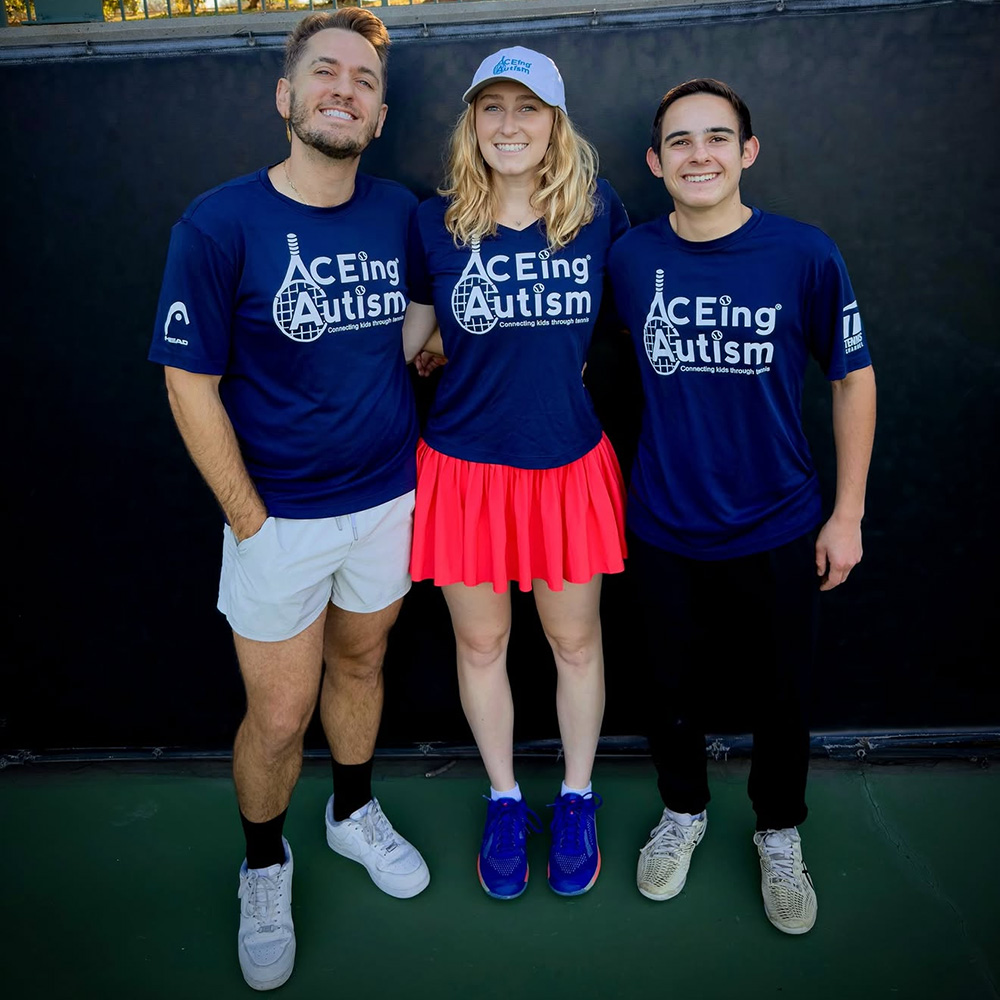
Bottom: Southern California Regional Program Directors of ACEing Autism: Trey Mihal, Brooke Fennell, and Seth Lindenfeld.
Across Southern California, Trey Mihal, 33, is helping redefine what intentional inclusion looks like. As a Program Director and Regional leader with ACEing Autism, Board Certified Behavior Analyst at Easterseals Southern California, and avid adult league player, Trey brings a unique blend of clinical expertise and personal passion to his work. These roles allow him to bridge evidence-based practices with community-driven programming, creating environments that are not only accessible, but purposely designed to support individuals of all abilities. In recognition of Pride Month, Trey’s leadership highlights the importance of visibility, representation, and affirming spaces on and off the court.
Rediscovering Tennis
Trey’s relationship with tennis began in childhood. At eight years old, he picked up a racquet after moving into a new neighborhood in San Diego, initially as a way to make friends. What started as a social outlet quickly became a genuine love for the sport. He played competitively through high school, but his tennis journey paused when his college didn’t have a team.
It wasn’t until his move to Los Angeles in 2021 that he rediscovered the sport. Seeking friendship in a new city, Trey joined the Los Angeles Tennis Association (LATA), a long-standing non-profit tennis organization serving the LGBTQIA+ community. The experience reignited his passion—not just for playing, but for what tennis can represent.
Now a USTA 4.0 player competing in leagues and tournaments, Trey enjoys the “mental puzzle piece” of the sport as well as creating real-time strategies against opponents. A singles and doubles player, he especially enjoys doubles as of late because of the camaraderie and partnership it brings. “There’s a real sense of security in doubles. It eases the pressure of having to solve every problem by yourself in the heat of the match,” he shares.
For Trey, organizations like the LATA and USTA are important advocates in pushing for continued pride visibility and representation in tennis.
“I think [Pride Month visibility] creates spaces that let others know they are accepted and welcome, no matter their sexual orientation or gender identity. Representation matters more now than ever; it’s about being able to step onto the court as your most authentic self,” he says.
“Having that visible inclusion really matters because when you see the Pride flag alongside the USTA logo, it reaffirms that this is a safe space where you can come and be yourself, free of judgment. While we’ve come a long way, there is still work to be done to ensure everyone in our community truly feels accepted. That is why we keep pushing for visibility—so that every person can live authentically and love freely.”
Two Worlds Colliding
That sense of belonging became the bridge to Trey’s work with ACEing Autism, a non-profit organization dedicated to helping kids with autism grow and thrive through affordable tennis programming. While playing in a LATA club tournament at the Burbank Tennis Center, he noticed a banner for ACEing Autism. A quick search revealed something that immediately resonated: a program combining tennis with support for individuals on the autism spectrum. “I was already working professionally with kids and teens on the spectrum. So I thought, how cool that this is both of my passions. I need to learn more about this right away,” he recalls.
As a Board Certified Behavior Analyst, Trey has worked with autistic individuals and their families for over 10 years. ACEing Autism created an opportunity for him to merge his professional expertise with his love for tennis. He began volunteering in Spring 2022, and within months, his skillset and natural leadership led him to become a Program Director for the Burbank program.
In this role, Trey balances both on-court leadership and behind-the-scenes administration to ensure clinics run smoothly. He focuses on supporting players who need assistance and coaching volunteers on strategies to help each student succeed. The program serves a wide range of participants, from children as young as five to teenagers up to 18, spanning all skill levels while meeting individualized needs.
“We’re really able to meet each of our athletes where they’re at and make the skills easier or more challenging based on that particular athlete’s skill level,” he says. “I think that makes ACEing Autism really special and provides an opportunity for participants to be able to try something new for the first time.”
That impact is felt not only by participants, but by families and staff as well. “Trey brings an unmatched energy and passion to his work in tennis and autism,” says Justin Belisario, Director of Program Operations at ACEing Autism. “He has such a fun personality that all of the families at the Burbank program enjoy! He is a hard-working individual who puts his athletes first.”
Scaling Impact Regionally
Beyond Burbank, Trey’s influence extends across Southern California and neighboring regions in his primary role as Regional Program Director. He helps launch new ACEing Autism programs, trains volunteers, and supports existing sites through regular visits and evaluations. This broader perspective allows him to share best practices across programs while continuously refining his own.
His leadership has also played a role in increasing visibility for athletes on the spectrum. Through his involvement with USTA Diversity, Equity, and Inclusion initiatives, Trey helped spearhead one of the first Adaptive Unified/Up-Down Tournaments last year in Southern California—introducing many to the concept of unified doubles, which pairs an athlete with disabilities and a partner without.
“Trey has always advocated for inclusion specifically for those with autism,” Justin notes. “He was a key champion who spearheaded our first USTA SoCal adaptive social event last year. He continues to highlight what athletes on the spectrum can do and helps them achieve their potential.”
Trey recalls one particularly special moment from that event, when a father and his intellectually disabled son shared the opportunity of competing together for the first time.
“The dad came up to me at the end of the tournament and said, ‘Just so you know, I was a nationally ranked junior player growing up, so tennis has always been a big part of my life,’” Trey recalls. “He had thought the opportunity to play tennis with his youngest son was something he wasn’t going to be able to do. And it was as a result of this opportunity that they were able to live out that dream of being in a doubles tournament together. It was really special. To this day I still get goosebumps. The dad even said it was the most connected he had ever felt with his son in his 16 years of life. So just being able to be a part of those experiences really drives me to keep going and wanting to create more opportunities for other parents and participants.”
A Career Felt Personally
Trey’s work at Easterseals Southern California provides the foundational component to his work on court. Inspired by his sister’s experience navigating life with a learning disability, he has made it his mission to create spaces where everyone has access to opportunities regardless of physical or mental ability.
“Growing up and seeing my sister not have as many opportunities as others—having trouble finding a community and access to different services—I knew I wanted to support and be there for others that had similar needs to her,” he shares.
That perspective directly informs his professional approach. As an ABA Assessor, he conducts intake interviews, observes participants in real-world settings, and develops comprehensive, strength-based reports that guide support plans. His background in behavior analysis allows him to break down complex skills into manageable steps, use clear and concise communication, and implement evidence-based strategies like prompting and reinforcement. On the court, that might translate into honing in on a participant’s specific interest as motivation to complete a drill. Off the court, it means building rapport and fostering belonging.
Meeting Athletes Where They Are
Trey’s experience as an ABA positively shapes his approach to coaching athletes on the spectrum, giving him a unique ability to adapt instruction in real time and create an environment where every athlete can build confidence and feel supported.
“Trey is a professional who understands individuals with autism and can provide the best support that each person needs,” Justin says. “He has a long history of being in multiple roles in the autism field and brings that expertise with him on the court when running our program. Given his tennis background, he is able to adapt multiple tennis activities to meet the level of each participant.”
“I think it allows me to really pick up on cues and know how to break down some skills to make that athlete more successful in what we’re doing…and really stepping in to create a space where they can be themselves,” Trey adds. “Creating a space that is fun and safe allows for comfort, which builds the perfect foundation to teach something new.”
A Life of Service
As an LGBTQIA+ leader and devoted advocate, Trey’s story is one of rediscovery, service, and intentional inclusion. In tennis, that means advocating for more adaptive tournaments, creating personalized strategies for students, and increasing awareness of inclusive programming. This Pride Month, Trey is a true example of creating authentic spaces where athletes and families feel seen and safe being themselves.