

Dwight Kuhlman’s Multi-Faceted Journey
Into Officiating
USTA SOUTHERN CALIFORNIA
USTA SOUTHERN CALIFORNIA
Top: Cecil Mamiit with his family at the Burbank Tennis Center; Bottom: Mamiit served as a hitting partner for Maria Sharapova during her French Open victory.
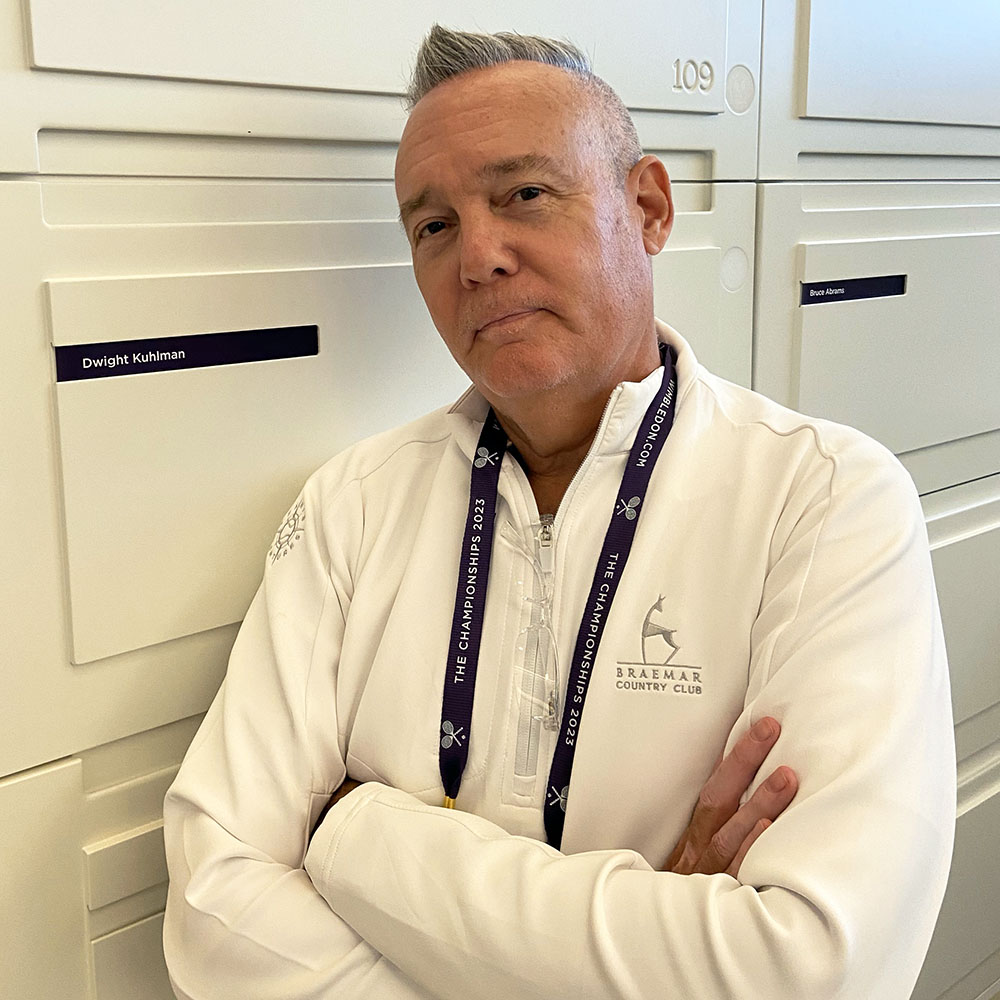
Throughout much of his life, Dwight Kuhlman has been driven by creativity, building a career rooted in radio production, voice acting, and bringing ideas to life across a wide range of mediums. While those pursuits remain central to who he is today, Dwight has recently embraced a new venture in officiating that, at first glance, seems far removed from his artistic background.
A certified USTA Official since March 2024, Dwight has quickly established himself as one of Southern California’s most reliable and respected umpires. In just over two years, his dedication and leadership have already made a lasting impact. He was named the 2025 USTA Southern California Shadow Mentor of the Year, an honor recognizing an official who excels in guiding and supporting new officials through their training.
As part of USTA Officiating Appreciation Week from April 19 to 25, we proudly recognize officials like Dwight, who uphold fairness, integrity, and sportsmanship at every level of play. These individuals play a key role in the sport, shaping the experience for players, families, and the broader tennis community. Dwight’s path is a clear example of how varied life experiences can translate into effective contributions on the court.
Early Influences
Although Dwight has spent most of his life in Southern California, his story began in the Midwest. Born in Lafayette, Indiana, while his parents attended Purdue University, he moved frequently throughout his childhood, living in seven different states before eventually settling in the San Fernando Valley at age 17. That constant change helped shape his adaptability and comfort with new environments.
Sports and music were central to Dwight’s upbringing, as he competed in football, baseball, basketball, and track while also exploring music, playing guitar, singing, and performing in bands. While he initially pursued performing, he eventually gravitated toward the production and business side of creative work.
Exposure to Tennis
Dwight was introduced to tennis outside of school athletics, as none of the schools he attended offered the sport. At age 12, he attended a tennis camp in Tampa, Florida, an experience that sparked a lifelong connection to the sport.
“The pros who ran the camp were amazing, and from that point forward, tennis became a passion,” Dwight said. “Although I didn’t get to play competitively in school, I ended up competing in Adult Leagues for many years and attended USTA National Championships twice, winning once in mixed doubles. I still play as much as possible and will continue as long as I’m physically able. One of the joys is that I still get to play with my 84-year-old father, who is still hitting the courts three times a week.”
His family’s influence has been central throughout his tennis journey, shaping both his early introduction to the sport and his continued love for it today.
“My dad was the person who got me started, and we still joke about the first time I beat him in my early twenties,” Dwight recalled. “My mother also played and managed the Northridge Recreation Center’s pro shop prior to her passing.”
Experience As an Official
Looking to further involve himself in the sport he cares deeply about, Dwight stepped into officiating without clear expectations of what it would become.
“I never would have guessed that my passion for sports would come full circle and become part of my professional life after turning 60. But here I am, and I’m loving it,” added Dwight.
Dwight’s background across multiple industries has proved valuable in a high-pressure officiating environment.
“Having experience dealing with everything from rock bands to government agencies to warehouse workers to actors and directors to retail clients and beyond has helped me in my work as an official,” Dwight stated. “My unique history has taught me that when you treat people respectfully and with transparency, the result will be positive, even when you’re giving someone a code violation.”
The early learning curve was steep, but consistent work helped him develop quickly. Since beginning, he has worked nearly 200 days as an official.
“In the beginning, it was extremely intimidating,” commented Dwight. “Things happen so fast, and it can be difficult to maintain order in highly stressful situations. Now that I’ve had a good number of matches in the chair, I feel like I can handle anything that comes up.”
Building a Career in Media and Entertainment
Long before officiating, Dwight built a wide ranging career that spanned broadcasting, music, and entrepreneurship, a path far removed from the chair he occupies today. After attending Los Angeles Valley College for its radio program, he landed an internship at KMET in Hollywood, which quickly turned into a full-time position and launched his career in radio.
He went on to produce The House of Hair with Dee Snider, a syndicated heavy metal radio show hosted by Twisted Sister frontman and hard rock icon Dee Snider. The show has been on the air since 1997 and now reaches over 200 stations worldwide.
“I played guitar and sang in a few bands but quickly realized the business side of things suited me better,” Dwight said. “I’ve worked in the music business for many years and still produce the radio show today.”
Dwight also expanded into entrepreneurship, serving as CEO of a company that manufactured weatherproof pool tables and later partnering in a real estate development firm that converted historic buildings into lofts in downtown Los Angeles.
Today, Dwight balances multiple creative roles alongside officiating, working as a professional voice actor, producing his long-running radio show, and running an e-commerce business featuring artwork inspired largely by animals, especially corgis.
“I create art in many different styles, but animals have always been predominant,” shared Dwight. “I am a corgi parent, which is what prompted the opening of my online store. It turns out that many people are corgi crazy, just like me.”
Voice acting remains one of his most defining creative outlets, shaped by an early experience producing a Japanese radio drama at Westwood One.
“I marveled at the actors’ talents and how much fun they had doing their work,” Dwight remembered. “Fast-forward 20 years later, after much study and practice, I would confidently refer to myself as a professional voice actor.”
The Power of Community
For Dwight, one of the most valuable parts of officiating has been the ability to learn from others and stay engaged in constant problem solving on court.
“It’s interesting to me that with each new officiating assignment, something new is bound to happen,” Dwight added. “One of the things I enjoy most is discussing these unique situations with other officials.”
That sentiment is echoed by colleagues who have worked closely with him, noting his willingness to collaborate, learn, and contribute thoughtfully in every situation.
“Dwight has been an amazing addition to our Southern California officiating community,” shared Teri Cohn, Chair of the USTA Southern California Officials Committee. “He is the ultimate team player, always arriving prepared and ready to jump in wherever needed to get the job done. Wherever Dwight goes, he makes a positive impact. We appreciate his leadership and commitment to making our officiating efforts stronger.”
“Dwight was a rare delight as a prospective official,” mentioned Ken Grassel, Officiating Growth Manager for the USTA. “When we met for his training day, Dwight was fully prepared. He studied the training checklist and came into his training day knowing how to handle the situations that were presented. We then went to a junior tournament in Santa Monica and worked together on court. He did such a great job, that if I could have finalized his certification that day, I would have. Dwight is engaged, knowledgeable, and personable, making him a great ambassador for our sport.”
Continuing Forward
As Dwight continues to build experience, he remains focused on growth and consistency, embracing the unpredictable nature of each assignment and the lessons that come with it.
“For anyone considering becoming an official, I would highly recommend it. You can make a difference for players of all ages and levels and help to create a positive tennis experience for everyone involved. Yes, this advice is even for the parents,” exclaimed Dwight.
His perspective reflects a career that continues to evolve, underscoring that it’s never too late to pursue officiating and make an impact.
Get Involved Today
For those interested in becoming a certified USTA official and contributing to the growth of the game while helping ensure fair play, like Dwight, please complete this form to express your interest.