

Creating Impact Through Special Education
and Sport with Emily Werman
USTA SOUTHERN CALIFORNIA
USTA SOUTHERN CALIFORNIA
Top: Current ATP world #40 Alex Michelsen of Alisio Viejo won the 2022 Easter Bowl singles and doubles titles. (Photo Courtesy of Easter Bowl)
Tennis and education have always been intertwined in Emily Werman’s life. A lifelong tennis player, special education teacher, and disability advocate, she is driven by a commitment to representation, inclusion, and belonging among the autistic and disabled communities. Today, on World Autism Day and during Autism Awareness Month, we celebrate Emily’s impact in helping grow a more inclusive game while empowering athletes of all abilities to feel seen, supported, and valued.
Upbringing & Education
Growing up in a family of tennis players, Emily was introduced to the sport by her mother, a former collegiate athlete, who sparked her early passion. But it wasn’t just the competition that kept her coming back; it was the connection.
“Tennis has created [a sense of] community for me by connecting me with people through shared goals, teamwork, mutual support, and a love of the game,” she says. “The relationships and friendships formed on the court have given me a strong sense of belonging both in and beyond the sport.”
That feeling of connection didn’t just shape her experience on the court, it helped guide her collegiate path too. Looking for a smaller class size and supportive educational environment, Emily chose California Lutheran University in Thousand Oaks, where she majored in Disability Studies.
“My decision to pursue a degree in Disability Studies and a career in special education comes from a lifelong passion that began in childhood,” she shares. “Having experienced what it feels like to be different and to sometimes struggle with understanding or being understood, I developed a deep sense of empathy for others with similar challenges.”
Collegiate Tennis & Camaraderie
Emily also played on the Division III women’s tennis team, competing for the Regals at the No. 1 and No. 2 singles and doubles spots while earning Scholar-Athlete Society honors all four years.
“Attending Cal Lutheran and playing on the varsity tennis team was incredibly meaningful to me,” Emily says. “It provided me with an opportunity that many individuals with complex special needs rarely experience—the chance to be recognized and valued for my strengths.”
For Emily, competing at a collegiate level was about far more than wins and losses. The structured practices, competitive matches, and team spirit created an environment where she felt grounded, accepted, and appreciated, ultimately strengthening her self-belief while reinforcing the sense of community that tennis had always given her.
“Living with autism and complex health challenges often means the world focuses on my limitations,” she explains. “However, on the tennis court, I was known as a teammate, competitor, and dedicated student-athlete. It was an experience that significantly shaped my confidence and identity, extending far beyond the tennis court.”
A Career Shaped by Connection
After graduating from college in 2017, Emily built a career focused on advocacy through sport and special education, taking on several impactful roles across Southern California. Currently, she’s a Program Director at both ACEing Autism and Kids Enjoy Exercise Now (KEEN) Los Angeles, helping children with autism and disabilities learn and grow through physical fitness and social connection.
Founded in 2008, ACEing Autism is dedicated to helping children with autism grow and thrive through affordable tennis programming—fostering friendship, fitness, and meeting individual needs while addressing a critical gap for this underserved community. In 2014, the USTA recognized that impact by awarding the organization its National Adaptive Tennis Community Service Award for its excellence and dedication in serving the adaptive tennis community.
Emily’s special education work also extends to KEEN Los Angeles, a non-profit that empowers children with disabilities to enjoy physical fitness and friendship while actively promoting disability awareness. Through these roles, Emily introduces tennis to young players with autism, helping create inclusive spaces where athletes can thrive at their own pace.
“I got involved with these organizations through my passion for tennis and my desire to work with individuals with special needs,” she says. “They gave me the opportunity to combine sport and education to build confidence and connection. They mean a lot to me because they represent inclusion, community, and the belief that everyone deserves the chance to grow, belong, and succeed.”
Justin Belisario, Director of Program Operations for ACEing Autism, has seen firsthand the impact Emily has had on players and volunteers through these organizations. “Emily has made such a positive impact with this community and has been able to relate and empathize with families and children alike,” he shares. “She continues to be an on-court support Program Director for multiple programs in Southern California, working directly with children who have higher support needs and training volunteers on how to work with the autism community. She loves to teach tennis to children and adults and is a true advocate of the game.”
A Commitment to Representation
Since 2019, she’s also served as a teacher and teacher’s aid at The Help Group, a non-profit organization with pre-K through high school educational programming for children, teens, and young adults with special needs.
“My work with The Help Group further deepened my commitment to supporting individuals with diverse learning and developmental needs in an educational setting,” Emily shares. “Overall, these organizations mean a great deal to me because they represent inclusion, community, and possibility. They have shaped me as much as I hope I have contributed to them, reinforcing my belief that everyone deserves access to supportive environments where they feel seen, valued, and capable of success.”
Finding Community On Court
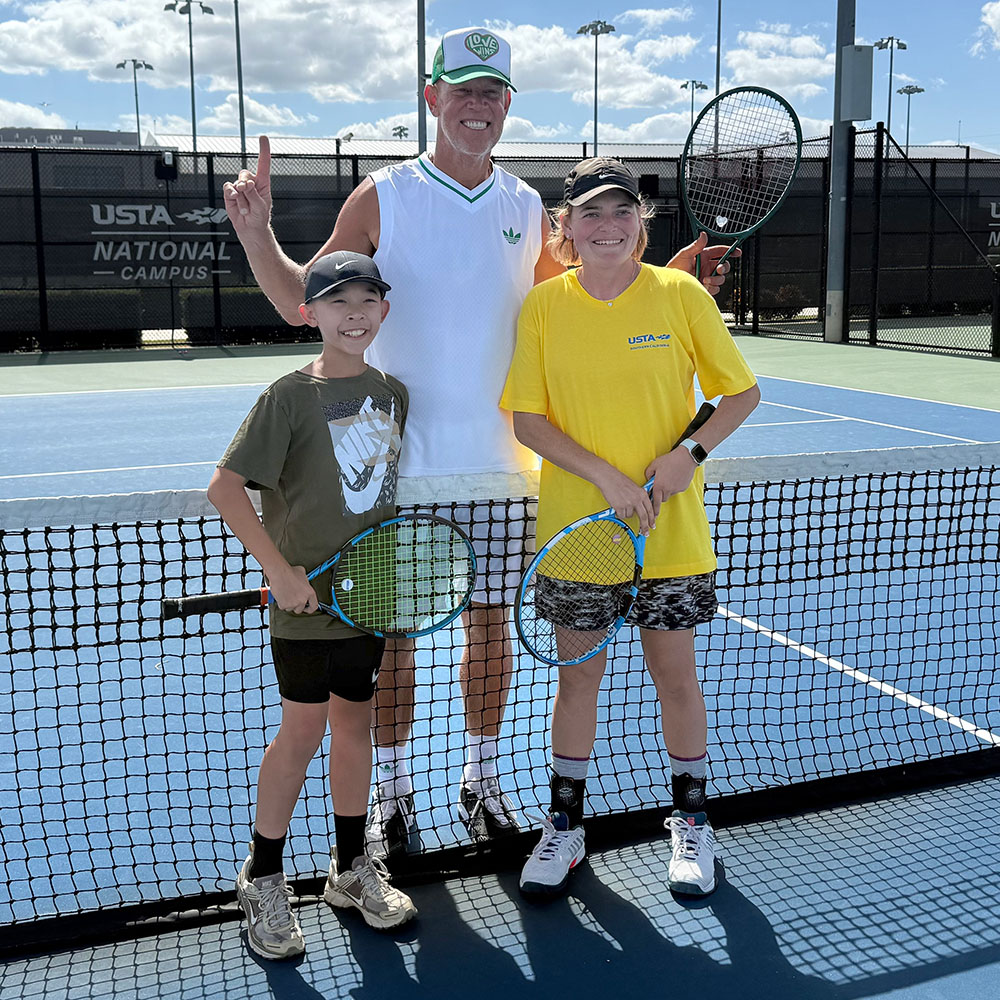
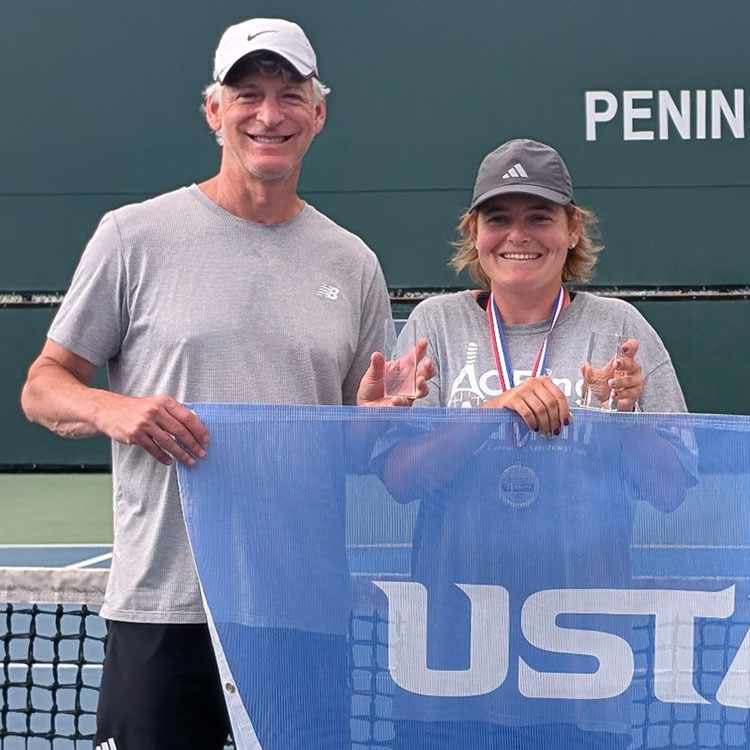
While her career path is impressive, Emily’s accomplishments on the court post-college are equally as significant. In September 2025, she won the USTA SoCal Unified Doubles Tournament, which pairs one player with intellectual and/or developmental disabilities (IDD) with one player without IDD. While the victory was exciting, it was the camaraderie and connection that was even more meaningful.
“Winning the USTA SoCal Unified Doubles Tournament meant far more to me than just a title,” she explains. “It represented inclusion, teamwork, and the power of sport to bring people together. Unified tennis is about partnership, trust, and celebrating each other’s strengths. Personally, it was incredibly meaningful to compete alongside my father in the qualifiers, and then Justin [Belisario] in the National [Adaptive Tennis Championships]. It reinforced why I love the sport—not just for competition, but for connection.”
She also earned a spot in the inaugural singles invitational at the National Championships held at the USTA National Campus in Orlando, Florida. Competing on a national stage in both singles and doubles was both exciting and humbling.
“The talent, determination, and resilience of the athletes were incredible,” Emily recalls. “Being part of an event that celebrates inclusivity in tennis is something I will always be proud of.”
“It was exciting to see Emily represent SoCal in the National Adaptive Tournament in Orlando in both singles and doubles,” says Bryan Hudson, USTA Southern California Community Coordinator. “She is such a fighter and competes for every single point on the court. Even when certain matches weren’t going her way, she found a way to problem solve and make adjustments.”
Changing the Narrative
As adaptive tennis continues to grow, Emily hopes to see expanded opportunities for athletes of all abilities. She’s passionate about challenging misconceptions around autism and disabilities, demonstrating that it’s not a limitation but rather a different way of thinking and experiencing the world that should be valued.
“I wish more people understood that autism and disability do not define a person’s potential,” she shares. “Athletes with disabilities are just that—athletes. They train hard, compete fiercely, and bring incredible focus, resilience, and passion to their sport.”
Her advice to young athletes with autism who are interested in tennis is to simply start and not limit yourself. “Just give it a try and go at your own pace. Tennis is a sport where everyone can grow in their own way, and it’s OK to learn differently or take extra time to feel comfortable. Keep the focus on having fun, celebrating small successes, and being proud of your effort,” she states.
A Story That Resonates
Emily’s work is particularly powerful during Autism Awareness Month, a time she views as an opportunity to move beyond awareness and toward meaningful inclusion.
“It’s not just about awareness—it’s about inclusion, respect, and recognizing the strengths and contributions of individuals on the autism spectrum,” she says. “It’s a time to encourage communities to move beyond stereotypes and create spaces where everyone feels valued and supported.”
Representation, she emphasizes, plays a critical role in that progress. “As a teacher working within the special needs community, I’ve realized that simply showing up and believing in my students can give them hope and confidence in their own abilities,” she reflects. “When people see someone who understands their experiences, succeeds, and supports others, it creates a powerful sense of belonging.”
She hopes her story will inspire others—both within the tennis community and beyond—to be more empathetic and receptive to different perspectives, while recognizing the strengths and potential in people of all abilities.
“I hope my story shows that autism and disability are not limitations—they are part of a unique perspective and strength,” she says. “If even one person feels more confident or more understood because of my journey, then sharing my story is worth it.”