

How Mathew Fritz is Carving His Own Path
in a Legendary Tennis Family
USTA SOUTHERN CALIFORNIA
USTA SOUTHERN CALIFORNIA
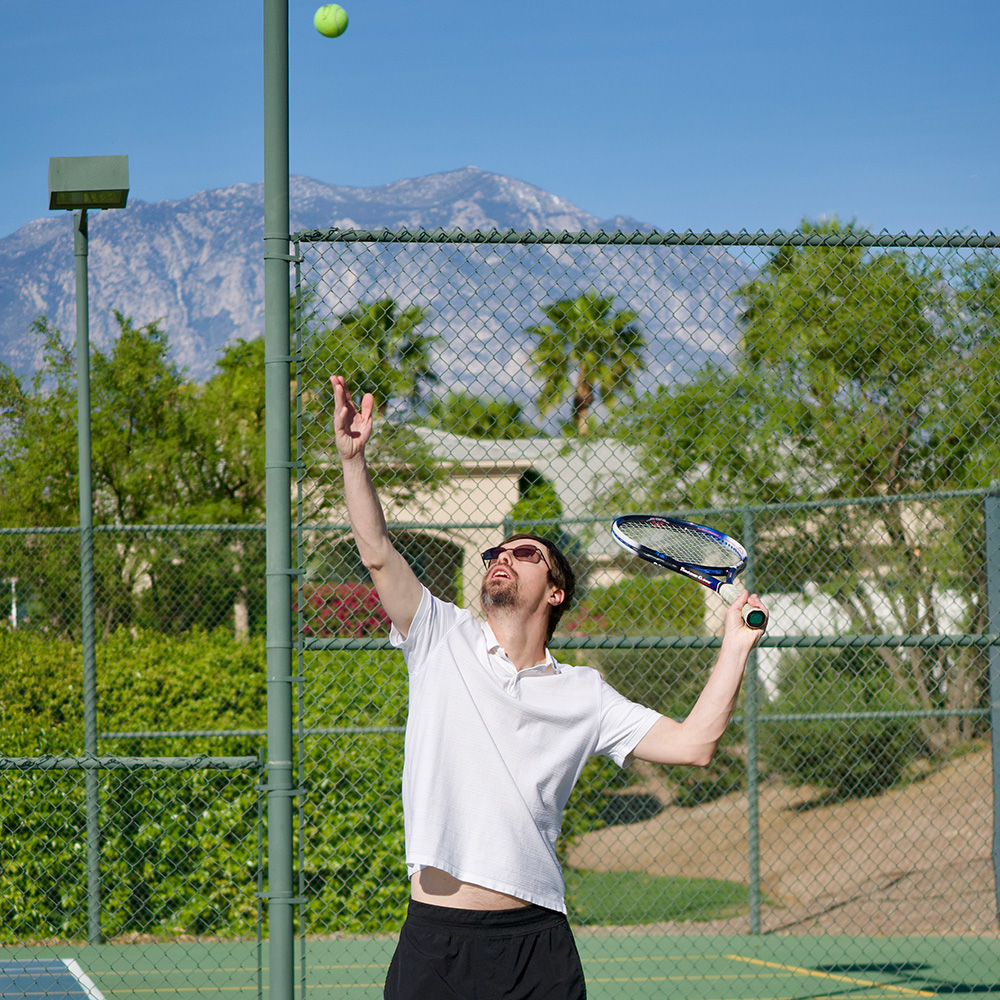
Top: Mathew Fritz hitting a serve.
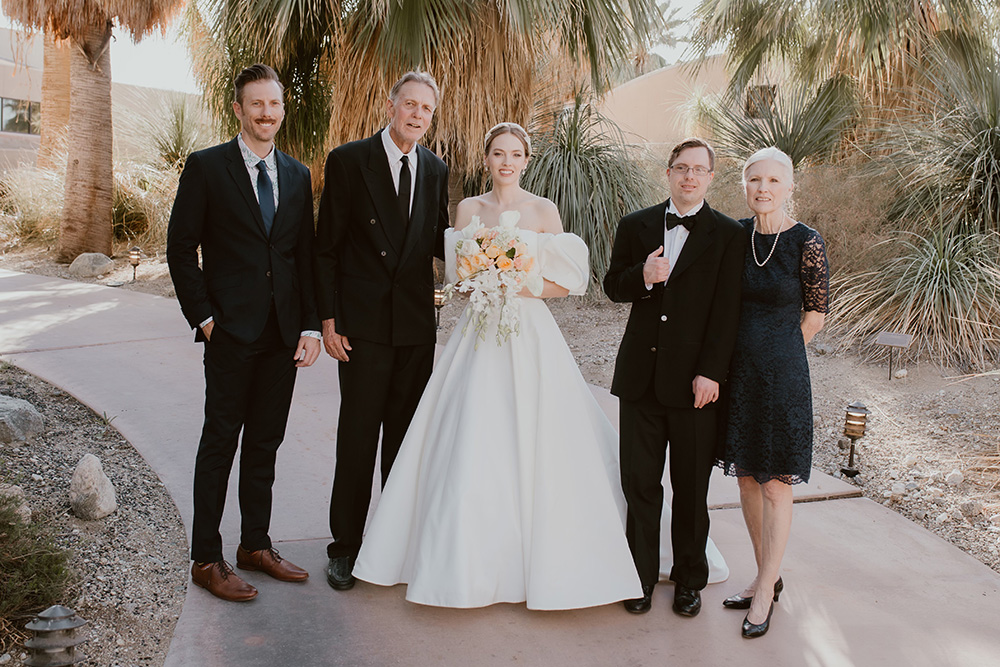
Middle: Mathew with his family at a wedding at Living Desert.
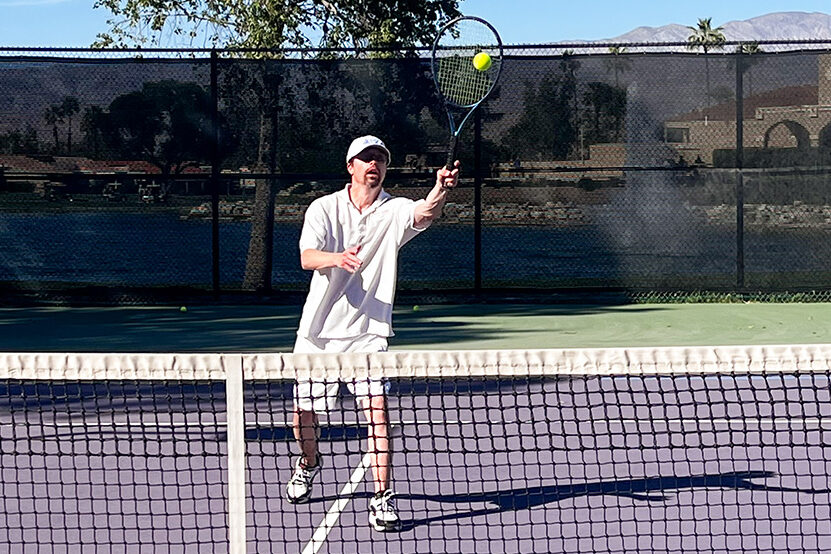
Bottom: Mathew hitting a volley.
For generations, the Fritz name has been woven into the fabric of tennis in Southern California and beyond. From accomplished players to respected coaches, the family’s impact on the sport has spanned decades.
Now, another member of the Fritz family continues that tradition in his own meaningful way. Mathew Fritz, a Coachella Valley athlete with Down syndrome, has built a lifelong connection to tennis through competition, family, and community. For the last thirty years, he has been a source of inspiration, refusing to let any barrier keep him from the game he loves. His story reflects the inclusive power of the sport and the opportunities tennis can create for players of all abilities.
In recognition of National Adaptive Sports Month, USTA Southern California is proud to spotlight athletes like Mathew, whose passion for the game shows that tennis truly can be a sport for life.
A Family Rooted in Tennis
For Mathew, tennis has always been more than a pastime. It has been the Fritz family’s primary way to connect across generations for decades. As the third of four children, Mathew grew up in an environment where his bond with his siblings, Sean, Ryan, and Tori, was forged largely on the court. Many of his earliest memories were formed on the court, where family time often meant rallying together.
According to his mother, Margeret Fritz, those early experiences and shared family connections helped shape Mathew’s passion that remains as strong today as ever. With his parents and siblings serving as his first hitting partners, and an extended family deeply rooted in the sport, Mathew grew up surrounded by a strong support system built around tennis.
Mathew’s father, Harry Fritz, played a major role in that foundation. A Canadian tennis standout who turned pro in 1971, Harry reached a singles career high ranking of No. 124 and earned his place in the history books during the 1982 Davis Cup. In a legendary showing, he won the longest singles rubber by games in the tournament’s history, defeating Venezuela’s Jorge Andrew 16-14, 11-9, 9-11, 4-6, 11-9. In international team competitions, a “rubber” refers to an individual match played as part of the overall series.
The 100-game marathon lasted six hours and one minute, solidifying Harry’s reputation for his endurance. Known throughout the industry as a “serve expert,” Harry became a highly regarded coach known for his technical expertise and ability to develop players. His technical precision helped refine the games of world-class players like Daniel Nestor and Coco Vandeweghe. Today, that same technical mastery remains an integral part of Mathew’s game and his ongoing development as a player.
Mathew’s uncle, Guy Fritz, further cemented the family’s impact on the sport. A former professional player himself, Guy became a premier coach celebrated for developing two top-ten players from the ground up: his son, Taylor Fritz, and Vandeweghe. His influence in Southern California is vast as he founded the tennis program at the College of the Desert, building it into a national powerhouse that has since earned nine state titles and a national championship.
This connection extends to Mathew’s cousin, Taylor, one of the top American players and the current world No. 7 on the ATP Tour. Mathew has been watching Taylor play since childhood and has long been one of his biggest supporters. That bond goes back to when he was less than three years old, watching Taylor practice and hit balls on his home court in Rancho Santa Fe, which is why he still hates to miss any of Taylor’s matches.
One of Mathew’s favorite memories took place in 2017 at the Indian Wells Tennis Garden when a then 19 year old Taylor, sitting just outside the world top 100, made his debut at the BNP Paribas Open. After earning his first main draw win against world No. 39 Benoit Paire, Taylor faced a massive challenge in the form of world No. 6 Marin Čilić. In a massive three set upset, Taylor secured his first ever win against a top 10 opponent. Taylor was rightfully joyous, but perhaps not as much as his biggest fan.
“Before I could grab him, Mathew ran onto the court, being chased by security, to give Taylor a hug,” Margeret recalled. “Taylor hugged him and told security that it was okay because it was his cousin.”
Those early results at the Tennis Garden set the stage for one of the largest victories of Taylor’s career when he won the BNP Paribas Open title five years later in 2022 in front of a home crowd that included Mathew and the rest of the family. These successes fuel Mathew’s desire to excel in the sport.
“I believe that as Taylor has moved up the rankings, Mathew has wanted to become a better player. He is willing to do anything for his coaches.”
This lifelong devotion was never more apparent than in early 2025, when Mathew was still practicing with his father just months before Harry’s passing. Such commitment was forged decades earlier, revealing a resilience that has defined his life.
Resiliency From an Early Age
Mathew’s introduction to the game was born out of a mix of family heritage and unexpected circumstances. He began hitting tennis balls around age six while Harry served as the head pro at Richmond Hill Country Club in Canada. However, it was a family crisis that truly proved Mathew’s persistence to play the sport whenever possible.
“We had a fire at our house and had to move into a rental,” recalled his mother, Margeret. “We set up a mini tennis net in between the dining room and living room and the kids hit with regular rackets and a foam ball.”
This dedication moved with Mathew to the Coachella Valley in late 1993, when Harry was hired as the tennis professional at the Ritz Carlton. Although he initially hit with his sister and father at the resort, his training became more consistent as both parents began coaching for the Special Olympics. Mathew practiced with them weekly and often joined his father for extra hitting sessions on their neighborhood courts.
Confidence Through Competition
Today, Mathew is at his happiest when he is on the court, as the game has become a source of profound self assurance.
“I think tennis makes Mathew feel very confident,” shared Margeret. “He is a wonderful athlete in many sports, but he knows he is very good in tennis especially because of his serve. He taught himself to hit a slice and one handed backhand just from watching tennis.”
Currently, Mathew maintains his skills through weekly sessions with Gordon Zawtun, a close family friend and coach at the Palm Desert Resort Country Club. These lessons keep his technique sharp, but the family is eager to expand his reach. They are actively looking for more hitting partners in the desert community to ensure Mathew can play more frequently, allowing him to test his skills against a wider variety of players.
The Impact of Adaptive Programming
Finding the right competitive environment was a journey in itself. Through her involvement with the Special Olympics, Margeret discovered Desert Recreation, which offers programs under the leadership of Kendra Smith. However, as Mathew’s skills sharpened, his parents realized he needed a higher level of challenge.
“Since Mathew had such great strokes, the program was not challenging for him,” Margeret said.
This led them to the tennis program at the College of the Desert. Rebecca Vineyard, who led the program for athletes with disabilities, was a staunch advocate for true inclusion. She frequently had her adaptive athletes play alongside neurotypical players. When she saw Mathew’s ability, she agreed that Mathew should join the neurotypical tennis class, where he flourished.
Further support came from JoAnne Gilliam, who took over the Special Olympics program at Rancho Las Palmas Country Club. Her positive influence, combined with the family’s summer trips to New York, provided Mathew with a year round training schedule. For twenty years, Harry and Margeret ran the tennis program at Millbrook Golf & Tennis in New York. During July and August, Mathew was on the courts almost every day, even assisting his mother in teaching the younger children.
“Inclusive programs are so important for our Special Olympic athletes,” Margeret emphasized. “But I think the neurotypical athletes also benefit. They can see that all disabled athletes have special gifts.”
A Story of His Own
While professional accolades define the Fritz family name, the essence of Mathew’s journey lies in community. For him, tennis is about the thrill of the game and camaraderie, the effort to improve, and the friendships forged on the court.
Mathew is now focused on competing regularly with neurotypical players. Whether perfecting his backhand or cheering for Taylor, he remains a Coachella Valley fixture. His journey proves that with inclusive coaching, every athlete can excel. Mathew stands as a reminder that the sport of a lifetime belongs to anyone with the courage to pick up a tennis racquet.