


Expand Its Sustainability Efforts
USTA SOUTHERN CALIFORNIA
USTA SOUTHERN CALIFORNIA
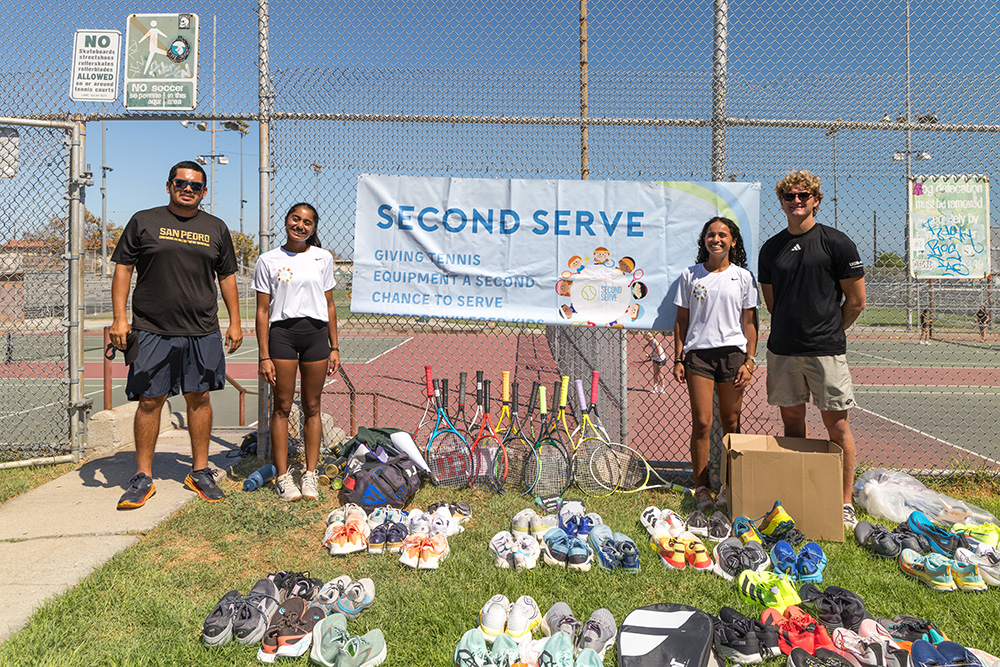
Top: USTA Southern California and Second Serve distributed donated tennis gear, including racquets, shoes, bags, shirts, and tennis balls, to 10 Title I schools across Los Angeles.
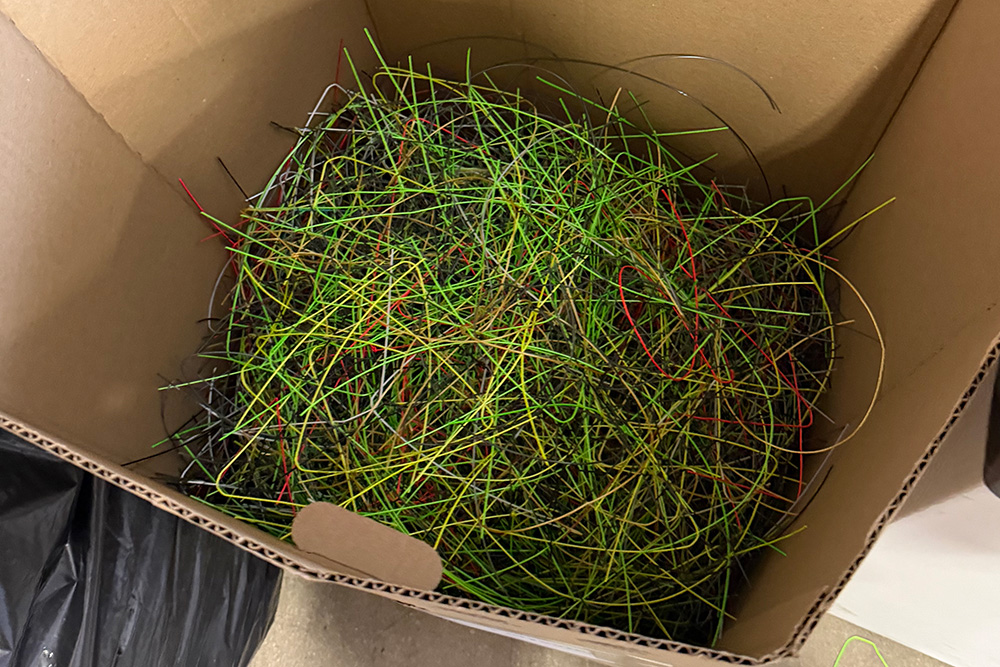
Middle #1: A collection box filled with used tennis strings, gathered to be repurposed with LET.Tennis.
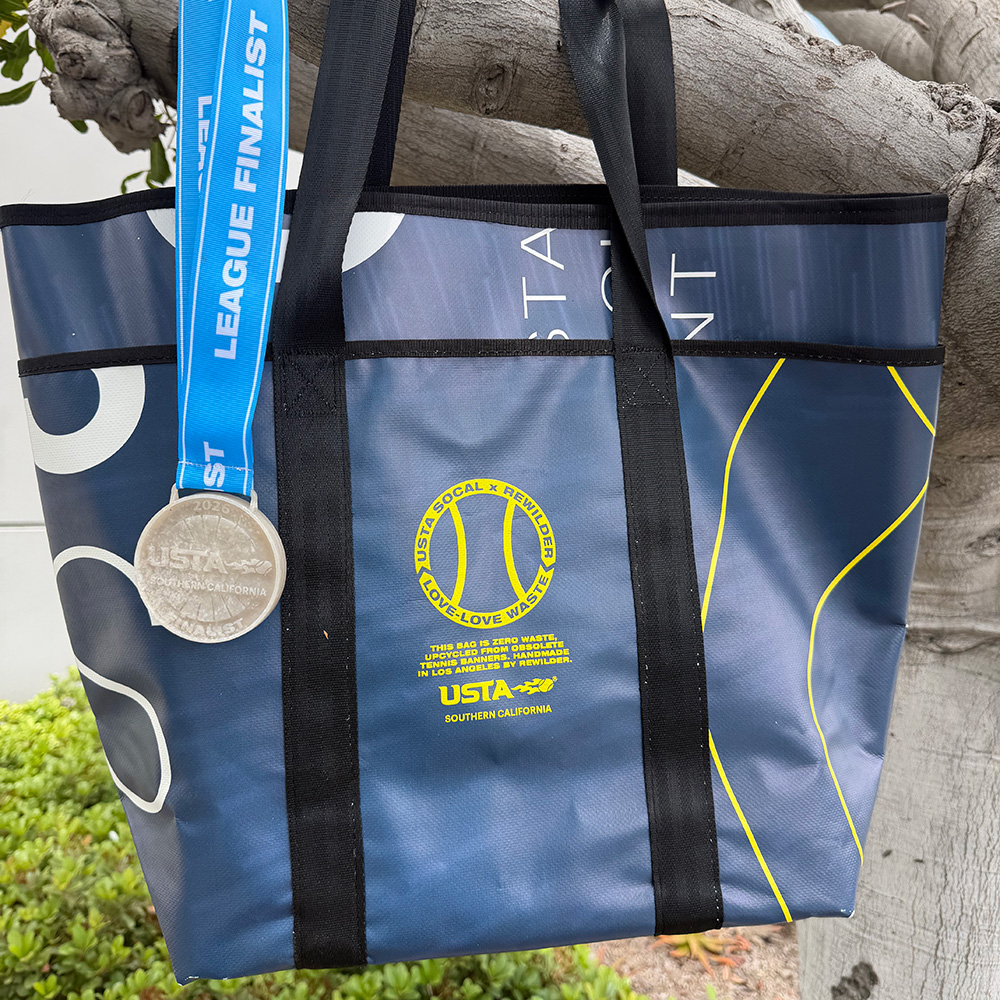
Middle #2: A Rewilder tote made from upcycled USTA Southern California banners, alongside a USTA League medal made from recycled cans.
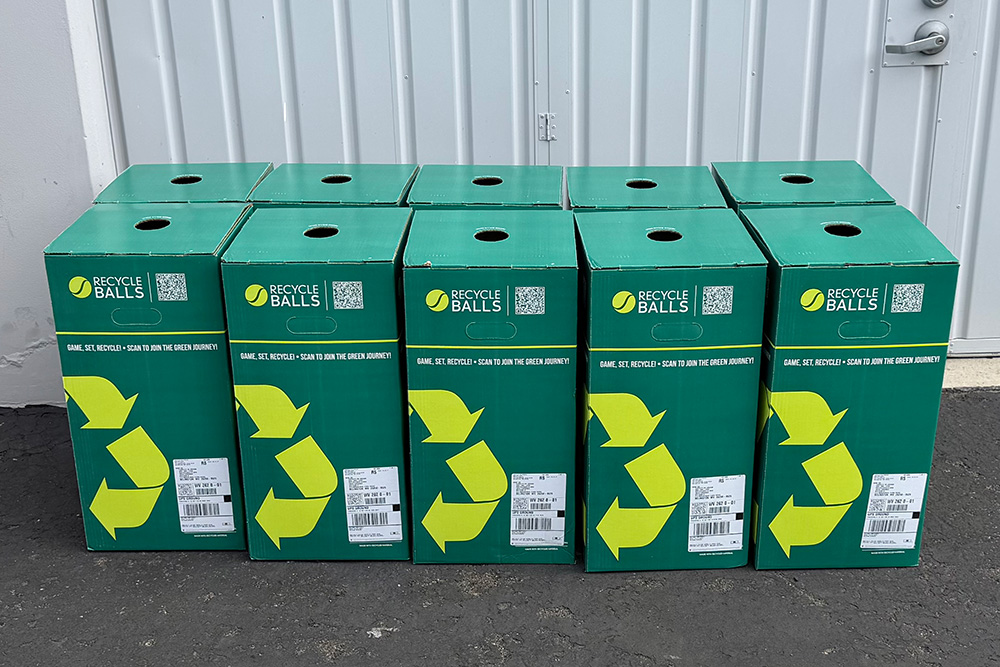
Bottom: RecycleBall donation boxes for collecting tennis balls.
Above: USTA Southern California and Second Serve distributed donated tennis gear, including racquets, shoes, bags, shirts, and tennis balls, to 10 Title I schools across Los Angeles.
A tennis ball loses its bounce. A can gets opened and set aside. A tournament banner comes down after the final match. Strings are cut from a racquet and replaced. A player outgrows a pair of shoes or replaces a racquet.
For USTA Southern California, those moments don’t necessarily have to be the end of the story. Across its tournaments, programs, and events, USTA SoCal is finding new ways to rethink what happens to the materials that make tennis possible. From upcycling tennis strings and banners to recycling tennis balls and donating gear, the section is actively giving everyday tennis items a second life while looking for ways to make sustainable choices part of the tennis experience itself.
That work is now entering a new chapter as USTA SoCal joins the Green Sports Alliance, a network that brings together organizations across sports and entertainment to advance environmental and social responsibility through education, collaboration, and shared best practices.
“Joining the Green Sports Alliance gives us a platform to scale what we’re doing locally and collaborate with leaders across the entire sports ecosystem,” says Julien Grigaux, who leads USTA SoCal’s sustainability efforts. “We aren’t just trying to divert waste. We’re changing the culture of how players, coaches, and facilities view tennis equipment, and giving USTA SoCal a real opportunity to keep players engaged as we work toward growing the sport to 35 million players by 2035.”
For USTA SoCal, the membership builds on sustainability initiatives already taking shape across Southern California while connecting that work with a broader sports community.
Rethinking What Tennis Leaves Behind
Sustainability in tennis can start with something as simple as asking a different question. Instead of asking where a used tennis ball, empty can, tournament banner, or discarded strings go when they’re no longer needed, USTA SoCal asks where they can go next. That shift in mindset has led to a growing collection of initiatives designed to reduce waste and find new uses for materials generated throughout the tennis community.
One of USTA SoCal’s newest sustainability efforts is its partnership with LET.Tennis, which collects used poly and co-poly tennis strings and transforms them into materials used to create clothing, addressing one of the sport’s more overlooked sources of waste. Players, facilities, and tennis organizations can collect used strings instead of sending them to landfills, allowing the material to be processed and repurposed into something players can wear beyond the court while keeping a tennis-specific material in circulation.
USTA SoCal has also partnered with Los Angeles-based upcycling company Rewilder since 2024 to extend the lifespan of event materials. Through its Banners to Bags initiative, 900 square feet of vinyl tournament banners have been transformed into 400 custom vinyl tote bags and zip pouches, giving materials that once marked the end of a tournament a place in players’ everyday lives. Meanwhile, its Cans to Medallions initiative has converted more than 7,000 tennis ball cans into 2,300 tournament awards given out at events like USTA SoCal League Sectional Championships and Junior Team Tennis Section Championships, keeping more than 550 pounds of plastic out of the waste stream while turning a familiar piece of tennis packaging into something that celebrates players’ accomplishments.
“This project, the Rewilder x USTA SoCal collaboration, is incredibly exciting because it’s exactly our mission: to upcycle single-use materials into lasting, valuable objects that people care about, and celebrate the health of players and the planet,” says Jenny Silbert, Founder and CEO of Rewilder. “We love helping brands innovate and create truly impactful stories, and this is a big win for everyone.”
For Silbert, the value of the partnership goes beyond keeping materials out of landfills. Rewilder’s approach is to make discarded materials visible and valuable again, pairing environmental impact with design that encourages people to keep and use what has been created.
“Materials like vinyl banners and plastic cans are incredibly resource-intensive to produce, yet are often treated as disposable once an event is over,” Silbert says. “By keeping those materials in circulation, we extend their useful life and reduce the amount of material going directly to landfill.”
Giving Tennis Balls a Second Life
Few items are more synonymous with tennis than the ball itself. USTA SoCal events use thousands of tennis balls throughout the year, many of which eventually lose their usefulness for competitive play. Rather than allowing those balls to become waste, USTA SoCal has partnered with RecycleBalls since October 2025 to collect, recycle, and reuse tennis balls.
The need is significant. Tennis balls can take up to 400 years to decompose, and approximately 125 million used tennis balls end up in U.S. landfills each year, representing an estimated 20,000 metric tons of rubber waste.
Through the program, the felt and rubber components of used tennis balls are separated, with the recovered rubber repurposed for applications including Laykold tennis court resurfacing and Green Gold equestrian tracks. At USTA SoCal, the partnership has already resulted in more than 15,000 tennis balls being recycled, keeping approximately 2,000 pounds of rubber from entering landfills.
The section is also looking at ways to extend the life of tennis balls before they ever reach the recycling stage. Its Ball Swap initiative allows coaches and facilities to exchange used, unpressurized balls for lightly used ones that can still meet their playing needs. At a recent coaching seminar in Orange County, more than 4,500 gently used tennis balls were redistributed to coaches, while two cases of new balls were given to coaches who donated their used balls.
USTA SoCal is looking to expand the program, keeping playable balls in circulation longer while creating a recycling path for those that have reached the end of their playing life. By implementing our Ball Swap initiative, we’ve been able to extend the life of a tennis ball well beyond a single match, until it’s eventually recycled with RecycleBalls, once the ball has little to no bounce.
Keeping Equipment in the Game
The same philosophy extends beyond materials that can be recycled or upcycled. Tennis equipment often has plenty of life left even when its original owner no longer needs it. A racquet may be replaced when a player moves to a different model, shoes may no longer fit, or a tennis bag may simply sit unused in a closet. Rather than allowing those items to collect dust or end up in the trash, USTA SoCal’s Equipment Donation initiative creates opportunities to keep them within the tennis community.
Players can donate gently used shoes, racquets, balls, bags, and other tennis gear at USTA SoCal events, which is then redistributed through partners such as Second Serve to players, programs, and community organizations. By extending the life of equipment, the initiative reduces waste while expanding access to the sport. USTA SoCal says players can drop off items at tournament desks so the equipment can continue to be used rather than go to waste.
During a recent US Open-themed donation with Second Serve, 10 Title I Los Angeles high schools were supported, six clinics were held for tennis teams, 202 new racquets were distributed, 155 kids were fitted with brand new shoes, and 2,000 US Open tennis balls were provided. USTA SoCal primarily contributed shoes and racquets to help support these efforts.
“Our green initiatives allow us to craft a unique story for our players: the balls you play with are donated to local schools, your cans are upcycled into your medals, the banners you see on court are repurposed into tennis bags, and your strings are turned into merchandise,” adds Grigaux. “Our goal is to embed circular practices into everything we do and encourage our players to think green.”
From Local Initiatives to a Broader Sports Movement
With support from USTA National, USTA SoCal received grant funding to help expand its sustainability work, including tennis string upcycling with LET.Tennis, vinyl upcycling with Rewilder, tennis ball recycling, and equipment donations.
Joining the Green Sports Alliance builds on that foundation, giving USTA SoCal a broader network through which to share what it has learned while bringing new ideas back to Southern California.
“When an organization like USTA SoCal embeds sustainability into its everyday operations, it elevates environmental action from isolated tasks into a defining leadership opportunity,” explains Jeff Pacini, Executive Director of the Green Sports Alliance. “It signals to the broader tennis community that protecting the environments where we play is essential to the future, resilience, and growth of the game.”
The Green Sports Alliance brings together organizations across professional and collegiate sports, entertainment, and their partners to advance environmental and social impact. Through education, collaboration, and its Play to Zero program, the Alliance provides resources for sports organizations to share best practices and explore ways to reduce their environmental impact.
For USTA SoCal, that peer network creates an opportunity to learn from organizations tackling similar challenges across the sports industry while sharing lessons from its own programs.
“The heart of the Green Sports Alliance is our peer network, serving as the industry’s connective tissue where sports leaders share best practices and draw on collective knowledge to solve shared environmental challenges,” says Micah Elan, Senior Manager of Membership Services and Events at the Green Sports Alliance. “By connecting with leagues, venues, and teams across the network, USTA SoCal can accelerate its own impact while bringing tested, scalable solutions directly to community courts and regional facilities.”
That exchange of ideas also creates opportunities for USTA SoCal to bring new approaches back to its own courts, facilities, tournaments, and events throughout Southern California.
For Rewilder, that kind of collaboration is a natural fit for sports organizations that have the ability to make sustainability visible to large communities.
“USTA SoCal is an amazing upcycling partner because they care deeply about this work, have a platform to champion it, and are rooted in health and wellness,” Silbert says. “Tennis is a natural partner for sustainability and innovation. Like many sports, tennis is played outside and requires a healthy planet and healthy bodies. There’s a natural connection between caring for your own health and the health of the planet we play on.”
Sports also bring together community, competition, and storytelling, creating opportunities to make sustainable practices part of the experience rather than something that happens behind the scenes.
“USTA SoCal has been a great partner because they see opportunity beyond the landfill and are willing to do the hard work to win,” Silbert says. “Together, we are turning what would have been waste into something meaningful that celebrates the athletes, the event, the community, and the earth.”
The goal is not simply to add more approaches. It’s to continue building systems that make sustainable choices easier and more accessible for players, facilities, tournaments, and communities throughout Southern California.
Sustainability Starts Where We Play
Tennis is inherently connected to place. We play outdoors, gather at parks and clubs, travel to tournaments, and spend time in communities throughout Southern California. For many players, the courts become part of their everyday lives. That makes protecting those places a natural extension of protecting the sport itself.
USTA SoCal’s sustainability efforts are ultimately about more than any single tennis ball, string, banner, can, racquet, or event. They are about creating a culture where players, coaches, facilities, tournament organizers, and the organization itself consider what happens before, during, and after a tennis experience. A set of tennis strings can find a new purpose. A used tennis ball can become part of a court. A tournament banner can become a bag. A racquet sitting in a closet can become someone’s first racquet. Each is a small example of the same idea: what we already have can have another purpose.
As USTA SoCal begins its work as a member of the Green Sports Alliance, the section will continue looking for ways to make sustainable choices easier across Southern California, from tournament sites to community courts. The future of tennis isn’t only about who picks up the next ball. It is also about what we do with everything that comes after it.