

Why Tennis Lasts a Lifetime:
The Benefits of Play
USTA SOUTHERN CALIFORNIA
USTA SOUTHERN CALIFORNIA
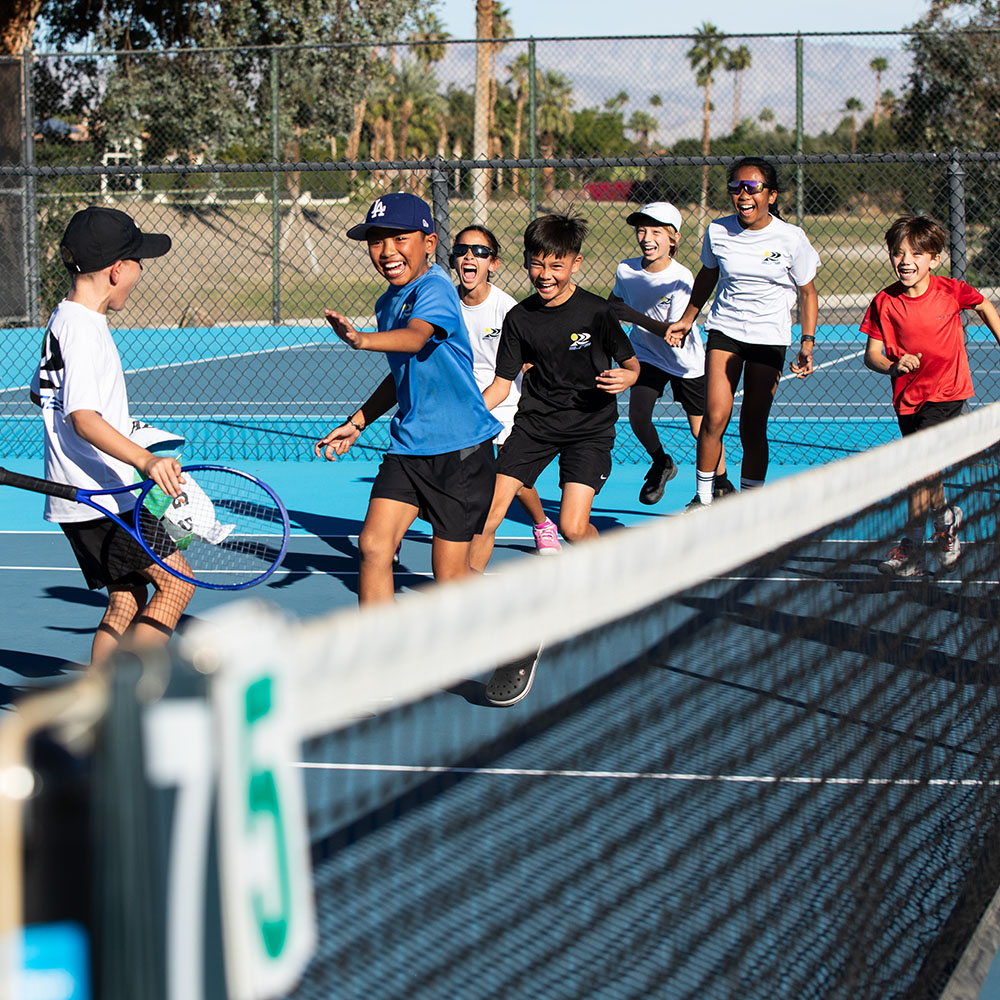
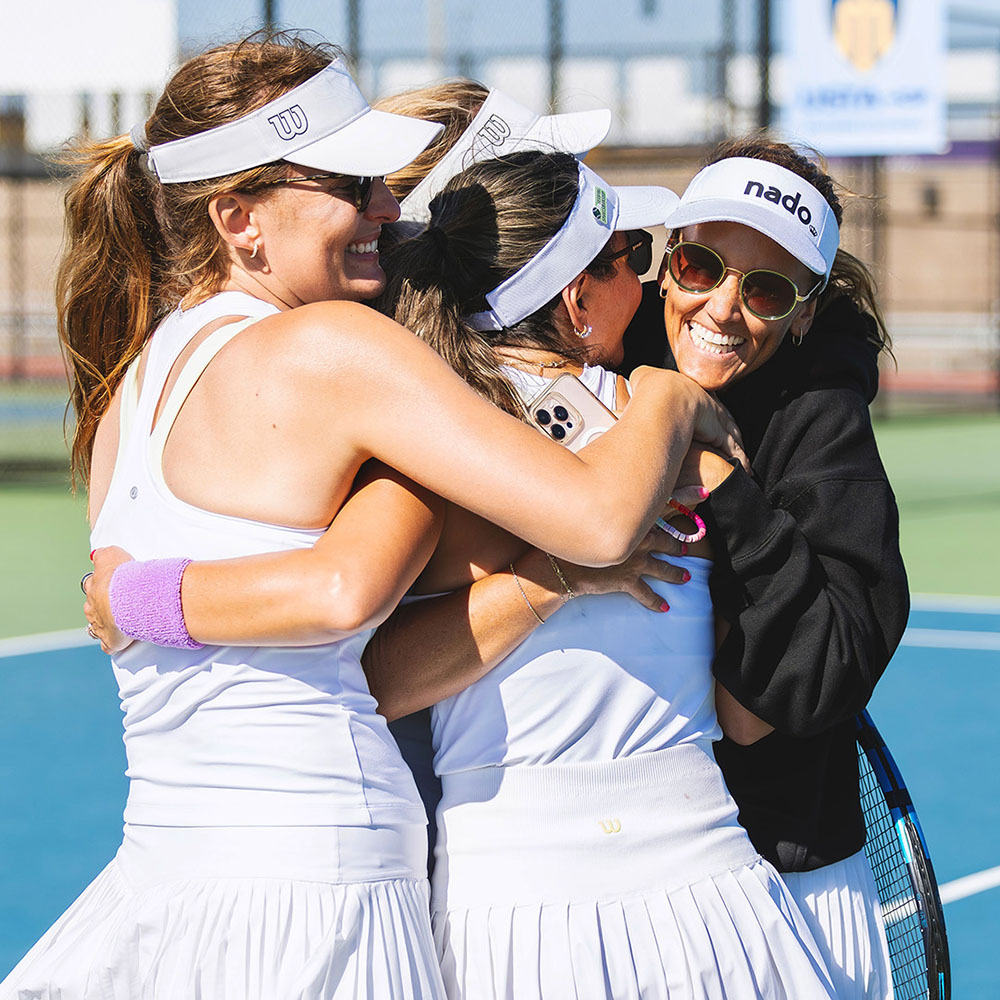
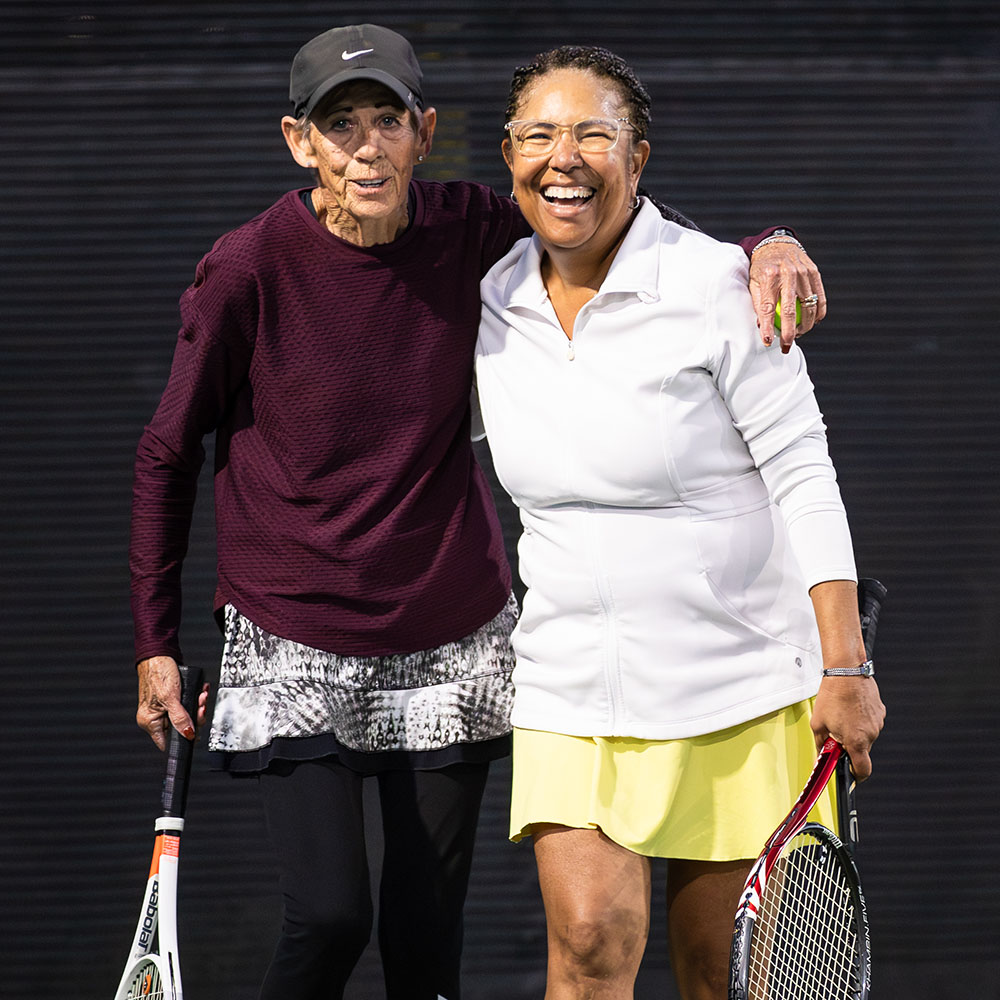
Top: Junior Team Tennis players celebrating a win at JTT Sectionals. (Photo – Rachel Scalera/USTA SoCal); Middle: Teammates hugging at League Sectionals. (Photo – Jon Mulvey/USTA SoCal) ; Bottom: 65+ players at League Sectionals. (Photo – Rachel Scalera/USTA SoCal)
Top: Junior Team Tennis players celebrating a win at JTT Sectionals. (Photo – Rachel Scalera/USTA SoCal); Bottom: Teammates hugging at League Sectionals. (Photo – Jon Mulvey/USTA SoCal)
May is National Tennis Month, making it the perfect time to celebrate a sport that offers far more than just points, games, and sets.
Tennis has a way of finding people at exactly the right time. For some, it begins with a first lesson as a child, gripping a tennis racquet that feels too big and learning how to send the ball over the net. For others, it starts later through a friend, a family member, or the decision to try something new. No matter how it begins, tennis often becomes much more than a sport. It becomes part of a routine, part of a community, and part of someone’s story.
What makes tennis so unique is that it grows with you. Few sports can meet people at every stage of life the way tennis can. As a child, it teaches movement, coordination, confidence, and discipline. In the years of adolescence, it becomes a place to improve, stay active, and learn resilience. For adults, tennis offers exercise, stress relief, and social connection after long days at work or school. Later in life, it becomes proof that joy, growth, and learning never have an age limit.
One of the greatest benefits of tennis is that it keeps people moving in a fun and engaging way. Unlike workouts that can feel repetitive, tennis turns exercise into movement, problem solving, and play. A single session can include sprinting, stopping, changing direction, swinging, reaching, and reacting, all of which help improve cardiovascular health, balance, coordination, agility, and endurance.
Regular play can help increase aerobic fitness, lower resting heart rate and blood pressure, improve metabolic function, and support healthy weight management. It is a full body workout that often does not feel like one because players are too busy enjoying the game.
It also offers something many workouts cannot: the thrill of competition. Whether it is chasing down one more ball, trying to win a close point, or battling through a tiebreak, the competitive side of tennis motivates people to push harder, stay engaged, and have fun while doing it. For many players, the chance to compete makes exercise feel less like a chore and more like a challenge worth showing up for.
Tennis is also excellent for long term health. Because it combines aerobic movement with strength, mobility, and hand eye coordination, it supports healthy aging and overall wellness. Weight bearing movement and quick changes of direction can help increase bone density, while repeated movement patterns can improve muscle tone, strength, flexibility, and reaction time. It can be played recreationally for decades, which is one reason so many people stay connected to the sport for life.
Across Southern California, it is common to see juniors training on one court while adults competing in league matches nearby and older players enjoying doubles on the next court over. Few sports unite generations so naturally.
The mental benefits of tennis are just as powerful. Every point requires focus, decision making, and adaptability. Players must think strategically, stay composed under pressure, and learn how to reset quickly after mistakes. Tennis teaches patience when progress is slow and resilience after losses. It can also be a healthy way to reduce stress, clear the mind, and step away from the distractions of daily life. Those lessons can carry into everyday life, helping people build confidence, composure, and the ability to keep moving forward.
That truth plays out every day across Southern California, one of the worlds’ great tennis communities. On any given weekend, public courts are filled with beginners learning the basics, league teams battling in close matches, families playing doubles together, and juniors dreaming of one day competing on the biggest stages in the sport. Tennis in Southern California is not limited to one age, one background, or one level. It belongs to everyone willing to pick up a racquet.
Southern California has long been a place where tennis dreams begin. Great champions such as Billie Jean King, Pete Sampras, Venus Williams, Serena Williams, Michael Chang, Lindsay Davenport, Tracy Austin, and Taylor Fritz all have ties to the region. Their success has inspired generations of players to believe they can follow their own path in the game. But the true power of tennis in Southern California is not only found in Grand Slam trophies or professional rankings. It is found on public neighborhood courts, school teams, college campuses, and community centers every single day.
Walk through a local park in Los Angeles, Orange County, San Diego, the Inland Empire, or the Coachella Valley, and you will see what makes the sport special. You might find kids in beginner programs celebrating their first rally. You might celebrate with a group of 10-and-unders competing at their first Junior Team Tennis (JTT) Sectionals as a team. You might see high school teammates practicing under the lights after class. You might watch adults squeezing in doubles before work or retirees competing with the same passion they had decades earlier. These moments may not make headlines, but they are the heartbeat of tennis.
Tennis is also one of the rare sports that can become whatever a person needs it to be. For some, it is personal growth and the pursuit of improvement. For others, it is fitness and a healthy habit. For many, it is friendship and community. League teams form lasting bonds. Junior tournaments create memories and rivalries that turn into lifelong friendships. Parents and children often discover that tennis is one of the few sports they can truly enjoy together.
Across Southern California, tennis has also become a pathway for opportunity. Junior players earn college scholarships. Adaptive athletes discover new forms of competition and confidence. Adults return to the sport years later and rediscover the joy they thought they had left behind. Communities come together through free clinics, school programs, and local tournaments that make the game more accessible to everyone.
In a world that often feels rushed and increasingly digital, tennis offers something refreshingly simple and real. It asks people to be present, to move, to compete with respect, to challenge themselves, and to connect face to face. It turns public parks, school courts, and neighborhood facilities into gathering places where confidence grows and friendships are built.
That is why tennis stays with so many people for life. It may begin as a lesson, a hobby, or a workout, but it often becomes much more. It becomes a source of inspiration, health, and belonging.
And here in Southern California, where tennis culture runs deep and opportunity exists around every corner, there has never been a better time to start. National Tennis Month is a reminder that tennis is for everyone. You do not need perfect technique or prior experience. You do not need expensive equipment or years of training. Many players begin with a borrowed racquet, a beginner class, or a few casual hits with friends. What matters most is simply getting started.
One hit can turn into a rally. One rally can turn into a passion. One day on court can become the start of a healthier, happier routine that lasts a lifetime. This National Tennis Month, pick up a racquet and see where the game can take you.