

USTA SOUTHERN CALIFORNIA
USTA SOUTHERN CALIFORNIA
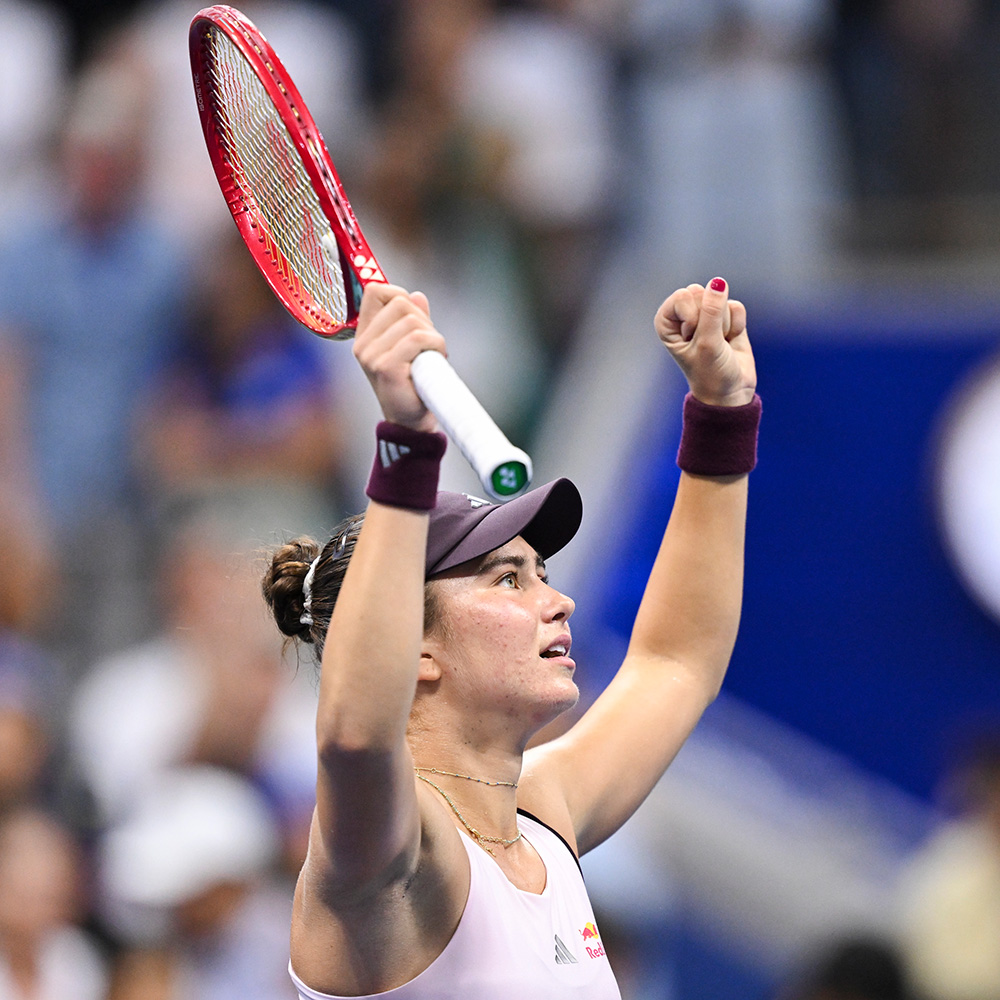
Top: Iva Jovic reacts after winning her third round match against Alex Eala during the 2026 US Open.
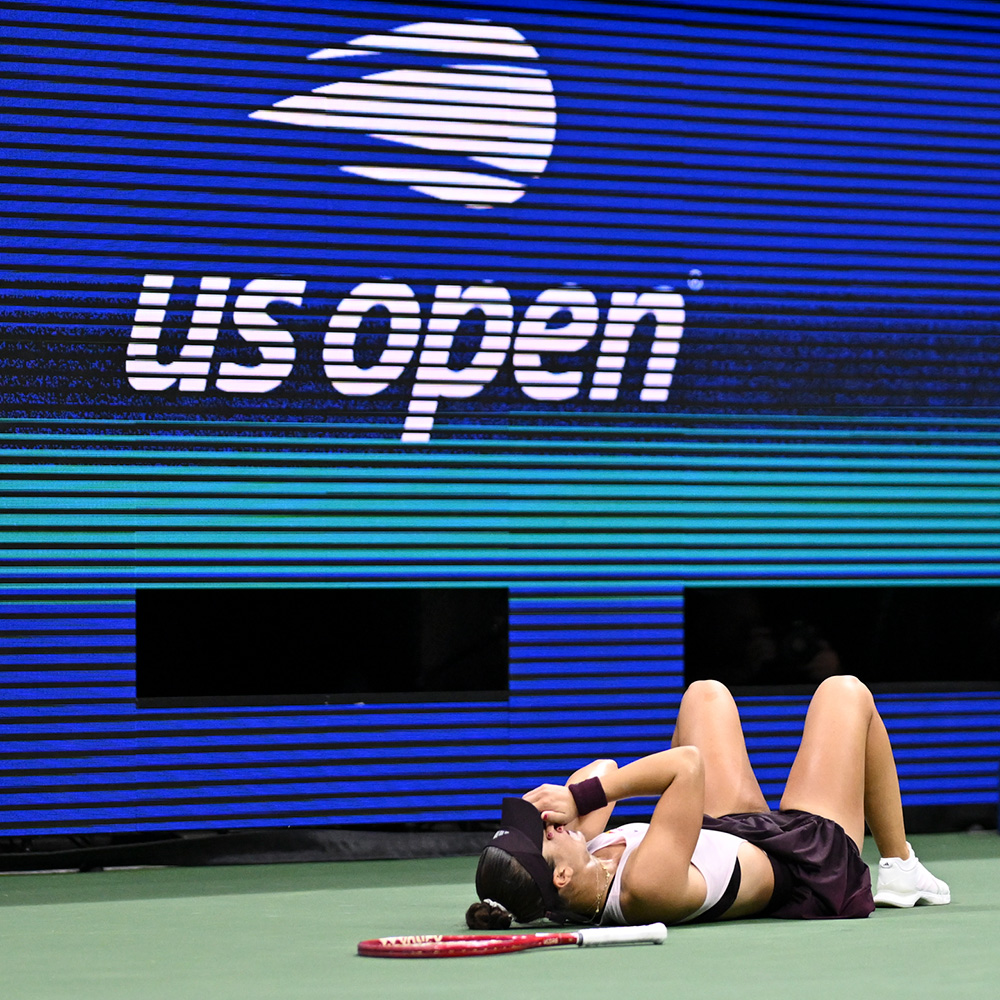
Bottom: Iva Jovic lies on her back on the court in emotional celebration after her victory.
(Photos – Ben Solomon/USTA)
Iva Jovic reacts after winning her third round match against Alex Eala during the 2026 US Open. (Photo – Ben Solomon/USTA)
For most of her tennis career, Iva Jovic has rarely worn her emotions on her sleeve. She’ll fist pump, let out the occasional “come on,” and show her excitement in the moment, but roaring after each point and theatrics have never really been her style, whether during a match or in the moments that follow. Even after winning her first WTA title last year, the then 17-year-old calmly walked to the net, embraced her opponent, and went about her celebration without much fanfare.
Saturday night under the lights of Arthur Ashe Stadium was different.
After a three-hour, three-minute marathon with longtime friend and rival Alexandra Eala, Jovic watched Eala’s final forehand sail long, collapsed onto the court, and burst into tears. Her knees were scraped, her earrings were missing, and her mental fortitude had been pushed to the absolute brink.
“I don’t even know what to say,” Jovic said on court after the victory. “That felt like a marathon, and I felt like I lost my sanity five times over to win that match. But it’s really worth it for this feeling.”
The 18-year-old South Bay native outlasted Eala, the 21-year-old No. 17 seed from the Philippines, 7-5, 3-6, 7-5, in a heavyweight battle to reach the fourth round of the US Open for the first time.
It was power against power, with neither player willing to back down as the two young stars traded thunderous groundstrokes and combined for 78 winners. Despite 17 service breaks, the level remained exceptional, making the third round feel more like the launch of a rivalry that could follow them for years. Jovic finished with 44 winners against 27 unforced errors, while Eala had 34 winners and 33 unforced errors.
“I was literally looking at the stats right after I finished, because I couldn’t believe what just happened,” she said. “We were both in the positive with the winners versus unforced errors, so it was just really, really high level.”
The first set set the tone. Jovic jumped out to a 4-1 lead, but Eala fought back to level at 5-5. Jovic responded by breaking again and serving out the set 7-5, despite facing 10 break points.
Eala answered in the second, using her return game to repeatedly pressure Jovic. She broke three times to level the match with a 6-3 set, and when she closed it out, the Ashe crowd erupted, fueled by thousands of Filipino fans who had rallied behind her.
The match had become a test of not only Jovic’s tennis, but also her physical resolve. During the second set, she began shaking out her leg before taking a medical timeout for leg and groin discomfort at the changeover before the third. The trainer suggested she return to the locker room to have the area taped, but Jovic declined. She shook it off, stepped back onto the court, and got to work.
Eala quickly moved ahead 4-2 and held a 30-Love lead in the third, leaving Jovic just points from the end of her tournament run. But Jovic refused to let it slip away. She slowed her breathing, embraced the roaring, pro-Eala crowd, and found another gear, winning five of the final six games. She converted her second match point to complete one of the most impressive comebacks of her young career. She saved 12 of 20 break points overall, showcasing physical resolve, composure under pressure, and maturity well beyond her years.
“I just tried to take my time in those moments and feel the energy, feel the crowd,” she said. “Even though they weren’t always rooting for me.”
Still, she heard the people who were.
“I love you guys,” Jovic said. “You gave me so much energy to just keep pushing and just leave absolutely everything on the court for the win.”
The numbers only tell part of the story. There were the points won and lost, the breaks traded, and the momentum swings, but there were also the physical reminders of just how much the match required.
“It took losing my earrings, falling literally flat out on the floor, cuts on my knees, mental breakdowns,” Jovic said. “It took literally everything… I’m usually not one to show that many emotions. But this one really meant a lot to me to have another match here at the US Open.”
That grit is no surprise to those who have watched Jovic’s rise. Long before her Grand Slam breakthrough, she was a South Bay kid riding bikes past local Torrance courts with her older sister, Mia, now a collegiate player for the UCLA Bruins. Casual hitting sessions soon turned into serious training at the Jack Kramer Club in Rolling Hills Estates and the USTA Training Center in Carson.
Peter Smith, who first worked with Jovic when she was just 11 at the Kramer Club, says little about her current rise has surprised him. The desire to succeed was there from the beginning, as was a fearlessness that has carried her from local courts to the biggest stages in tennis.
“She is never afraid of the moment,” Smith said. “No situation or court is too big for her.”
Her local roots laid the groundwork for a rapid ascent: sweeping the 2024 USTA Billie Jean King Girls’ 18s Nationals singles and doubles titles in San Diego, claiming her first pro win as a wildcard at the SoCal Pro Series hosted at the Kramer Club, and capturing a WTA 125 title in Ilkley at 17. By 2026, she scored her first Top 10 victory over Jasmine Paolini and crashed the Australian Open quarterfinals, pushing her into the Top 20.
Her coach, Tom Gutteridge, has seen that competitive fire in Jovic from the very beginning. He has watched her develop into a player who fights for every point, regardless of the score, and rarely lets a bad stretch affect the next one. That consistency, Gutteridge believes, is one of the biggest reasons Jovic has continued to produce at such a high level. She brings the same intensity to the practice court as she does to a Grand Slam, always competing, always pushing, and always finding a way to stay in the fight.
Those lessons became especially important this season.
After her breakthrough run in Australia, Jovic suffered tough three set losses to Naomi Osaka at Roland Garros and Jessica Pegula at Wimbledon. Rather than letting those defeats linger, she used them as lessons in how to manage the biggest moments.
“I’ve learned a lot this year with match management,” Jovic said. “I’ve lost a couple of tough ones like this in the Slams earlier in the year. So I’m happy to get this one under my belt. I feel like I did some things better from the match management perspective.”
That growth was evident against Eala. When the match became chaotic, Jovic stayed present, managed the pressure, and found a way through. Then, at the net, Eala crossed over to embrace her, and Jovic was overcome with emotion once again.
The two have known each other for years, and their Round 3 battle added another chapter to an increasingly compelling rivalry. Jovic has now won three straight against Eala and leads their head-to-head 3-0, but their friendship remains at the center of it. Eala’s gesture meant a great deal to Jovic, who praised her friend’s character for offering such warmth after such a heartbreaking loss, both on court and behind closed doors in the locker room.
“It says a lot about her as a person to be able to do that after that type of match and still come over and hug me and wish me all the best,” Jovic said. “That just says a lot about her and her character. Yeah, she’s incredible.”
For two players still so early in their careers, Saturday felt like the kind of match that could become a reference point years from now. But Jovic has little time to reflect. Waiting in the fourth round is 2023 US Open champion Coco Gauff, who narrowly defeated Jovic, 5-7, 7-5, 6-2, in their only previous meeting this year in Rome. The No. 4 seed is making her fifth consecutive US Open fourth round appearance; for Jovic, it is her first. The American teenager knows exactly what she is walking into.
“This is what you want,” Jovic said. “Week two in the Slams, you’re playing one of the best players in the world.”
Jovic remembers their match in Rome well. She had chances, but could not close it out. Now, she gets another opportunity against one of the best players in the world.
“I’m going to be more than happy to just bring this fight and this energy, and then whatever happens, I can leave with my head high,” Jovic said. “But she is playing some really unbelievable tennis, and she is a great person. It’s going to be an amazing match.”
Jovic also knows how close she came to turning the Rome match in her favor.
“Hopefully I can learn from that and replicate,” she said. “I think if I replicate this level, I’m definitely going to have my chances in that one.”
Two years ago, Jovic made her Grand Slam debut as a 16-year-old looking to belong. She won a match and became the youngest American woman to win a US Open main draw match since 2000.
Now, she is back in the second week, but she looks different. More experienced. More composed. More willing to fight through the moments that once got away.
Jovic has always preached taking things one day at a time, treating each accomplishment as another step rather than a destination. Saturday night showed those lessons taking hold.
It was more than a win. It was proof she can weather the chaos, manage the pressure, and find another gear when she needs it. She has already learned how to make history. Now, the pride of Southern California is learning how to survive the fight.