

A Father’s Perspective on Tennis,
Neurodiversity, and Belonging
USTA SOUTHERN CALIFORNIA
USTA SOUTHERN CALIFORNIA
Long before Chad MacAllister ever joined USTA Southern California’s Board of Directors, he was a father searching for a way to connect with his son.
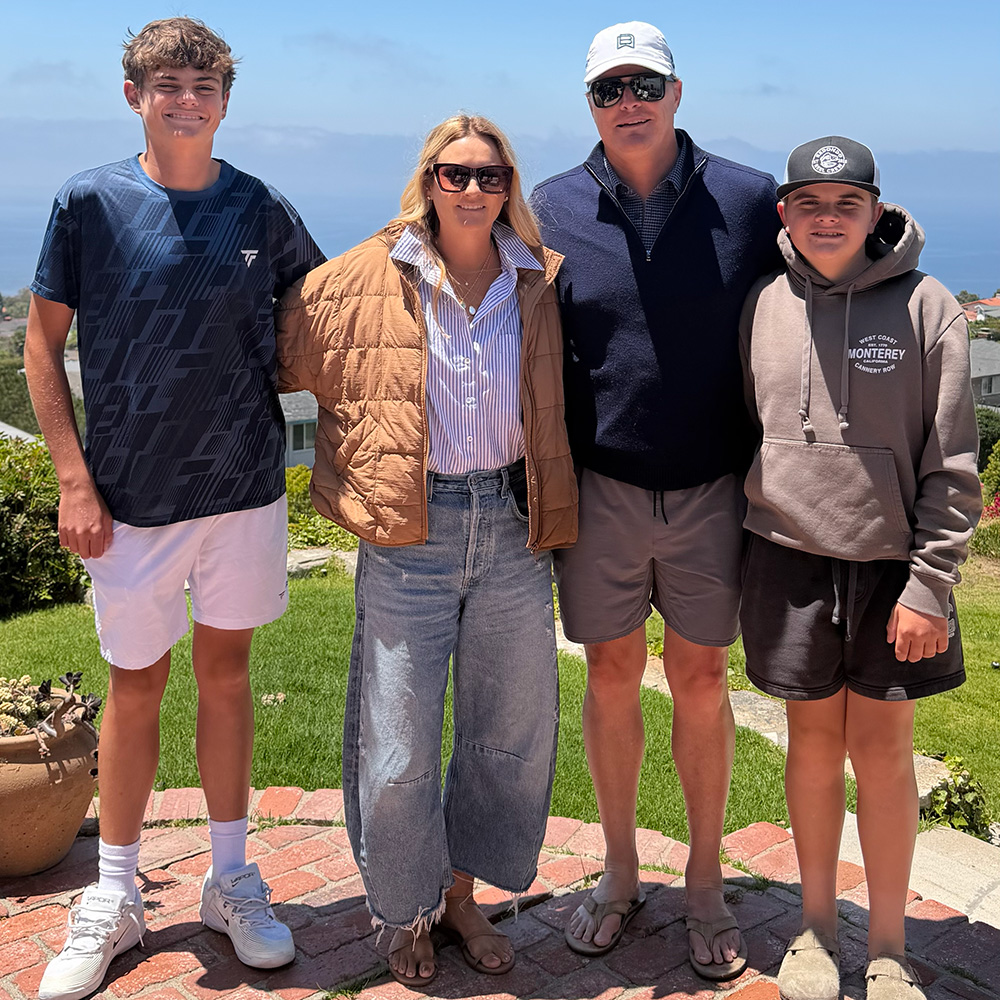
That journey began in 2013, when Chad and his wife, Annie, settled down to raise their family in Palos Verdes. With both sets of parents and Chad’s sister living nearby, they felt fortunate to have a local support system in close proximity. Yet, beneath the comfort of that setting, they quickly found themselves navigating a complex landscape.
Their oldest son, Vincent, now 17, is neurodiverse and has faced real difficulties finding his place within traditional youth sports. Group settings, shifting team dynamics, and chaotic environments frequently left Vincent feeling overwhelmed. This sparked a mindset shift for Chad, one that required letting go of traditional parenting expectations and learning to view the world through his son’s eyes.
“As first-time parents, we assumed Vincent would go through traditional sports like we did, and honestly, we were looking forward to that,” Chad shared. “When baseball and soccer didn’t pan out, we realized we might be heading down a different path—and I’m glad we did.”
Vincent’s turning point arrived through a tennis racquet and a persistent rhythm that suddenly took over their home. The repetitive act of hitting a tennis ball became a bridge to communication and confidence.
“The first thing we noticed at home was the lack of quiet in the house—he was constantly pounding balls against any flat surface,” Chad recalled. “He would train most of the day, grab a bite to eat, and then rally against the wall for hours. Many times, he would ask me to come watch him hit and hit 1,000 volleys in a row. Even as he’s gotten older, he’s never stopped. As he’s matured, the passion and dedication have remained. Maybe there’s even a bit of boredom in there, but no matter what, he still finds joy in hitting a ball against the wall.”
The Power of Predictability
July marks the celebration of National Disability Pride Month, a cultural window dedicated to honoring the visibility, identity, and unique contributions of neurodiverse and disabled individuals. For the MacAllisters, this pride is witnessed daily.
The pivot toward tennis began at the suggestion of a close family friend who recommended that a young Vincent join some of the workouts at the Palos Verdes Tennis Club.
From a developmental perspective, the sport provided an ideal framework for a neurodiverse athlete. The beauty of tennis lies in its lack of ambiguity. The rules are straightforward, and the ball is either in or out.
“At its core, tennis is simple: hit a ball with a racquet,” Chad explained. “That alone can be incredibly satisfying—seeing the ball respond to your effort and fly with different pace and spin. Because consistency is so difficult in tennis, it requires a tremendous amount of repetition. With that repetition comes predictability. As a parent, when you have a child who never needs to be pushed to practice, it’s a beautiful thing—you know they’ve found something they truly love. The game can also be stressful, especially in competition. It’s hard to watch your child struggle when they’re out of rhythm. Tennis will always humble you. For Vincent, repetition and predictability are everything.”
As Vincent immersed himself in the sport, the rest of the family followed. Having played paddle tennis for years with their friend, transitioning to the court was an easy choice for Chad, who soon joined a weekly Wednesday group with friends. Watching their dedication, Annie decided to try a beginner clinic at the club as well. An athlete by nature, she picked up the game quickly and now competes across both local USTA Adult Leagues and Palos Verdes’ Marine League.
This shared family passion set the stage for Vincent’s own ascent in the competitive junior ranks. As a freshman in the fall of 2024, Vincent earned a coveted spot on the Palos Verdes High School varsity team leading into the 2025 season. By his sophomore season in 2026, he helped lead the Sea Kings to a historic milestone when the team captured the CIF-SS Division 2 Championship. Their victory marked the school’s first boys’ CIF team tennis title since 1974.
Now heading into his junior year, Vincent’s dedication to the sport is stronger than ever. To accommodate his demanding schedule, he transitioned to remote learning, which provides the flexibility he needs to spend five hours a day on the court and in physical conditioning. Alongside his daily training regimen, he actively competes in USTA junior tournaments, fueled by his ambitious goal to play Division I college tennis.
Visibility and Milestones
For the MacAllisters, finding a supportive sports environment for Vincent meant redefining progress, measuring it by personal growth rather than trophies. This journey led them to a life-changing resource in 2019, when the family first connected with ACEing Autism, a national non-profit co-founded by Richard Spurling and Vincent’s neurologist, Dr. Shafali Jeste.
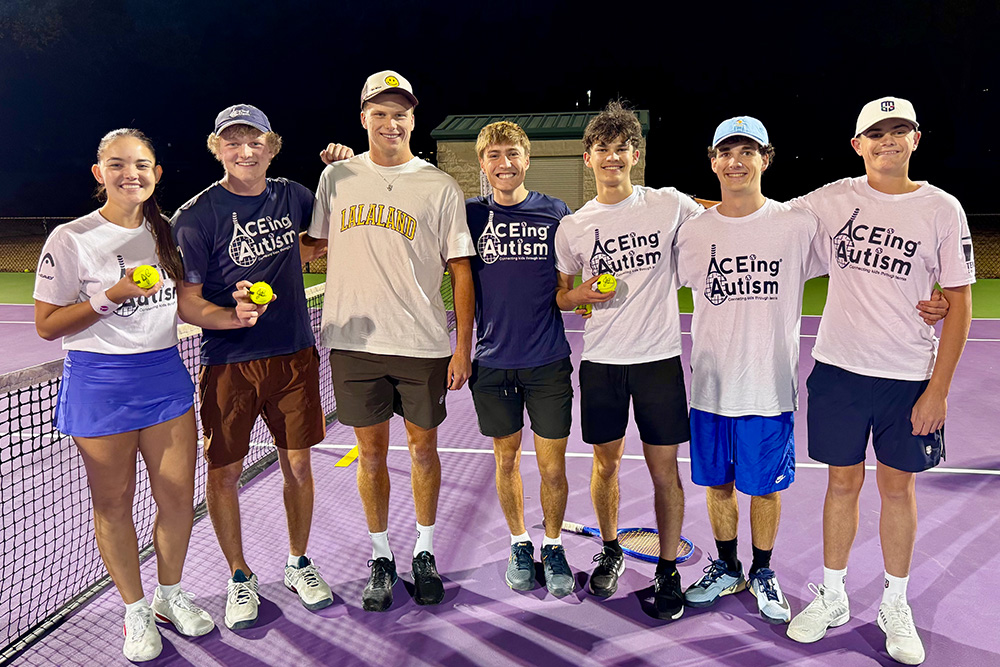
A proud partner of USTA SoCal, the organization provides adaptive, weekly tennis clinics for children on the autism spectrum aged 5 to 18. Inspired by this mission and wanting to bring those benefits to their own backyard, Chad and Annie partnered closely with Richard and the broader ACEing Autism team to launch a new chapter right in Palos Verdes in the fall of 2025.
It was through this deeply rooted leadership and community involvement that Vincent’s world expanded to a global scale. In late 2024, professional tennis star Jenson Brooksby had become the first active player on the ATP Tour to publicly share his autism spectrum disorder diagnosis. By capturing his first ATP Tour singles title in April 2025, Brooksby became the first openly autistic athlete to win a tour title, providing Vincent with a tangible example of elite achievement.
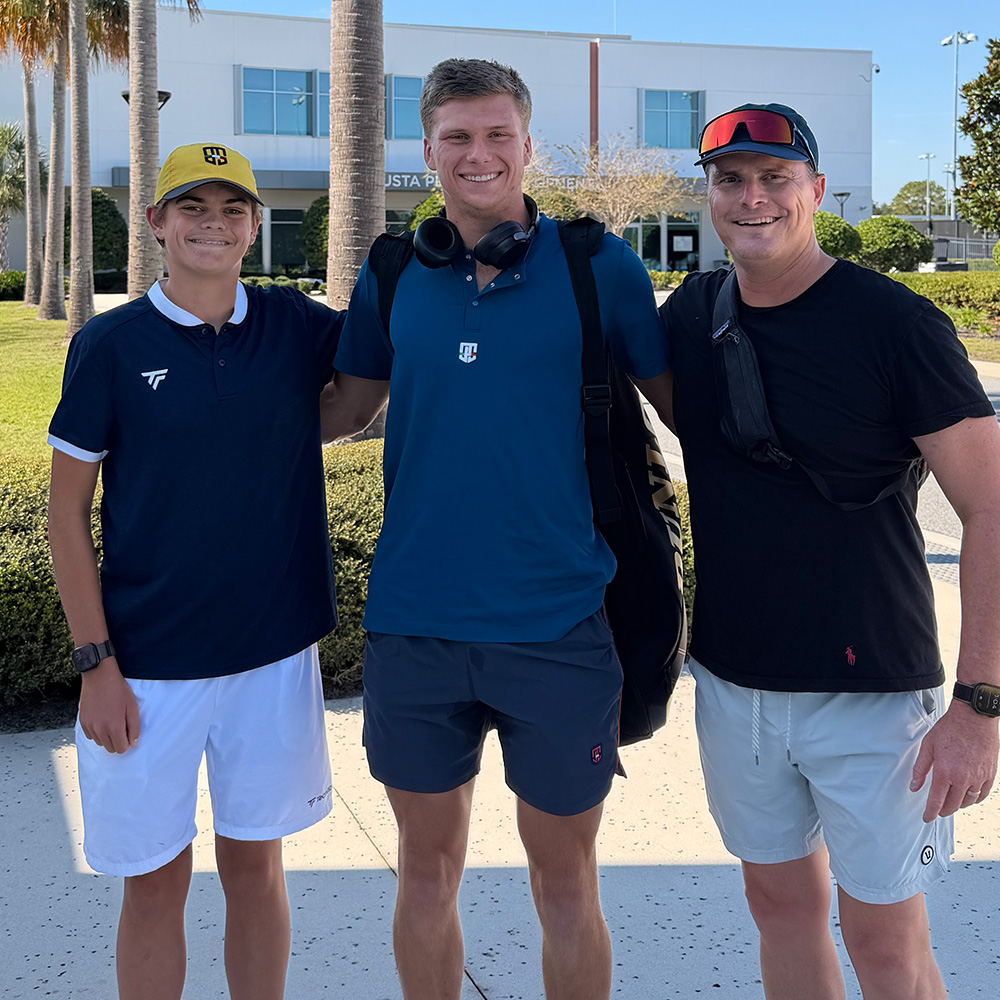
This inspiration culminated in a major milestone earlier this year. Ahead of the 2026 Nexo Dallas Open, Vincent traveled to a local ACEing Autism event held at Texas Christian University (TCU), where he stepped onto the court to rally alongside his hero.
“I cannot fully express how much Jenson Brooksby has impacted Vincent’s life,” Chad emphasized. “I am deeply grateful to his grandmother for bringing us together. After meeting Jenson at the BNP Paribas Open in 2025, Vincent carried himself differently—more confident, more assured. Jenson has become an incredible role model for him. Jenson’s decision to share his diagnosis with the world was both meaningful and courageous. It is not an easy thing to do, and his openness has helped broaden people’s understanding of what neurodiverse individuals can achieve when they focus on what they love. Watching Vincent and Jenson hit together at an ACEing Autism event in Dallas is a memory I will always carry with me. It still brings out strong emotion when I think about it. Toward the end, they played a game of red light, green light—fully present, giving their energy and attention to those kids. The joy on their faces, and the smiles they created, is something I will never forget.”
Leading with Empathy
The transformation witnessed in his own home permanently altered Chad’s trajectory as a sports administrator. When he joined the USTA Southern California Board of Directors in 2023, he brought an intentionality shaped by the daily realities of raising a neurodiverse son.
“Anyone on the USTA SoCal board knows where my passions lie,” Chad stated. “I’ve been very open about Vincent. Tennis has changed our lives, and it has given Vincent the confidence to take on the world. Giving back to the game is incredibly important to me, especially here in Southern California. As Vincent has grown and better understood his own journey, we’ve also become more open about it. We want to help kids still experience the joy of tennis who may not fit into traditional programs.”
Running specialized local clinics allows Chad and Annie to build the exact safe, welcoming spaces he wishes had existed when Vincent was a toddler.
“I’ll never forget the smiles on the kids’ faces when Annie and I started ACEing Autism Palos Verdes,” Chad said. “The kids can be themselves. Parents don’t have to worry about their child disrupting a session. That freedom is incredibly liberating.”
The true measure of the program is evident in the everyday moments that often go unnoticed. Chad recalls a recent weekend when a friend brought his autistic daughter to the court. The sensory input was initially too overwhelming, and she had to step away. Rather than treating it as a failure, Chad encouraged them to try again for the final session of the season.
“This time, we took it slow. We didn’t rush onto the court—we rolled balls, took breaks, and focused on having fun,” Chad shared. “Eventually, she smiled. Then we stepped onto the court, hit some balls, and played simple games. By the end, she proudly wore her ACEing Autism medal. Her father later sent me a message that meant a lot. Annie and I have been on a long journey, and being able to give back like this is incredibly meaningful.”
Clarity of the Journey
Reflecting on their timeline, Chad acknowledges that living in a neurodiverse household requires immense intentionality and balance from everyone involved.
“Living in a neurodiverse household creates a unique bond,” Chad reflected. “It also brings challenges that many families may never experience. At times, it can be difficult for non-neurodivergent family members, especially when more attention is needed elsewhere. Those moments require a lot of selflessness and understanding. Through it all, Annie and I have grown incredibly close. We’ve learned so much and continue to learn every day. Looking back, the uncertainty was often the hardest part. Over time, that uncertainty turns into clarity, and with that comes more space to focus on each other.”
Today, Vincent has grown from a child navigating a complex diagnosis into a young man who spends his own free time volunteering at local summer camps and clinics.
“Vincent has worked with many adults throughout his life—Applied Behavioral Analysis (ABA) therapists, speech therapists, occupational therapists, and more,” Chad mentioned. “Through all of that, we’ve never heard anyone say he isn’t a wonderful boy with a big heart. In later years, especially through volunteering at Palos Verdes Tennis Club summer camps and most recently with ACEing Autism, you really see that heart come through. Watching him connect with others on the spectrum like him is incredibly meaningful.”
For parents watching their child struggle to find a place in traditional sports, Chad offers an enduring piece of advice.
“The court does not care who you are, how old you are, who you love, how you got there, what your background is, or how you move around on it,” Chad stated. “The lines on a tennis court are exactly the same for everyone. Pick up a racquet, take a chance, and jump out there. Tennis is a universal connector, and it is an incredible way to build community. Not every experience will be perfect, but tennis teaches you how to navigate different situations. It builds independence, rapid problem-solving, and emotional resilience. Give it a chance, because tennis will give you joy, fitness, camaraderie, and a lifelong community.”