

Tracy Macnair Burrell: The “Unofficial
Tennis Historian” of Bakersfield
USTA SOUTHERN CALIFORNIA
USTA SOUTHERN CALIFORNIA
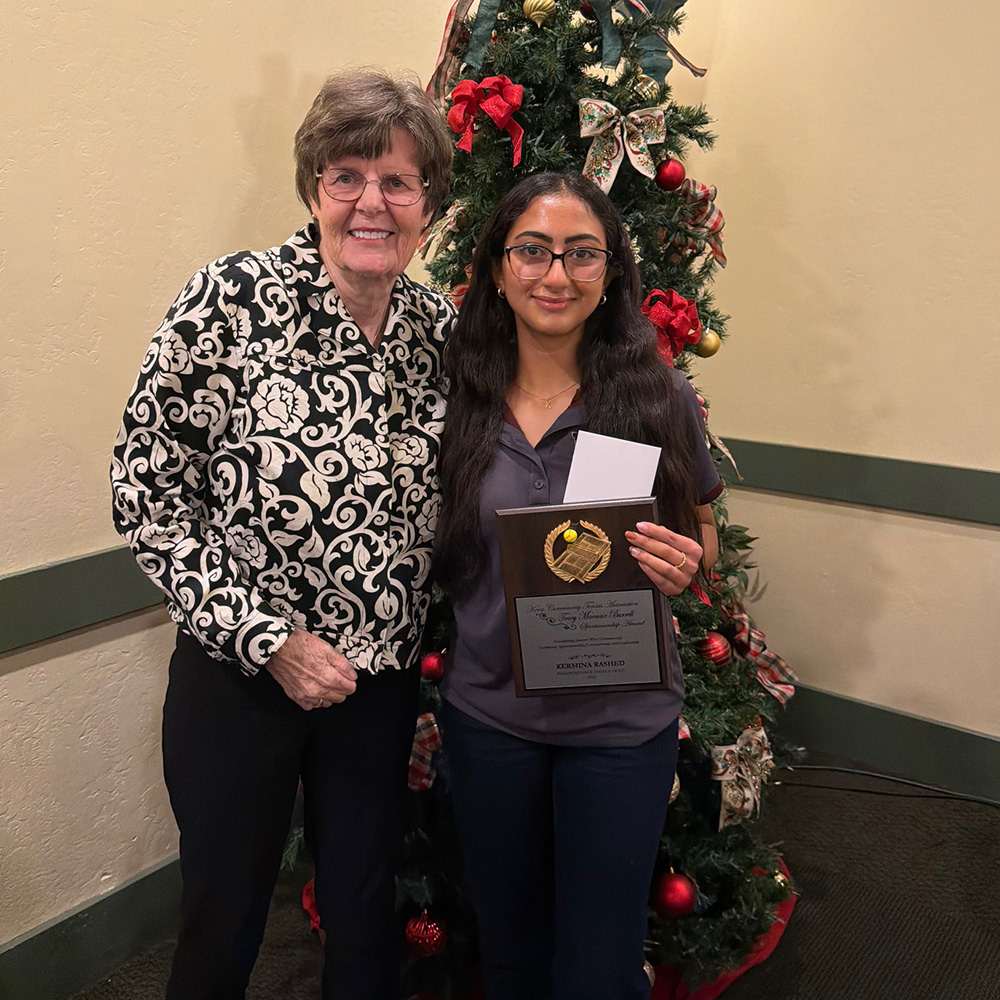

Top: Tracy Macnair Burrell with 2025 Tracy Macnair Burrell Sportsmanship Award Nominee.
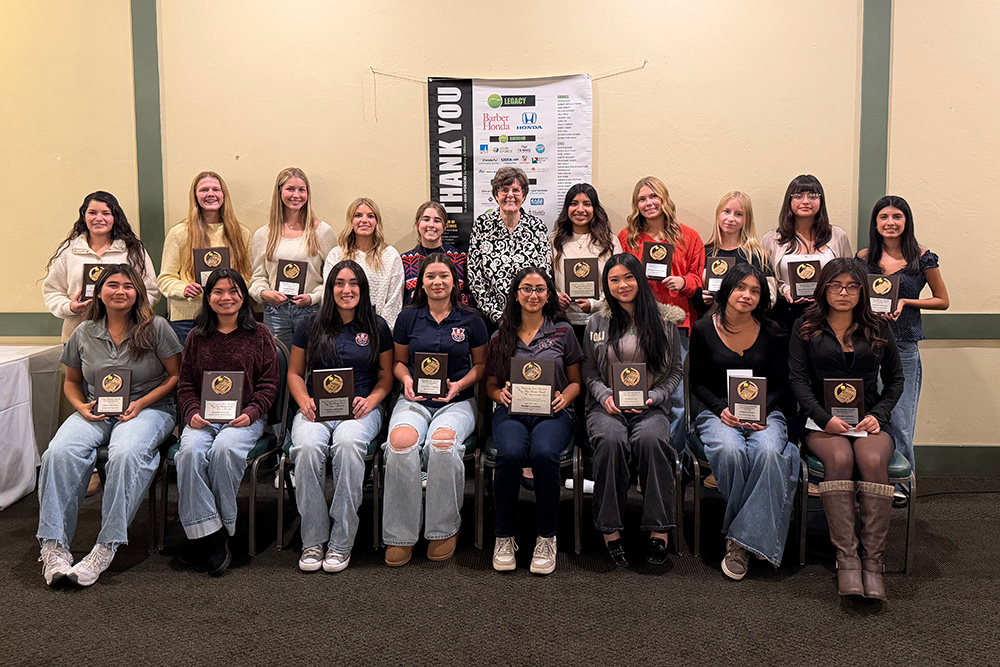
Middle #1: Nominees for the 2025 Tracy Macnair Burrell Sportsmanship Award.
Middle #2: Tracy Macnair Burrell and Jack Kramer in 1970.
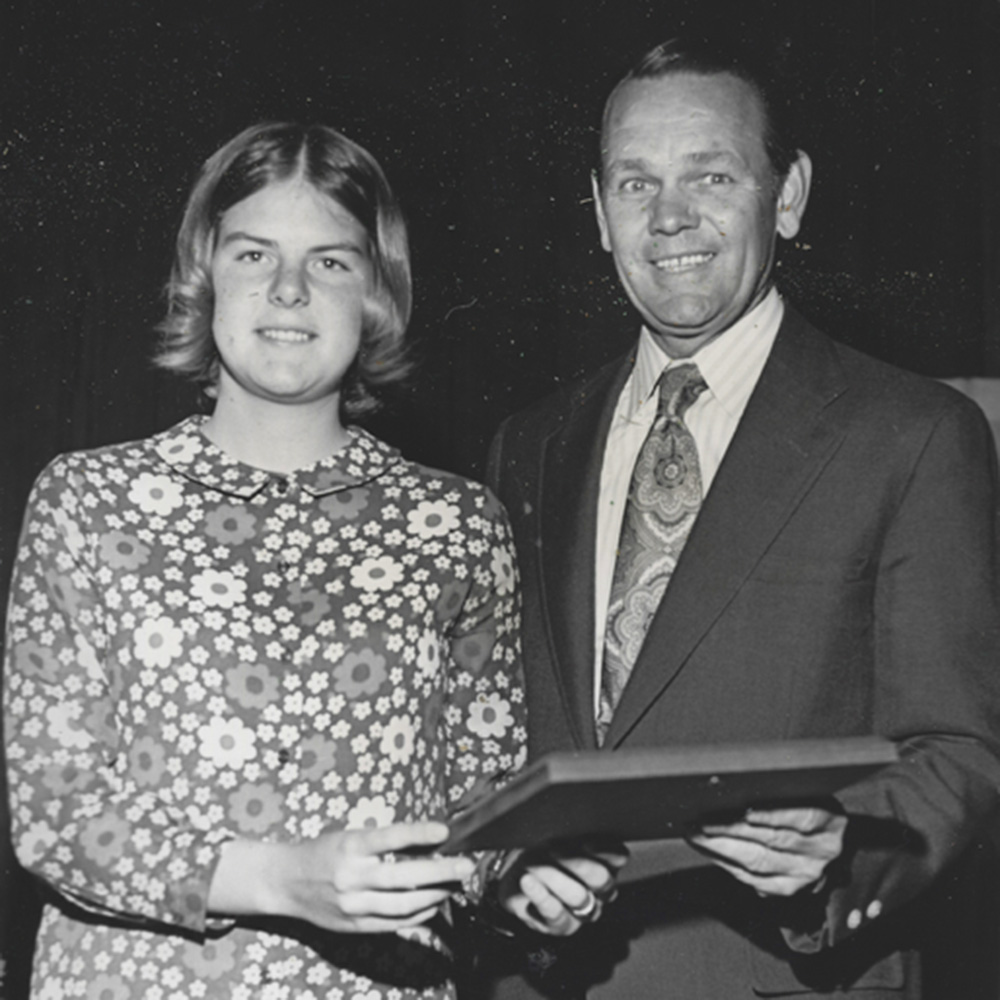
Bottom: Tracy receiving the 1971 Southern Cal Sportsmanship Award from USTA SoCal President Joe Bixler.
In Bakersfield, tennis history doesn’t just live among scrapbooks and trophies. It lives within 72-year-old Tracy Macnair Burrell. Whether it’s the origins of Bakersfield Racquet Club (BRC), local player accomplishments, or longstanding exhibitions, the chances are Tracy knows the answer or statistic without hesitation. Known as the “unofficial tennis historian” of Bakersfield, Tracy is a fixture among the community who cares deeply about keeping its rich history alive for generations to come.
A Family Affair
Born and raised in Bakersfield, Tracy’s connection to tennis began almost as soon as she could walk. Looking for an outlet for their energetic child, her parents introduced her to the sport at five years old at their home club, BRC. As charter members, they were already very connected to the club—and it wasn’t long before it became Tracy’s second home. “Some of those people are still my best friends,” she says. “We grew up together at five, six, and seven years old. It feels like an extended family that I’m incredibly fortunate to be a part of.”
BRC has been a “home away from home” for generations of players, buzzing with ambition and excellence since its opening in 1948. Members have earned more than 160 national championships altogether, with legends like Rod Laver, Billie Jean King, Arthur Ashe, and Pete Sampras gracing its courts.
Elite Mentorship
Growing up surrounded by elite talent at her home club, Tracy developed her game under the guidance of exceptional mentors and coaches. Among them was Hall of Famer Dennis Ralston—former World No. 5 in men’s singles and five-time Grand Slam doubles champion—as well as Lake Lovelace and Andy Davidson, the first tennis pros at BRC with dozens of championships under their leadership. “When people like Dennis, Lake, and Andy care about you and are accessible to you,” she says, “it’s just fantastic.”
The strong foundation she built under their guidance carried seamlessly into her own competitive career. As a junior, she reached No. 1 in Kern County and No. 4 in Southern California singles, and earned national rankings of No. 30 in singles and No. 3 in doubles.
College During Title IX Pass
Tracy also played collegiate tennis at Stanford—competing between No. 1 and No. 3 singles and No. 1 in doubles—during a pivotal time in women’s sports. When she arrived at Stanford, there were no scholarships or funding for women’s tennis. She and her teammates paid their own expenses and even ran Saturday morning clinics for staff, faculty, and students just to afford new balls for practice. “We were willing to do those clinics at eight in the morning,” she recalls. “Who wants to do that in college? But we did it anyway.” Then, during her junior year, Title IX passed—largely thanks to Billie Jean King’s advocacy efforts—and Tracy became part of the first graduating class to reap its rewards. “We went from nothing to having enough money to fly down to play against USC and UCLA,” she recalls.
An Unforeseen Diagnosis
Paying her way through college and playing clinics to buy tennis balls was never going to be Tracy’s biggest challenge. At 25, her life took a sharp and unexpected turn when her competitive playing career ended abruptly. Diagnosed with multiple sclerosis, she lost the ability to compete as her vision, strength, and mobility declined. It was a life-altering moment, but not a life-defining one.
“It’s been…well, it’s a daily thing,” she shares. “But maybe because of tennis, I’ve figured out not to worry about it. I do what I’m supposed to, and there’s not much else you can do. People ask me all the time, ‘Why do you feel bad today?’ I don’t know, and doctors don’t know. It’s not about why, it’s about how. How do you handle it? How do you move forward? That’s just like tennis: this is happening—now what do you do next?”
Tracy hasn’t framed her diagnosis around loss. Instead, when she couldn’t play anymore, she poured herself into other areas of the sport—all while raising her three sons. She was the Assistant Tennis Pro at BRC for two years, Head Pro at Stockdale Country Club for 17 years, a Junior League Member for 45 years, and continues to volunteer for the local tennis community today.
Finding Herself Through Coaching
Coaching has always been a passion of hers, from teaching kids with autism, blindness, and hearing impairments, to developing junior varsity players and most recently working with adults of all ages. Over the past 25 years, she’s taught thousands of players, offering free lessons to anyone eager to improve their game.
“When the ‘light bulb’ moment comes on—when you show them where to be in a certain situation—it’s extremely rewarding and gratifying. You can see on their faces just how much they appreciate it,” she remarks.
“This [disease] has framed my life because of my inability to play anymore, but it hasn’t stopped my life,” she shares. “Coaching is how I play. I get to go out with people that I care about and help them. It’s my way of playing and being on the court because otherwise I couldn’t.”
Improvement Over Results
At the heart of Tracy’s coaching philosophy is court awareness, self-kindness, and building more than just an “A game.” “We all love to play and practice our A game, but developing and integrating very strong B, C, and D components not only adds variety and unpredictability, but it makes us less vulnerable if we only have one strategy we’re confident using. Very few opponents can play well against all styles of play (consistency versus aggressiveness, playing up versus. playing back, hitting with different speeds, depths, heights, spins, etc.). The trick is to employ the right strategies against each player and force them to have to use their B, C, and D games,” she explains.
She also emphasizes progress over outcomes. “Winning is not the goal, improving is. If you improve, you will win.” She further stresses the importance of this mindset for tennis parents, suggesting they should be asking their children, ‘How was your game?’ or ‘How did you play?’ instead of initially asking, ‘Did you win?’
“Winning can become too important,” she adds. “And when that happens, it often becomes a barrier to real improvement.”
Sportsmanship as a Skill
Tracy’s emphasis on effort over results also shapes her views on sportsmanship. For her, integrity, honesty, and respect aren’t optional, but rather part of the competition itself. Sportsmanship has always mattered deeply to Tracy, so much so that the KCTA named a sportsmanship award in her honor. Presented annually, the award recognizes a high school senior girl who exemplifies character, leadership, enthusiasm, academic excellence, and community service. Tracy herself received a USTA sportsmanship award at just 18 years old, and she continues to champion the importance of exemplary character both on and off the court.
When asked why there’s an award named after her, she humbly says, “I think you’d have to ask them, but it’s really important to me to be ethical and honest. You can be competitive as sin and still be a good sport.” She continues, saying “I hope it’s because I lived it, right? I hope I earned it. I believe in caring about effort, not wins.”
Tracy often frames sportsmanship as a skill—similar to developing a serve or a backhand. Learning how to balance fierce competitiveness with good character is essential on the court. “I think it’s like any skill you develop,” she explains. “If it’s not a strength, you treat it like your serve—something you work on. You learn how to stay calm and poised, because even if it doesn’t come naturally to you, that persona can become one of your greatest weapons. It’s a strategy. Even if you don’t feel it, act it.”
Leadership Off Court
Tracy’s impact off the court is just as powerful as her coaching and mentorship. Over the years, she’s served as the Director of Kern Community Tennis Association (KCTA) and President of BRC, helping lead club initiatives such as providing equipment and apparel to underserved youth and hosting USTA matches at no cost. A firm believer in giving back, she has also personally supported high school teams and funded summer memberships for junior players.
Her influence is further reflected in the annual Burrell Open, a junior varsity high school girls tournament established in her honor, where players from local schools compete against one another. Through these roles and recognitions, Tracy has helped create opportunities for thousands of players, fostering growth regardless of age, background, or financial status.
A Legacy for the History Books
For Tracy, Women’s History Month is about honoring legendary trailblazers while building opportunities for the next generation. She’s quick to say “it’s sad that we have to have a month,” not because recognition isn’t important, but because women’s achievements should be normalized and celebrated year round. Tracy never set out to be the first at anything, and opportunities weren’t handed to her. Instead, she worked hard to carve out a space for herself and encourage her students to improve and thrive.
In many ways, this commitment mirrors her work as the town’s resident tennis historian: preserving the past while shaping the future. Through her bold leadership and deep love for Bakersfield, she has certainly left a lasting mark on her community. “I can’t tell you how incredibly fortunate I feel that I was born to the right family, in the right town, at the right club, and at the right time with amazing people,” she says.