

Built on Public Park Courts: How Coach U.J. Neri
Is Growing Tennis in SoCal
USTA SOUTHERN CALIFORNIA
USTA SOUTHERN CALIFORNIA
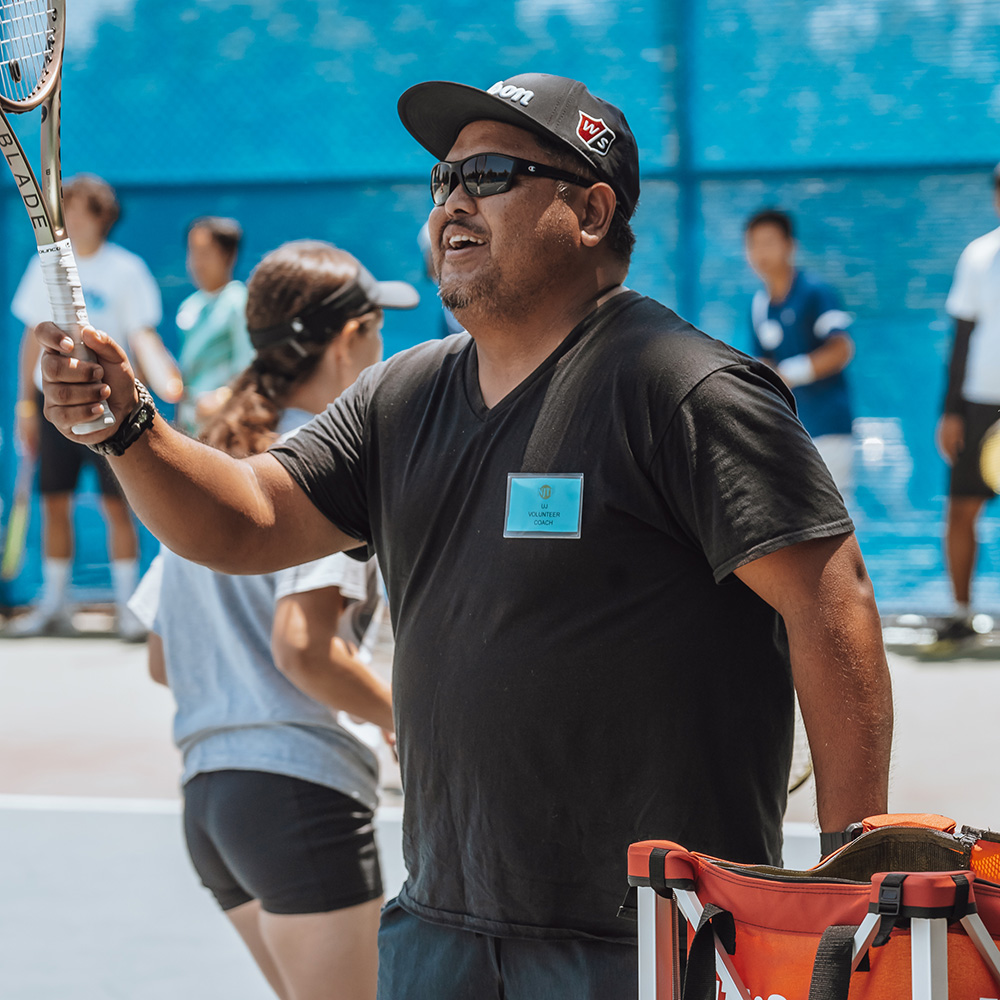
Top: U.J. volunteering at an AANHPI Month celebration.
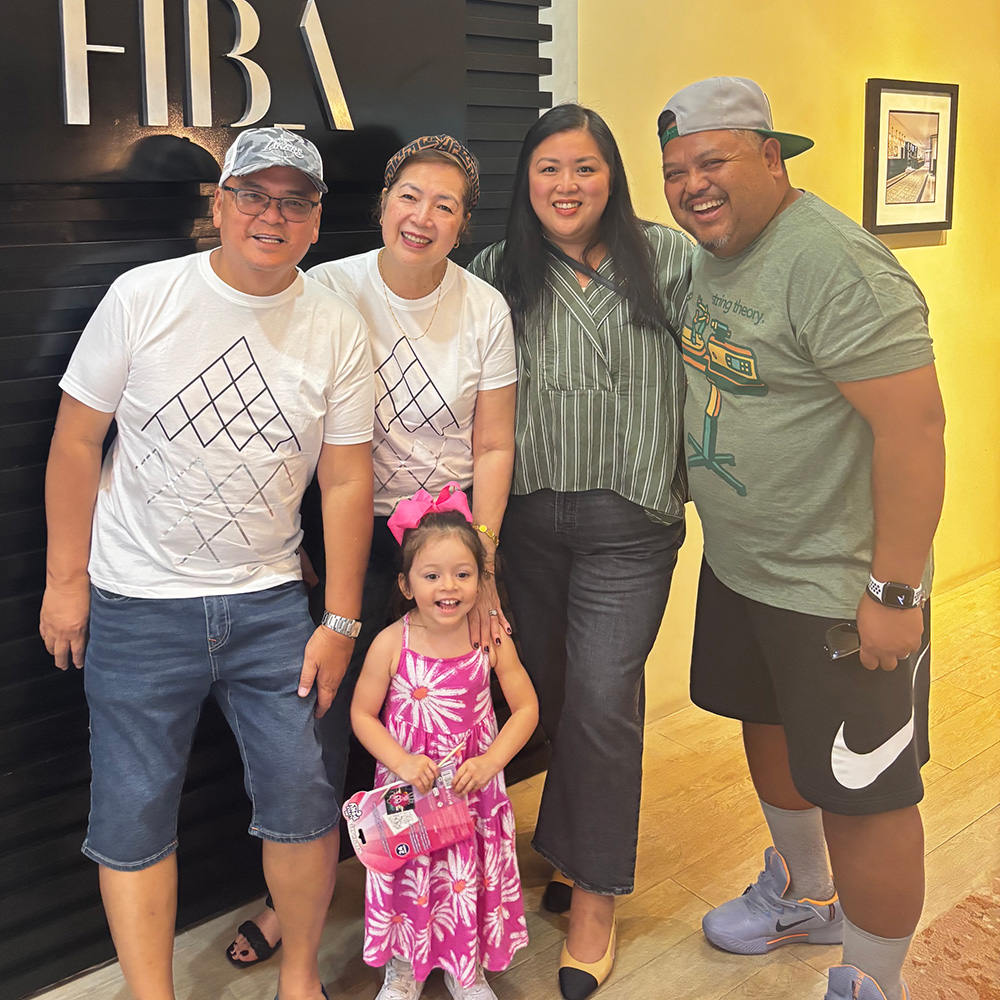
Middle: U.J. with his family.
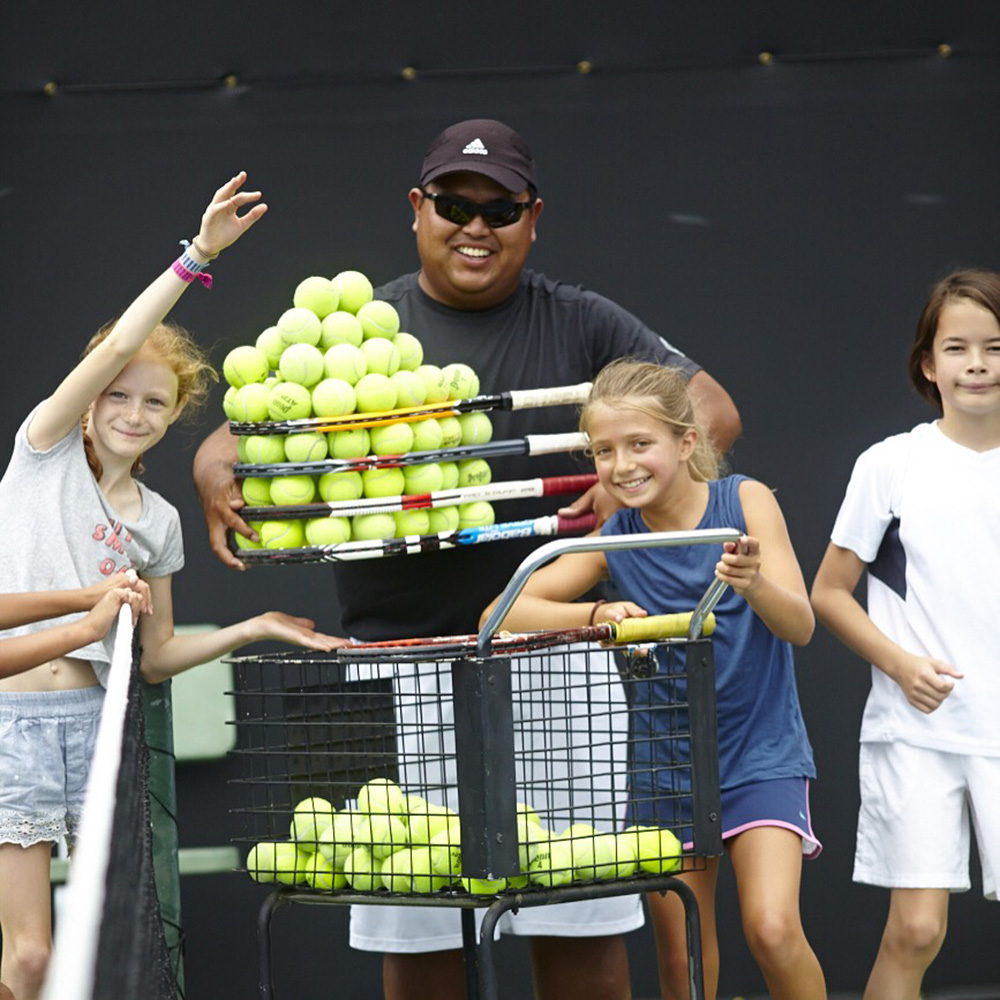
Bottom: U.J. coaching tennis with junior players.
Ulysses “U.J.” Neri’s story is, at its core, a public park story. Long before he became a respected Southern California tennis coach, U.J. was a kid learning the game at his local public park in Panorama City. There were no private lessons and no guarantees of court time. Just four city courts at the Panorama Recreation Center, known to the locals at Chase Park due to its proximity to Chase Street.
Chase Park largely shaped U.J.’s upbringing and his connection to the surrounding Filipino and Hispanic community. A tight-knit group, U.J. and his younger brother would spend hours there on weeknights and weekends, hanging out with friends while learning to play from older generations willing to share their knowledge. That environment didn’t just introduce U.J. to tennis—it shaped everything about how he approaches the sport today.
A Filipino Upbringing Steeped in Tradition
Raised in a middle-class, family-oriented Filipino household, U.J. grew up surrounded by family gatherings and shared meals that brought relatives and friends together. Those experiences instilled in him the importance of community and joy, values that continue to shape his life today. His family still comes together often, celebrating both everyday small moments and major milestones, along with every Filipino tradition, occasion, and holiday.
“There’s always something happening every week in our family, whether it’s a birthday or accomplishment,” U.J. shares. “After every occasion we always get together and have lunch or dinner after the event. There’s always a lot of Filipino traditions.”
U.J. cherishes these traditions passed down from his parents, which he now shares with his Filipino wife Charisse and their two-year-old adopted Mexican daughter Celine. From ballet recitals to birthday parties, she’s quickly become the center of attention and the perfect excuse to get together.
“Celine is definitely a blessing,” he remarks. “Both of our families are very involved and adore her.”
As for tennis, U.J. is already teaching her how to swing a racquet in their backyard, a technique she learned from Southern California pro and former USC star, Sabrina Santamaria.
“I hung a tennis ball from a branch in our backyard and got a junior racquet and started by having my daughter hold it with two hands and try to whack the tennis ball,” he says. “That advice came from Ivan Santamaria, Sabrina’s dad. Now Sabrina’s playing on the pro doubles tour, so I [naturally] took the advice.”
Grassroots Beginnings
While U.J. didn’t start playing as early as his daughter, he quickly fell in love with it as soon as he picked up a racquet around eleven years old. Two of his uncles introduced him to the sport at Chase Park, and soon enough, he became immersed with the local community there.
“It was a different era. We never paid a penny in lessons; we just asked retirees to help us play and they were open to helping out,” he recalls. “They would feed balls to us between their matches and then we would wait until they were done and come back on the court to hit more balls with them. We were very lucky that our parents gave us the independence to be at the courts. Tennis kept us out of trouble.”
That environment shaped more than his technique. It instilled a sense of belonging that still defines his coaching style and philosophy today. “We built relationships and lifelong friendships through tennis. That’s something I try to recreate for my players,” he shares.
A Nontraditional Path to Coaching
Coaching wasn’t part of U.J.’s original plan. In fact, his first career was in computer science, where he spent more than a decade working as a computer network engineer and IT director. In 2009, after being laid off from his full-time IT job, U.J. saw an opening at the Riviera Country Club where he was already working part-time at the front desk. Wanting to follow his roots back to tennis, he asked the Junior Director of the club at the time, Giancarlo “G.C.” Cava—now assistant coach for the UCLA Women’s Tennis Team—if he could join the junior program as a coach.
“G.C. took me under his wing and I started teaching tennis,” he recalls. “I already had the experience of knowing how to play, so I just observed and shadowed and asked lots of questions on teaching, technique, and strokes. I was mentored by a lot of great coaches from that club.”
Coaching Résumé
Over the years, U.J. settled into the coaching world. He eventually earned his certification through the United States Professional Tennis Association (USPTA)—now Racquet Sports Professionals Association (RSPA)—and built a career coaching across Los Angeles, developing junior programs and working at several clubs across the region.
Today, he serves as Head Tennis Pro at MatchTough Tennis Academy on weekdays, coaches with the Pasadena Tennis Association National Junior Tennis and Learning (NJTL) program on weekends, and formerly volunteered as Assistant Coach for the Glendale Community College Women’s Tennis Team before stepping back once Celine was adopted.
U.J. is also involved with USTA Coaching, including participation in high-performance development workshops. He sees the evolution of coaching in the U.S. as a positive shift toward inclusivity and purpose-driven training.
“I think the new wave of USTA Coaching is taking little bits of high-performance development and bringing it to the grassroots level. I think we’re going in the right direction to get more players involved and start playing tennis,” U.J. explains.
Through these roles, he believes there’s one key “hook” to getting the next generation of players excited about tennis. “I always believe that once the parents are engaged in tennis and kids see their parents playing tennis, that’s the hook. Kids will be connected with tennis and want to play because they see their parents playing tennis.” That “hook” has become a hallmark of U.J.’s approach: making tennis accessible, engaging, and—above all—fun.
A Holistic View of Development
For U.J., tennis is more than a sport—it’s a vehicle for life skills. Whether he’s teaching Red, Orange, or Green Dot Ball to beginners at Pasadena Tennis or developing high-performance juniors at MatchTough, U.J. emphasizes strategy, execution, and understanding the “why” behind each decision on court. “Once you have the right mental mindset, the physical comes,” he explains. “Tennis is like chess. You have to think two or three moves ahead.”
He also prioritizes goal-setting, resilience, communication, and confidence—aspects that all play a role in his lessons. He takes pride in understanding his students’ motivations, cheering them on, and guiding them through both short and long-term development.
“I’m a cheerleader for any kid I teach on the court,” he exclaims. “I want to do a great job at executing what their purpose is and trying to accomplish the goals that we implemented. You want to be on varsity? Okay, I only want “varsity” type of effort. You want to play D1, D2, or D3? Okay, this is the effort I need from you. So along with being coaches, I think we’re also big cheerleaders as well.”
Community College Tennis
Wanting to play for a Division I, II, or III college is commonplace among elite tennis players. But U.J. believes one of the most underutilized and often unspoken pathways to compete at a high-level is community college tennis—both athletically and financially.
“I’m a huge advocate for community college tennis,” he states. “It’s a great pathway for a lot of these parents to save money for their kids if they weren’t able to get a great scholarship. “You can save money, develop your game, and still have the opportunity to transfer and compete at a higher level.
It’s why he chose to be a volunteer assistant coach for Glendale Community College—to help players in their collegiate journey while reducing the financial burden on families.
Filipino Stars & Influence
As a Filipino-American, U.J. takes pride in representing his dual heritage on and off the court. The values he grew up with—family, loyalty, and celebration—remain central to his life and extend to his coaching, where he champions his students to succeed and enjoys celebrating their wins, big or small.
In recent years, increased visibility of Filipino players at the professional level has added another layer of inspiration. WTA stars like Alex Eala, Leylah Fernandez, and Southern California doubles specialist Desirae Krawczyk from Rancho Mirage have captivated fans around the world with their talent and skill. But beyond their impressive résumés is something U.J. believes these players naturally embody and is central to Filipino culture: connection.
“They see each other on tour and sometimes share the same bus or flight to the tournaments they all go to. They back each other up and support each other.”
He continues, noting that seeing Filipino players on TV directly contributes to an increase in younger Filipino generations wanting to try the sport. “I think seeing them on TV is encouraging a lot of players in the Philippines to start playing and join programs because they see that example on TV,” he shares.
He also notes the strong network among Filipino coaches, who often share knowledge and support one another. “There’s a level of detail and purpose in how we teach. We all want to see each other succeed.”
Where It All Started
From public park courts to high-performance training environments across Southern California, U.J.’s life has always found its way back to the game that brought him joy, community, and purpose. This AANHPI Month and National Tennis Month, he serves as a testament to what the sport can offer: camaraderie, inclusivity, and connection. Because U.J. is still doing what others once did for him—creating a place of belonging and building an extended family through tennis.