

Journey into Player-First Coaching
USTA SOUTHERN CALIFORNIA
USTA SOUTHERN CALIFORNIA
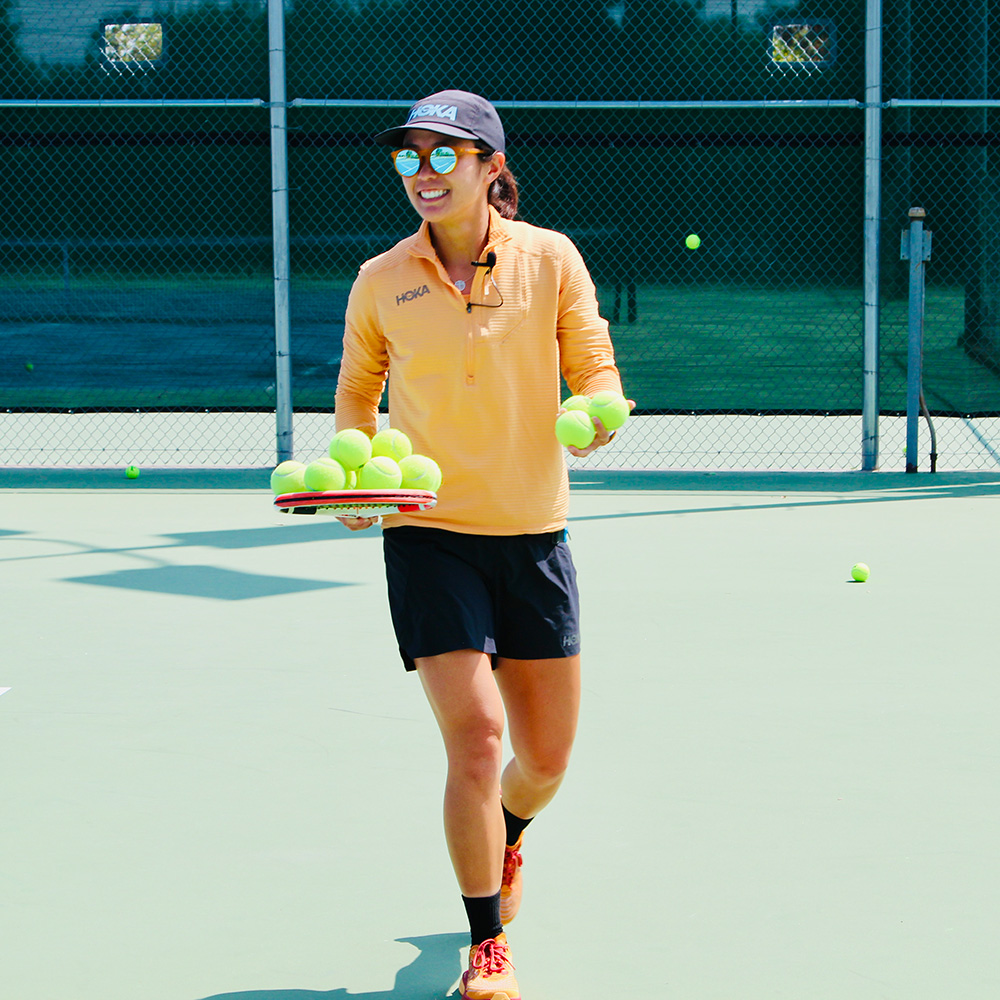
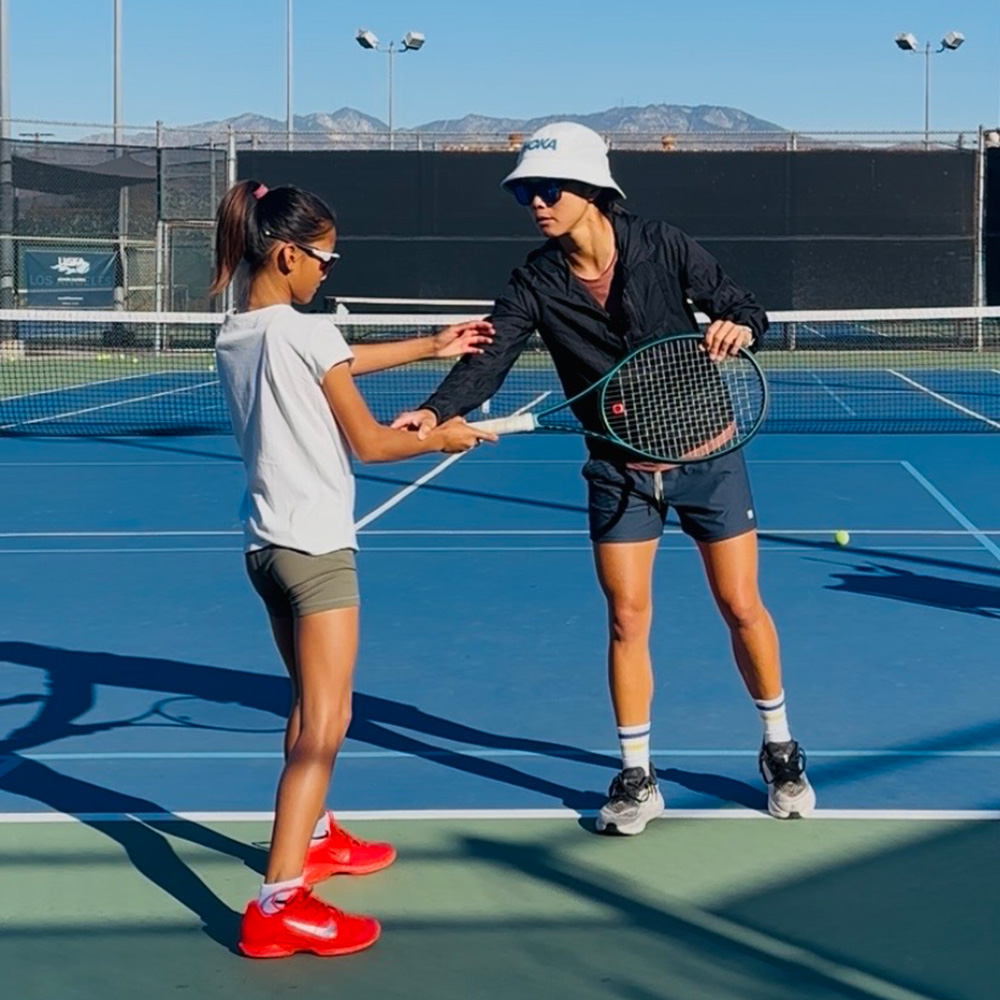
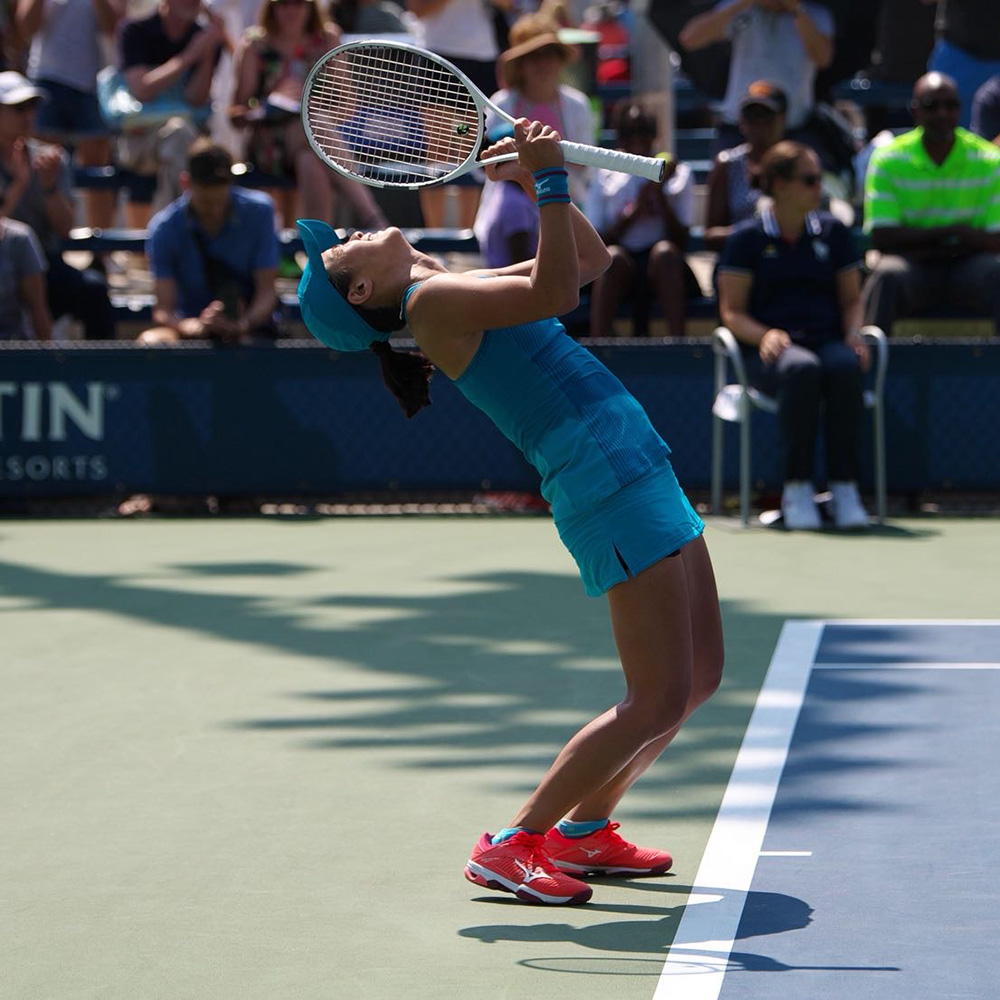
Top: Tennis coach Danielle Lao smiles on court.
Middle #1: Danielle gives hands-on instruction to a young player.
Middle #2: WTA player Danielle Lao celebrates a point victory on the hard court at the US Open.
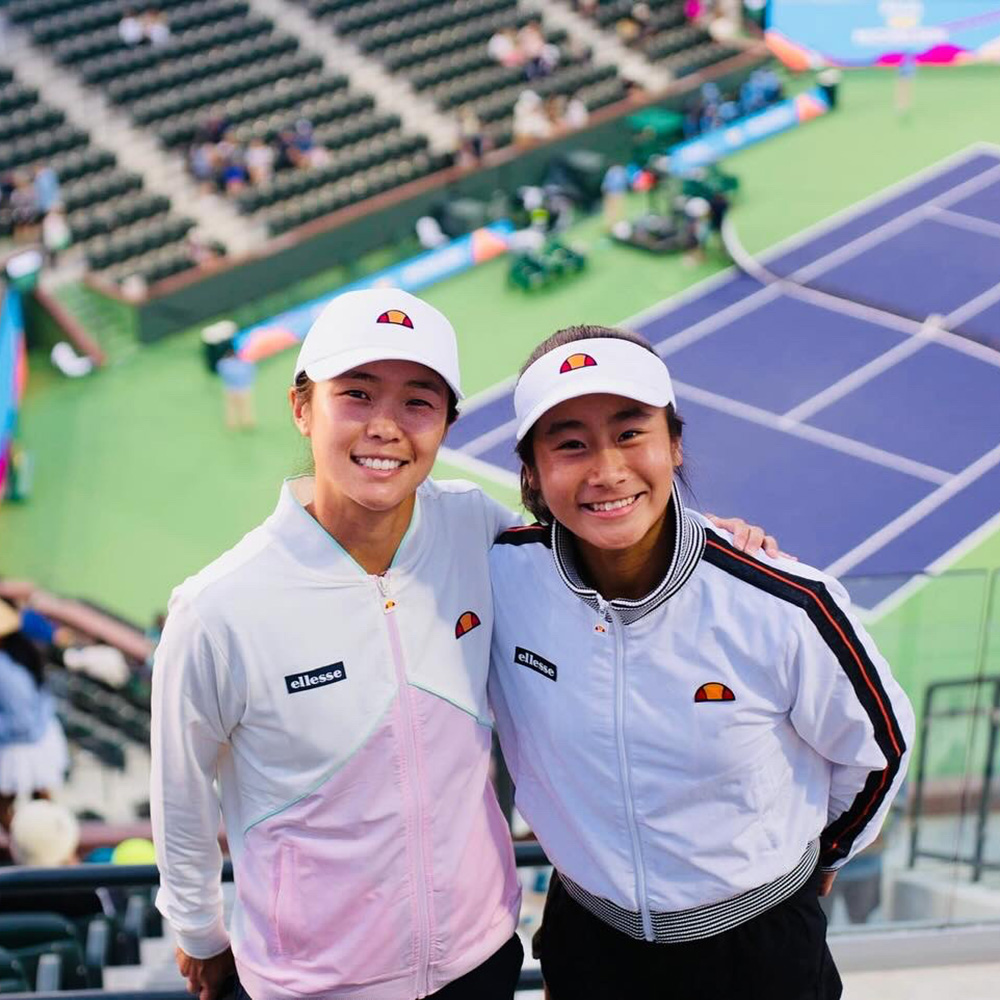
Bottom: Coach Danielle with Natalie Kha at BNP Paribas Open.
Above: Former professional player turned coach Danielle Lao smiling on court.
In tennis, a sport heavily focused on individual accountability and mental toughness, the best coaches make sure an athlete never feels alone on the court. While players fight for every point in the heat of competition, coaches supply the strategy and conviction that keep them grounded in critical moments.
Danielle Lao understands both sides of that equation intimately. From an early age, she forged her own path in the sport, combining her family’s unwavering support and the guidance of transformative coaches with her own fierce drive to become the best player she could be. Her relentless work ethic, tactical intelligence, and determination to compete for every point helped propel the Arcadia native from La Salle High School to the University of Southern California (USC), where she reached as high as No. 3 in the nation and earned two-time All-American honors, before climbing to No. 152 on the WTA Tour.
Every day, and especially during Coach Appreciation Month, USTA SoCal is proud to celebrate leaders like Danielle, who make such a profound difference in players’ lives. Since transitioning from player to coach, Danielle has continued to share her expertise through private lessons, as Head Coach of the Pete Brown Junior Tennis Program—an NJTL chapter—and as a faculty coach at USTA SoCal’s National Player Development Camps. She brings those lessons learned to the next generation, translating her journey across the junior, collegiate, and professional circuits into actionable guidance for Southern California’s rising talent.
For Danielle, coaching is about building self-reliant competitors who feel supported, seen, and prepared to perform under pressure.
Foundations of Competition
Danielle’s story began as a first-generation tennis player traversing the Southern California junior circuit. Without a family background in the sport, her parents were completely self-taught throughout her early development.
“As a first-generation tennis player, there were lots of hurdles, from understanding how the tournament system works and how to properly train and develop, to learning what is a healthy competitive mentality and environment to foster for young athletes. I always keep in mind that these are things I know now, but did not know back then. Whether I am coaching privately or at camps, I make a deliberate effort to share this knowledge and experience with young players and their parents.”
Following her graduation from La Salle High School in Pasadena in 2009, Danielle joined the Women of Troy at USC, competing across four standout seasons from 2009 to 2013. A cornerstone of the program, Danielle reached a career-high collegiate singles ranking of No. 10 in the nation in 2011 and consistently remained among the country’s elite.
As a freshman, she was named the ITA Southwest Region Rookie of the Year and selected to the USTA Summer Collegiate Team. By her junior year, she earned ITA All-American honors, made the NCAA All-Tournament Team in doubles, won the National Collegiate Tennis Classic singles title, and finished the year ranked No. 18 nationally with a 24-4 record.
Her senior campaign in 2012-13 saw Danielle serve as team captain for a dominant Trojan squad that posted a 23-3 overall record. USC went an undefeated 10-0 in Pac-12 play, capping the regular season with a 6-1 victory over crosstown rival UCLA to secure the outright Pac-12 Championship. Over her entire collegiate career, Danielle compiled an extraordinary record of 111 wins to just 39 losses across singles and doubles, remaining ranked in the ITA Top 50 in all four seasons.
When her time at USC ended with a heart-wrenching 3-4 team loss to Stanford in the NCAA Round of 16, Danielle found herself conflicted. Though initially planning to step away from competitive tennis and hang up her racquet, she realized she wasn’t ready to let the sport go and decided to take her game to the professional ranks.
Fully embracing the transition to professional tennis, Danielle funded her early tour days with family support while her coach, Kal Moranon, agreed to be compensated with lunches after practice. Through four years of relentless grinding, Danielle built her ranking high enough to qualify for her first Grand Slam main draw at the US Open in New York, eventually reaching a career-high WTA singles ranking of No. 152 in the world.
Grounded in the Journey
That extensive playing background is precisely what fuels Danielle’s coaching philosophy today. Because her parents knew nothing about the sport when she picked up a racquet, she understands the confusion many families feel. Through private coaching and USTA SoCal sectional camps, Danielle makes a conscious effort to share her experience and demystify the developmental pathway for young families who feel as lost as her family once did.
She also brings the perspective of a player who succeeded on the pro tour without physical leverage. Standing at 5’3”, Danielle learned that success required maximizing what she could control.
“I’m big on maximizing what you have and the things you can control,” Danielle explained. “I understand I don’t have certain things like height and size, but I don’t spend much time and energy dwelling on the fact that I don’t have them. I am more focused on increasing my tennis knowledge, refining my mental game, and doing what I can in my preparation to give myself the best chances to compete.”
That lesson was reinforced during her time at USC under head coach Richard Gallien, who imparted a foundational piece of wisdom that still drives her today.
“One of the first things he told me was his coaching philosophy: ‘Talent is a cheap commodity; what matters is what is between your chest and ears,’” Danielle recalled. “I came into college knowing how to play good tennis, but Richard taught me what it meant to compete. It wasn’t about hitting the best shots; it was about making good choices and living with the results. He helped me to understand that I could do everything I can and still lose, but that shouldn’t stop me from laying it all out on the line. I bring that with me in everything I do in life.”
For Richard, watching Danielle extract all of her potential on the court made it apparent that she possessed a rare dedication.
“Early on while I was coaching Danielle at USC, I knew she would be successful,” Richard recalled. “She was always taking notes and wanting to get better. She was just always so invested in her own improvement. She wasn’t waiting around for somebody to quote-unquote, fix her. She wanted to be part of the process.”
Richard saw much of his own relentless hunger to learn reflected in Danielle’s game, particularly in how she maximized her skillset.
“Her emotional intelligence was also very high. So when she lost a point, she didn’t just fall apart. She was planning for the next point,” Richard said. “She got every single ounce out of what she had. That’s all you can ask for.”
Now, having watched her transition from a determined collegiate standout to a mentor in her own right, Richard sees her bringing that same passion and preparation to the next generation.
“Danielle is a rare talent who is extraordinarily organized, hard-working, and smart,” Richard added. “The way that she’s training her young players is just very smart, and she takes it very seriously. They’re very lucky because they’re getting unusually high coaching at an early age. She’s so conscientious and caring, and she has always poured her heart and soul into what she’s doing.”
Richard isn’t the only one who recognizes the impact of Danielle’s coaching. As someone who walked a remarkably similar path from SoCal junior tennis to USC and into coaching, USTA Southern California Director of Junior Tennis Dianne Matias has watched Danielle’s evolution firsthand, both as a peer and as an administrator.
“Danielle has lived every step of this journey—from SoCal juniors to college tennis at USC to the WTA tour,” shared Dianne. “She’s done it herself, and she knows how to help juniors get there as well. What’s so valuable about having her at the camps is how she connects with families, giving parents real guidance on how to properly structure practice schedules and training blocks so players are practicing with purpose. Then with her personal players, there’s a clear reason behind everything she does. She is exceptionally deliberate about their preparation, and she’s focused on building complete people, on and off the court. She’s just a huge resource for our section.”
Today, Danielle instills that exact self-reliance in her athletes, guiding them to maximize their unique technical and tactical strengths rather than forcing them into rigid molds.
Prioritizing the Players
At the core of Danielle’s philosophy is a commitment to put the player first. In practice, executing that ideology requires navigating a delicate balance between what a player wants, what they truly need, and what a coach visualizes for their development.
“What the player needs does not necessarily always match up with what they want, and neither always matches up with what I want or need,” Danielle explained.
Central to that dynamic is establishing genuine two-way trust on the court. Having captained USC through high-stakes team battles and ground through four years on the WTA Tour, Danielle knows firsthand that athletes perform at their best when given the autonomy to make decisions under pressure rather than being micro-managed from the sidelines.
“Trust has to be a two-way street,” Danielle emphasized. “Players have to trust their coaches, but they need to feel trusted too. Coaches need to prepare and teach in a way where they set themselves up to trust their players. It’s easy for a coach to keep correcting a player, but to get them to commit and execute with freedom, on their own terms, is more challenging.”
Learning to release that control was a dynamic learned through early coaching encounters. Reflecting on a former student who fundamentally reshaped her perspective as a mentor, Danielle noted how her role evolved.
“One player in particular changed how I see coaching,” Danielle reflected. “When I first started working with her, I was focused on having the answers: knowing what we needed to work on, how we could improve, and how we could get better results. Over time, more layers emerged, like learning to enjoy the process and learning to trust and support herself. That changed me, because I had to see my role differently. Giving her the tools was important, but it became just as important to create an environment where she could be her own person.”
The standard is best exemplified today with star pupil Natalie Kha.
A senior at Ayala High School in Chino Hills, Natalie has established herself as one of Southern California’s premier junior talents. A five-star, blue-chip recruit ranked No. 7 in California according to Tennis Recruiting, Natalie’s decorated career includes multiple ITF junior titles and being named the 2023 Inland Empire Player of the Year. In October 2025, she announced her verbal commitment to play college tennis at USC, following directly in the footsteps of Danielle.
Since committing, Natalie has only accelerated her trajectory, culminating in an extraordinary test of endurance and willpower at the 2026 Billie Jean King Girls’ National Championships.
“At BJK, Natalie took a tough loss in the second round after battling cramps for two straight rounds,” Danielle recalled. “I wasn’t sure she should keep playing given her physical condition and low morale, but she insisted on entering the back draw while still alive in the doubles draw. That meant two matches a day, sometimes three. She woke up more tired each morning with her motivation in question, yet she kept competing and fighting. I knew it was in her, but I was amazed every day we advanced. She won the back draw and placed fourth in doubles, playing 17 matches in 8 days. Those back draw results earned her a spot in the Junior US Open, a goal that was hard to reach because we didn’t play an ITF schedule.”
With her spot at the Junior US Open secured, Danielle joined Natalie in New York as her coach to help guide her through an unforgettable Grand Slam debut.
For Danielle, seeing Natalie take full agency over her tournament run stands as a defining memory in her coaching journey.
“When I look back, I think about how she decided to push through, and how I was along for the ride, doing my job to the best of my ability despite my personal opinion,” Danielle said. “That’s why I coach. It’s about letting the players shine.”
For Natalie, that player-first approach has been transformative for her decision-making and problem-solving on the court.
“Danielle has helped me grow not only as a tennis player, but also as a person,” Natalie emphasized. “She values my feelings and perspective, and patiently listens to the challenges I am facing. Through our conversations, she guides me to think for myself and find my own solutions, rather than simply giving me the answers. She has taught me to understand my game more deeply, take greater ownership of my development, and keep growing even when things are difficult. Her guidance has helped me become a more confident, independent, and thoughtful player.”
That commitment extends off the court to the player’s support system, where clear communication and shared vision create a foundation for long-term progress. For Natalie’s mother, Kazumi, Danielle’s personal background and holistically supportive nature have made all the difference.
“Danielle has been such an important part of Natalie’s journey, and we are truly grateful to have her in Natalie’s life,” added Kazumi. “What I appreciate most about Danielle is how much she genuinely cares about Natalie not just as a tennis player, but as a person. She has been patient with her, supported her through difficult moments, and always looked at her development with a long-term perspective. As a parent, it means so much to know that Natalie has a coach we can trust, someone who truly wants the best for her. We are very grateful for all the time, care, and heart Danielle has given to Natalie and to our family.”
Educating Parents and Fostering Growth
Because long-term player development requires buy-in off the court, Danielle spends significant time educating parents like Kazumi on the connection between technical progress and mental maturity. Drawing from her own six-month losing streak in Challenger events after committing to USC, Danielle teaches families that athletic growth is rarely linear.
“Long-term development has a technical and mental side, and parents need to understand both,” Danielle stated. “It’s fairly clear how to encourage good technical development, but fostering the mentality that goes with it can feel like a mystery. Just like in technical development, there are no shortcuts in mental development. Fear of mistakes, for example, may bring consistency and early success, but long term, that may limit a player from developing an aggressive game.”
By prioritizing delayed gratification over short-term tournament trophies, Danielle helps young athletes and their families embrace the process over immediate results.
“I always tell my players it’s about the work, rather than the wins, and the journey instead of the destination,” Danielle added. “The wins and the destination are what people see, but the work and the journey are who you are.”
Life Lessons
Having competed at the highest levels of the sport, Danielle views tennis not as an end goal, but as an intense incubator for emotional resilience and life skills.
“Learning how to deal with emotions and stress is what I feel most passionate about passing on,” Danielle mentioned. “I believe if you can lean into the discomfort of competition, you become a stronger and tougher individual. You learn so much about your inner life out there.”
For Danielle, the ultimate reward of coaching comes from watching young players discover who they are through the sport, just as she once did on her journey.
“At the end of the day, what makes coaching so rewarding is helping a player find their identity,” Danielle reflected. “Tennis taught me a lot about who I am, and I enjoy watching that process happen with my players.”
Her legacy now lives on through each athlete she molds, fueling them with the same traits that defined her playing career. When her players eventually look back on their time under her leadership, Danielle hopes the deepest memory they carry has little to do with mechanics or wins.
“I want my players to look back and know that everything I did was intended to make them feel supported and seen.”